Skip to main contentSkip to search barSkip to navigationSkip to footer
Logo of the University of Applied Sciences and Arts Northwestern Switzerland
  • DE
  • EN
  • Home
  • Degree programmes
  • Continuing education

Ten Schools One Goal

The FHNW comprises 10 schools with different specializations. Select a school to see its specific courses, study programmes and information.

Applied Psychology

Architecture, Construction and Geomatics

Art and Design

Business

Computer Science

Engineering and Environment

Life Sciences

Music

School of Education

Social Work

  • Research

    • Research fields
    • Projects
  • Updates and insights

    • News and stories
  • Events

  • Media corner

  • About the School of Engineering and Environment

    • People directory
    • Management Board
  • Institutes

    • Institute of Automation
    • Institute of Bioenergy and Resource Efficiency
    • Institute of Business Engineering
    • Institute of Electric Power Systems
    • Institute of Humanities and Social Sciences
    • Institute of Polymer Engineering
    • Institute of Mathematics and Natural Sciences
    • Institute of Polymer Nanotechnology
    • Institute of Optometry
    • Institute of Product and Production Engineering
    • Institute for Sensors and Electronics
    • Institute of Thermal and Fluid Engineering
    • Laboratories of the School of Engineering and Environment
Logo of the University of Applied Sciences and Arts Northwestern Switzerland
  • About the School
    • FHNW School of Engineering and Environment
    • Degree Programmes
    • Continuing Education
    • Collaboration in Research and Services
  • Social Media
    • LinkedIn
    • Instagram
    • Facebook
    • TikTok
    • YouTube
  • About FHNW
    • Organisation
    • Schools
    • Locations
    • FHNW Library
    • Media Relations
  • Support
    • IT Support
    • Inside FHNW
    • Webmail
  • Data Protection
  • Imprint
  • Accessibility
  • Research

    • Research fields
    • Projects
  • Updates and insights

    • News and stories
  • Events

  • Media corner

  • About the School of Engineering and Environment

    • People directory
    • Management Board
  • Institutes

    • Institute of Automation
    • Institute of Bioenergy and Resource Efficiency
    • Institute of Business Engineering
    • Institute of Electric Power Systems
    • Institute of Humanities and Social Sciences
    • Institute of Polymer Engineering
    • Institute of Mathematics and Natural Sciences
    • Institute of Polymer Nanotechnology
    • Institute of Optometry
    • Institute of Product and Production Engineering
    • Institute for Sensors and Electronics
    • Institute of Thermal and Fluid Engineering
    • Laboratories of the School of Engineering and Environment

Type a search term and search continuing education,degree programmes, events, documents and other content.

  • Engineering and Environment
  • Research and services
  • Research
  • Research fields
  • Electrical engineering
Electrical engineering

Digital ASIC & FPGA Design, FHNW School of Engineering and Environment

School of Engineering and Environment


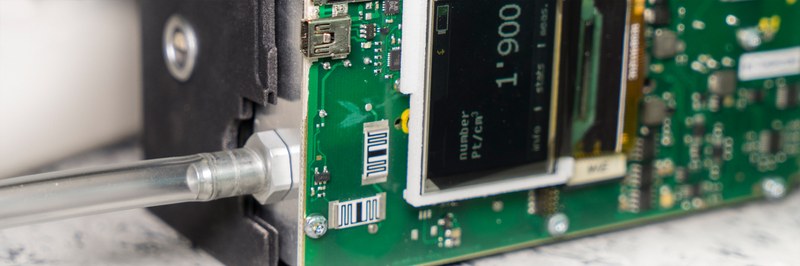
We implement digital functions from algorithm and signal processing to FPGA in VHDL, including simulation with test benches, requirement tracing, code checking, and implementation with vendor tools.
elektrotechnik_forschung-feld.jpeg

Digital microelectronics encompasses all steps leading to FPGA (Field Programmable Gate Array) or digital ASIC implementation. This includes:

  • Design and evaluation of algorithms and architectures

  • ASIC / FPGA design using VHDL (Verilog)

  • Functional verification with VHDL testbenches, including PSL (Property Specification Language) and SystemVerilog

  • Integration of processors, using both hard and soft macros

  • Development and integration of digital signal processing

  • Utilization of high-speed interface structures of modern FPGA families

  • Design of test structures and test patterns (ATPG – Automatic Test Pattern Generation) for ASICs

In addition, we have the competence to develop microelectronics according to the highest standards of functional safety.

Selected Projects
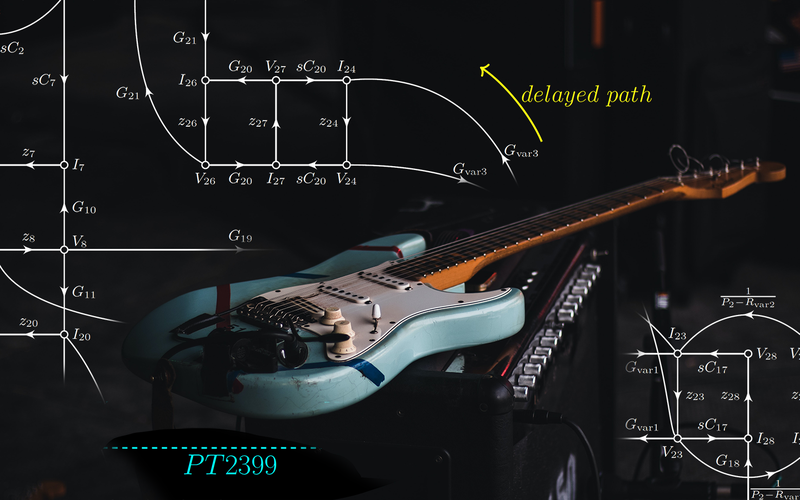
Authenticity in Music

Together with the research centre of the Academy of Music, the Institute for Sensors and Electronics is developing a method to simulate electronic equipment such as guitar amplifiers or effect devices in a purely digital environment.
Institute
School of Engineering and Environment and lnstitute for Sensors and Electronics

SAPE – a modular printing system

The modular printing system SAPE raises the benchmark in terms of printing speed and quality.

Contact

Michael Pichler

Prof. Michael Pichler

Leiter des MAS Mikroelektronik, Teamleiter Mikroelektronik
Phone
+41 56 202 75 26
E-Mail
michael.pichler@fhnw.ch

School of
Engineering and Environment FHNW University of Applied Sciences and Arts Northwestern Switzerland

  • About the School
    • FHNW School of Engineering and Environment
    • Degree Programmes
    • Continuing Education
    • Collaboration in Research and Services
  • Social Media
    • LinkedIn
    • Instagram
    • Facebook
    • TikTok
    • YouTube
  • About FHNW
    • Organisation
    • Schools
    • Locations
    • FHNW Library
    • Media Relations
  • Support
    • IT Support
    • Inside FHNW
    • Webmail
Logo FHNW - 20 Years
Logo Swiss Universities
Logo European University Association
© University of Applied Sciences and Arts Northwestern Switzerland (FHNW)
  • Data Protection
  • Imprint
  • Accessibility
  • DE
  • EN