3D printing of metal and plastic components, including manufacturing-specific design.
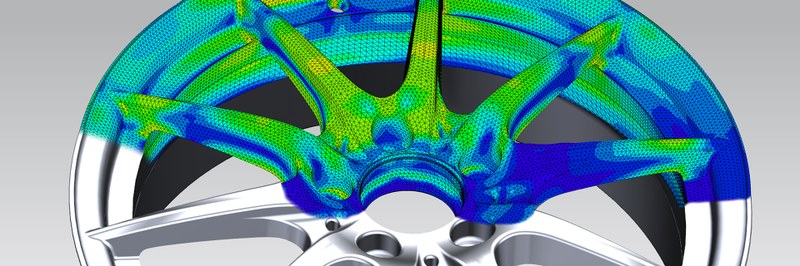
Selective Laser Melting (SLM) is the most successful manufacturing process in metal additive manufacturing. At IPPE, we offer extensive expertise across the entire development cycle of SLM components – from design and simulation to manufacturing, material characterisation, and validation.
The Institute of Product and Production Engineering has the following methods at its disposal:
Selective Laser Melting (SLM)
Selective laser melting is the most successful production method in metallic 3D printing. The IPPE boasts extensive know-how for the entire development cycle of SLM components, from design to simulation, production to material characterisation, right through to validation.
Key advantages of SLM technology include:
- Highly complex geometries can be manufactured economically, or at all (“complexity for free”). This enables fundamental redesigns that can significantly improve component performance (e.g. increased lifetime or weight reduction of aircraft components).
- Reduction of manufacturing steps, leading to lower production costs (e.g. producing a five-part assembly as a single SLM component).
- No auxiliary tools
- Easy production of customised, application-specific components.
The Institute of Product and Production Engineering has an SLM machine of type Realizer SLM125. The dimensions of the machine's build volume are 125 x 125 x 200mm. The materials processed are nickel-based alloys (superalloys), as well as aluminium and steel.
Contact: Prof. Dr. Kaspar Löffel
Additive manufacturing process principles
In additive manufacturing, production is not carried out by removing material from a solid block, as in milling, but by adding material layer by layer. This means that components are created through the successive addition of feedstock material or through a phase change of a material from liquid or powder form into a solid state. The manufacturing process does not require molds or tools.
Process workflow
Based on 3D CAD data, functional components are produced through the additive build process in the desired material. Depending on the process, mechanical post-processing, removal of support structures, and/or cleaning may be required after the parts are removed from the additive manufacturing system.
Classification of additive manufacturing processes
With the increasing number of different AM technologies, selecting the right process is becoming more challenging. The required component quality often plays a key role, depending on whether the products are end-use parts, small series, or prototypes.
Below, the most important AM processes are classified according to the form in which the material is supplied to the machine. In metal 3D printing, metal powder is currently used almost exclusively. For polymers, additional options exist, such as thermoplastic filament, which is melted in the FLM process.
Contact

Prof. Dr. Kaspar Löffel
- Phone
- +41 56 202 85 64
- kaspar.loeffel@fhnw.ch