Skip to main contentSkip to search barSkip to navigationSkip to footer
Logo of the University of Applied Sciences and Arts Northwestern Switzerland
  • DE
  • EN
  • Home
  • Degree programmes
  • Continuing education

Ten Schools One Goal

The FHNW comprises 10 schools with different specializations. Select a school to see its specific courses, study programmes and information.

Applied Psychology

Architecture, Construction and Geomatics

Art and Design

Business

Computer Science

Engineering and Environment

Life Sciences

Music

School of Education

Social Work

  • Research

    • Research fields
    • Projects
  • International

    • Outgoing Students
    • Incoming Students
  • Updates and insights

    • News and stories
  • Events

  • Media corner

  • About the School of Engineering and Environment

    • People directory
    • Management Board
  • Institutes

    • Institute of Automation
    • Institute of Bioenergy and Resource Efficiency
    • Institute of Business Engineering
    • Institute of Electric Power Systems
    • Institute of Technology and Society
    • Institute of Polymer Engineering
    • Institute of Applied Mathematics and Physics
    • Institute of Polymer Nanotechnology
    • Institute of Optometry
    • Institute of Product and Production Engineering
    • Institute for Sensors and Electronics
    • Institute of Thermal and Fluid Engineering
    • Laboratories of the School of Engineering and Environment
Logo of the University of Applied Sciences and Arts Northwestern Switzerland
  • About the School
    • FHNW School of Engineering and Environment
    • Degree Programmes
    • Continuing Education
    • Collaboration in Research and Services
  • Social Media
    • LinkedIn
    • Instagram
    • Facebook
    • TikTok
    • YouTube
  • About FHNW
    • Organisation
    • Schools
    • Locations
    • FHNW Library
    • Media Relations
  • Support
    • IT Support
    • Inside FHNW
    • Webmail
  • Data Protection
  • Imprint
  • Accessibility
  • Research

    • Research fields
    • Projects
  • International

    • Outgoing Students
    • Incoming Students
  • Updates and insights

    • News and stories
  • Events

  • Media corner

  • About the School of Engineering and Environment

    • People directory
    • Management Board
  • Institutes

    • Institute of Automation
    • Institute of Bioenergy and Resource Efficiency
    • Institute of Business Engineering
    • Institute of Electric Power Systems
    • Institute of Technology and Society
    • Institute of Polymer Engineering
    • Institute of Applied Mathematics and Physics
    • Institute of Polymer Nanotechnology
    • Institute of Optometry
    • Institute of Product and Production Engineering
    • Institute for Sensors and Electronics
    • Institute of Thermal and Fluid Engineering
    • Laboratories of the School of Engineering and Environment

Type a search term and search continuing education,degree programmes, events, documents and other content.

  • Engineering and Environment
  • Research and services
  • Research
  • Projects
Projects

Argus: Vehicle control system test device for SBB's FLIRT, FHNW School of Engineering and Environment

School of Engineering and Environment


  • Project details
  • Contact

Development of a test platform that optimises and automates the I&C maintenance processes, including tests and diagnostics for hardware and software.

Technologies

  • System modelling, Digital Twins
  • System  identification for diagnostics
  • Signal processing

Background

In recent decades, the growing traffic and complexity of railroads have been a major challenge for the maintenance, upgrading and diagnosis of rolling stock control systems. In the event of faults, identifying the root cause is a highly challenging task that must be performed quickly and reliably so that the train can be quickly returned to service. Currently, no available system can fully perform the specific functions with the required performance. In this project, we are developing and testing a test platform that optimizes and automates the I&C maintenance processes, including testing and diagnostics for hardware and software.

Objectives

  • A digital twin simulation model that simulates the processes in the environment of the vehicle control technology that directly controls the test unit (including heating, ventilation, air conditioning (HVAC), door control, traction, etc.). Combined with an appropriate HiL setup, the test device is thus to be made to believe that it is still installed in the train.

  • A diagnostic and fault localization algorithm based on a novel hybrid classification concept. This combines and integrates deterministic and stochastic models, i.e. historical data, models and measurements.

  • A modular diagnostic and fault localization algorithm, which identifies and documents defective inputs and outputs of the test equipment. Modular in the sense that it can test different generations of the same vehicle control system.

Results

  • Build and develop fault localization software to test defective digital inputs and outputs of the first generation of the test set.

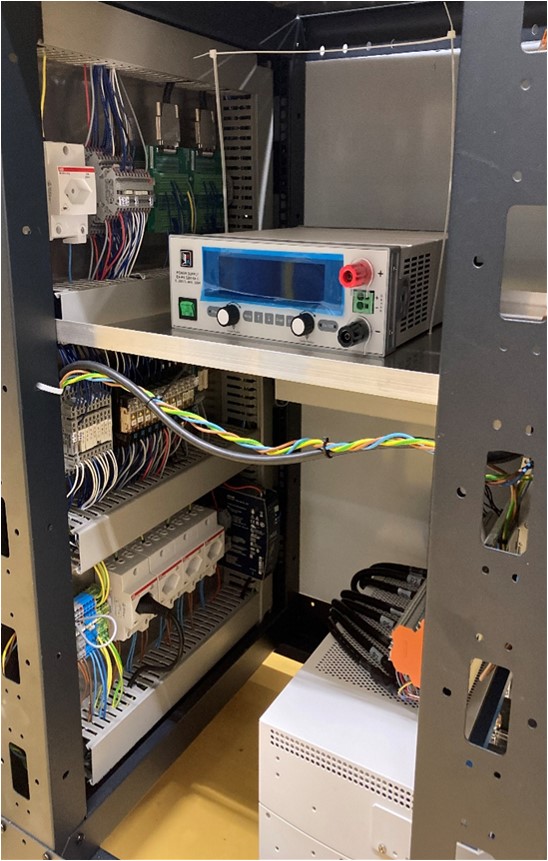
  • Build the hardware of the modular test set so that it can test inputs and outputs from different generations of the vehicle control system.

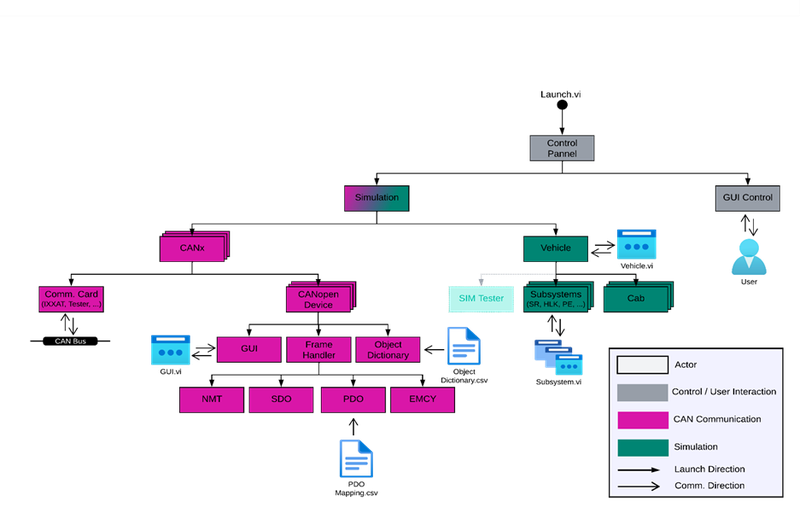
  • Software structure for the digital-twin simulation model developed and implemented so that the most important models of the subsystems can be incorporated.

  • Communication interface between test device and vehicle control system programmed and tested.
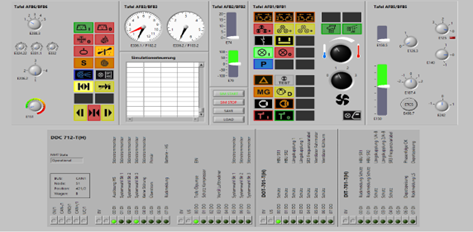
Fig 1: Digital Twin control panel
Fig. 2: Digital Twin software structure
Fig. 3: First prototype of the hardware test platform
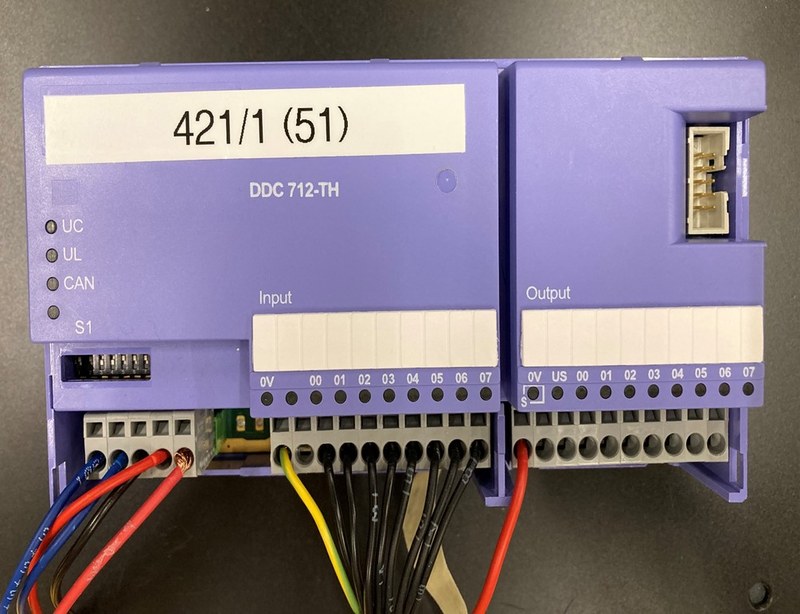
Fig 4: One of the digital input modules of the regional vehicle control system, old generation

Project details

Type
Research project
Research areas
Electrical engineering
Topics
Technologies and engineering, Digitisation and digital transformation, Electrical engineering and measurement technology, Business information technology
University
FHNW School of Engineering and Environment / Institute of Electrical Power Systems
Partner
Schweizerische Bundesbahnen (SBB)
Funding
Bundesamt für Verkehr (BAV)
Volume
2 years
Management
Silvia Mastellone

Contact

Silvia Mastellone

Prof. Dr. Silvia Mastellone

Lecturer for Signals and Systems
Phone
+41 56 202 71 76
E-Mail
silvia.mastellone@fhnw.ch

School of
Engineering and Environment FHNW University of Applied Sciences and Arts Northwestern Switzerland

  • About the School
    • FHNW School of Engineering and Environment
    • Degree Programmes
    • Continuing Education
    • Collaboration in Research and Services
  • Social Media
    • LinkedIn
    • Instagram
    • Facebook
    • TikTok
    • YouTube
  • About FHNW
    • Organisation
    • Schools
    • Locations
    • FHNW Library
    • Media Relations
  • Support
    • IT Support
    • Inside FHNW
    • Webmail
Logo FHNW - 20 Years
Logo Swiss Universities
Logo European University Association
© University of Applied Sciences and Arts Northwestern Switzerland (FHNW)
  • Data Protection
  • Imprint
  • Accessibility
  • EN
  • DE