Skip to main contentSkip to search barSkip to navigationSkip to footer
Logo of the University of Applied Sciences and Arts Northwestern Switzerland
  • DE
  • EN
  • Home
  • Degree programmes
  • Continuing education

Ten Schools One Goal

The FHNW comprises 10 schools with different specializations. Select a school to see its specific courses, study programmes and information.

Applied Psychology

Architecture, Construction and Geomatics

Art and Design

Music

Computer Science

Life Sciences

School of Education

Social Work

Engineering and Environment

Business

  • Research

    • Research fields
    • Projects
  • Updates and insights

    • News and stories
  • Events

  • Media corner

  • About the School of Engineering and Environment

    • People directory
    • Management Board
  • Institutes

    • Institute of Automation
    • Institute of Bioenergy and Resource Efficiency
    • Institute of Business Engineering
    • Institute of Electric Power Systems
    • Institute of Humanities and Social Sciences
    • Institute of Polymer Engineering
    • Institute of Mathematics and Natural Sciences
    • Institute of Polymer Nanotechnology
    • Institute of Optometry
    • Institute of Product and Production Engineering
    • Institute for Sensors and Electronics
    • Institute of Thermal and Fluid Engineering
    • Laboratories of the School of Engineering and Environment
Logo of the University of Applied Sciences and Arts Northwestern Switzerland
  • About the School
    • FHNW School of Engineering and Environment
    • Degree Programmes
    • Continuing Education
    • Collaboration in Research and Services
  • Social Media
    • LinkedIn
    • Instagram
    • Facebook
    • TikTok
    • YouTube
  • About FHNW
    • Organisation
    • Schools
    • Locations
    • FHNW Library
    • Media Relations
  • Support
    • IT Support
    • Inside FHNW
    • Webmail
  • Data Protection
  • Imprint
  • Accessibility
  • Research

    • Research fields
    • Projects
  • Updates and insights

    • News and stories
  • Events

  • Media corner

  • About the School of Engineering and Environment

    • People directory
    • Management Board
  • Institutes

    • Institute of Automation
    • Institute of Bioenergy and Resource Efficiency
    • Institute of Business Engineering
    • Institute of Electric Power Systems
    • Institute of Humanities and Social Sciences
    • Institute of Polymer Engineering
    • Institute of Mathematics and Natural Sciences
    • Institute of Polymer Nanotechnology
    • Institute of Optometry
    • Institute of Product and Production Engineering
    • Institute for Sensors and Electronics
    • Institute of Thermal and Fluid Engineering
    • Laboratories of the School of Engineering and Environment

Type a search term and search continuing education,degree programmes, events, documents and other content.

  • Engineering and Environment
  • Research and services
  • Research
  • Projects
Projects

Bipolar plates made from conductive polymer compounds, FHNW School of Engineering and Environment

School of Engineering and Environment


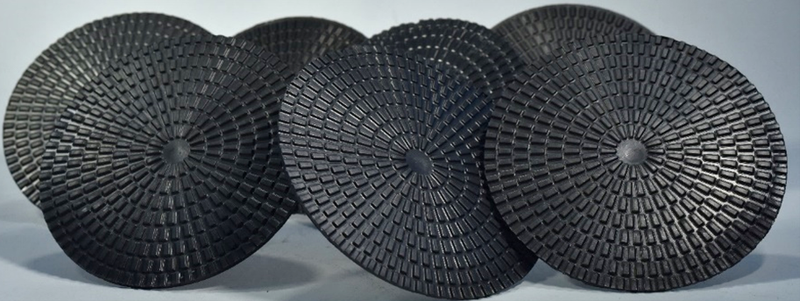
A new approach to produce innovative polymer composite bi-polar plates for polymer electrolyte membrane fuel cells
Project details

University
FHNW School of Engineering and Environment / School of Engineering and Environment, Institute of Polymer Engineering
Production of small-scale bipolar plates with variothermal compression molding

Technologies

  • Fuel cells
  • Conductive polymers
  • Bipolar plates
  • Variothermal injection compression molding

Background

Soon, most engines will be powered electrically by batteries or fuel cells. One of the major factors limiting fuel cell commercialization is the development of bipolar plates. Their characteristic requirements are a challenge for any class of material, and none yet fully meets these requirements. Bipolar plates significantly influence the gravimetric and volumetric power density of a fuel cell, typically accounting for more than 80% of the weight of a stack and nearly two thirds of the volume.

Goals

The main goal of the project has been to produce polymer composite bipolar plates for polymer electrolyte membrane fuel cells. The plates had to fulfil the following characteristics: through thickness electrical conductivity > 50 S/cm, lightweight (maximum density of 1.7 g/cm3), temperature application up to 180°C, flexural strength >25 MPa and thickness of 0.5 mm.

The plates were produced in two sizes: 80cm2 and 150cm2 both with the characteristic micro-structured channels.

Results

In the project we have successfully developed innovative polymer-based composites for fuel cell bipolar plates. The compounds developed and used showed good processability using a multi-filler approach with carbon-based fillers. This results in an electrical conductivity and flexural strength above DOE. Two different methods have been validated for the manufacturing and the up-scaling. Within these two approaches we could prove a good reproducibility of the micro channels of the bipolar plates.

Project information

Client
Tosa Swisstech, GreenGT

Execution

Institute of Polymer Engineering FHNW, KATZ Kunststoff-Ausbildungs- und -Technologiezentrum

Duration

21 months

Projektteam

Institut für Kunststofftechnik: Prof. Dr. Christian Rytka, Mariona Diaz

Panayota Tsotra (KATZ), Sawsane Queloz (Tosa Swisstech), Grégoire Gschwend (GreenGT) Jean-Marc Le Canut (GreenGT)

School of
Engineering and Environment FHNW University of Applied Sciences and Arts Northwestern Switzerland

  • About the School
    • FHNW School of Engineering and Environment
    • Degree Programmes
    • Continuing Education
    • Collaboration in Research and Services
  • Social Media
    • LinkedIn
    • Instagram
    • Facebook
    • TikTok
    • YouTube
  • About FHNW
    • Organisation
    • Schools
    • Locations
    • FHNW Library
    • Media Relations
  • Support
    • IT Support
    • Inside FHNW
    • Webmail
Logo FHNW - 20 Years
Logo Swiss Universities
Logo European University Association
© University of Applied Sciences and Arts Northwestern Switzerland (FHNW)
  • Data Protection
  • Imprint
  • Accessibility
  • DE
  • EN