Skip to main contentSkip to search barSkip to navigationSkip to footer
Logo of the University of Applied Sciences and Arts Northwestern Switzerland
  • DE
  • EN
  • Home
  • Degree programmes
  • Continuing education

Ten Schools One Goal

The FHNW comprises 10 schools with different specializations. Select a school to see its specific courses, study programmes and information.

Applied Psychology

Architecture, Construction and Geomatics

Art and Design

Music

Computer Science

Life Sciences

School of Education

Social Work

Engineering and Environment

Business

  • Research

    • Research fields
    • Projects
  • Updates and insights

    • News and stories
  • Events

  • Media corner

  • About the School of Engineering and Environment

    • People directory
    • Management Board
  • Institutes

    • Institute of Automation
    • Institute of Bioenergy and Resource Efficiency
    • Institute of Business Engineering
    • Institute of Electric Power Systems
    • Institute of Humanities and Social Sciences
    • Institute of Polymer Engineering
    • Institute of Mathematics and Natural Sciences
    • Institute of Polymer Nanotechnology
    • Institute of Optometry
    • Institute of Product and Production Engineering
    • Institute for Sensors and Electronics
    • Institute of Thermal and Fluid Engineering
    • Laboratories of the School of Engineering and Environment
Logo of the University of Applied Sciences and Arts Northwestern Switzerland
  • About the School
    • FHNW School of Engineering and Environment
    • Degree Programmes
    • Continuing Education
    • Collaboration in Research and Services
  • Social Media
    • LinkedIn
    • Instagram
    • Facebook
    • TikTok
    • YouTube
  • About FHNW
    • Organisation
    • Schools
    • Locations
    • FHNW Library
    • Media Relations
  • Support
    • IT Support
    • Inside FHNW
    • Webmail
  • Data Protection
  • Imprint
  • Accessibility
  • Research

    • Research fields
    • Projects
  • Updates and insights

    • News and stories
  • Events

  • Media corner

  • About the School of Engineering and Environment

    • People directory
    • Management Board
  • Institutes

    • Institute of Automation
    • Institute of Bioenergy and Resource Efficiency
    • Institute of Business Engineering
    • Institute of Electric Power Systems
    • Institute of Humanities and Social Sciences
    • Institute of Polymer Engineering
    • Institute of Mathematics and Natural Sciences
    • Institute of Polymer Nanotechnology
    • Institute of Optometry
    • Institute of Product and Production Engineering
    • Institute for Sensors and Electronics
    • Institute of Thermal and Fluid Engineering
    • Laboratories of the School of Engineering and Environment

Type a search term and search continuing education,degree programmes, events, documents and other content.

  • Engineering and Environment
  • Research and services
  • Research
  • Projects
Projects

Employment of novel tools for the continuous characterization of the carbonaceous fraction in ambient aerosol, FHNW School of Engineering and Environment

School of Engineering and Environment


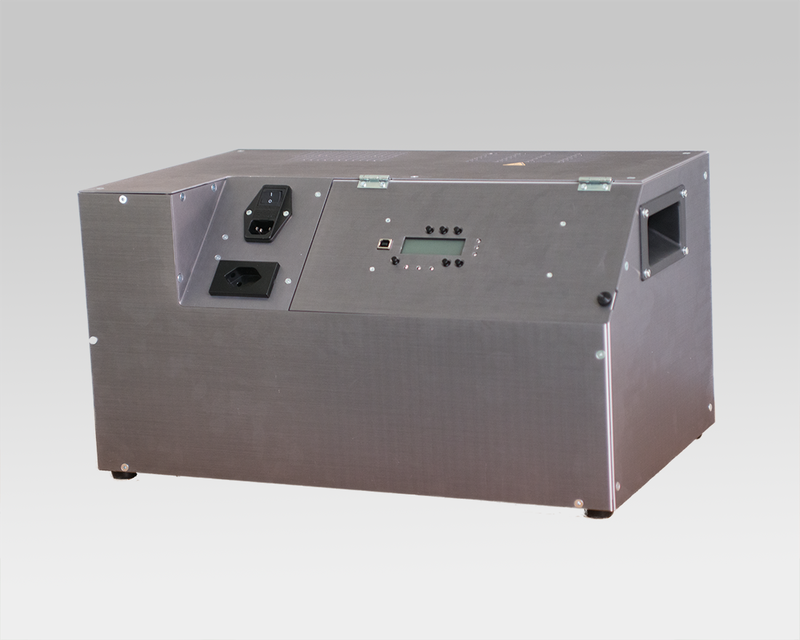
Development of a new measurement system to better understand the effects of carbonaceous aerosol on climate and public health.
Project details

Technology

Particle-bound Total Carbon Analysis

Objective

To develop a standalone carbonaceous aerosol measurement system for long-term unattended operation.

Background

Total aerosol carbon mass (TC) is a major constituent of atmospheric fine aerosol particles. However, this fraction is not yet continuously monitored at atmosphere monitoring networks like, e.g., Global Atmosphere Watch (GAW). Commercial instruments for characterization of carbonaceous aerosol are expensive and not ready for standalone operation. The lack of an appropriate measurement system is the main obstacle to improve the carbonaceous aerosol dataset. Adding a TC measurement is thus crucial to complete the existing measurement program for a comprehensive interpretation impact of aerosols on our climate. We develop a carbonaceous aerosol measurement system for long-term monitoring of TC. The instrument is a redesign of FATCAT (FAst Thermal CArbon Totalizator), a successfully tested technology for emission monitoring developed at the FHNW. The standardization and the development of a simplified continuous TC measurement method aim to fill a major gap in the GAW aerosol monitoring program and beyond! I.e., to provide an affordable method of carbonaceous aerosol measurement at monitoring sites and to assure comparability of data measured by different research groups.

Project information

Execution
FHNW Institute for Sensors and Electronics
Duration
4 Years
Funding
MeteoSchweiz / Global Atmosphere Watch (GAW) / Federal Office for the Environment FOEN
Partners
EMPA, PSI
Contact
Dr. Alejandro Keller

School of
Engineering and Environment FHNW University of Applied Sciences and Arts Northwestern Switzerland

  • About the School
    • FHNW School of Engineering and Environment
    • Degree Programmes
    • Continuing Education
    • Collaboration in Research and Services
  • Social Media
    • LinkedIn
    • Instagram
    • Facebook
    • TikTok
    • YouTube
  • About FHNW
    • Organisation
    • Schools
    • Locations
    • FHNW Library
    • Media Relations
  • Support
    • IT Support
    • Inside FHNW
    • Webmail
Logo FHNW - 20 Years
Logo Swiss Universities
Logo European University Association
© University of Applied Sciences and Arts Northwestern Switzerland (FHNW)
  • Data Protection
  • Imprint
  • Accessibility
  • DE
  • EN