Skip to main contentSkip to search barSkip to navigationSkip to footer
Logo of the University of Applied Sciences and Arts Northwestern Switzerland
  • DE
  • EN
  • Home
  • Degree programmes
  • Continuing education

Ten Schools One Goal

The FHNW comprises 10 schools with different specializations. Select a school to see its specific courses, study programmes and information.

Applied Psychology

Architecture, Construction and Geomatics

Art and Design

Music

Computer Science

Life Sciences

School of Education

Social Work

Engineering and Environment

Business

  • Research

    • Research fields
    • Projects
  • Updates and insights

    • News and stories
  • Events

  • Media corner

  • About the School of Engineering and Environment

    • People directory
    • Management Board
  • Institutes

    • Institute of Automation
    • Institute of Bioenergy and Resource Efficiency
    • Institute of Business Engineering
    • Institute of Electric Power Systems
    • Institute of Humanities and Social Sciences
    • Institute of Polymer Engineering
    • Institute of Mathematics and Natural Sciences
    • Institute of Polymer Nanotechnology
    • Institute of Optometry
    • Institute of Product and Production Engineering
    • Institute for Sensors and Electronics
    • Institute of Thermal and Fluid Engineering
    • Laboratories of the School of Engineering and Environment
Logo of the University of Applied Sciences and Arts Northwestern Switzerland
  • About the School
    • FHNW School of Engineering and Environment
    • Degree Programmes
    • Continuing Education
    • Collaboration in Research and Services
  • Social Media
    • LinkedIn
    • Instagram
    • Facebook
    • TikTok
    • YouTube
  • About FHNW
    • Organisation
    • Schools
    • Locations
    • FHNW Library
    • Media Relations
  • Support
    • IT Support
    • Inside FHNW
    • Webmail
  • Data Protection
  • Imprint
  • Accessibility
  • Research

    • Research fields
    • Projects
  • Updates and insights

    • News and stories
  • Events

  • Media corner

  • About the School of Engineering and Environment

    • People directory
    • Management Board
  • Institutes

    • Institute of Automation
    • Institute of Bioenergy and Resource Efficiency
    • Institute of Business Engineering
    • Institute of Electric Power Systems
    • Institute of Humanities and Social Sciences
    • Institute of Polymer Engineering
    • Institute of Mathematics and Natural Sciences
    • Institute of Polymer Nanotechnology
    • Institute of Optometry
    • Institute of Product and Production Engineering
    • Institute for Sensors and Electronics
    • Institute of Thermal and Fluid Engineering
    • Laboratories of the School of Engineering and Environment

Type a search term and search continuing education,degree programmes, events, documents and other content.

  • Engineering and Environment
  • Research and services
  • Research
  • Projects
Projects

Power electronics for variable power control of boilers, FHNW School of Engineering and Environment

School of Engineering and Environment


With the help of a silicon controlled rectifier, the power of a hot water boiler can be adjusted precisely according to the current excess PV output power.

Project details

University
FHNW School of Engineering and Environment / School of Engineering and Environment

Background

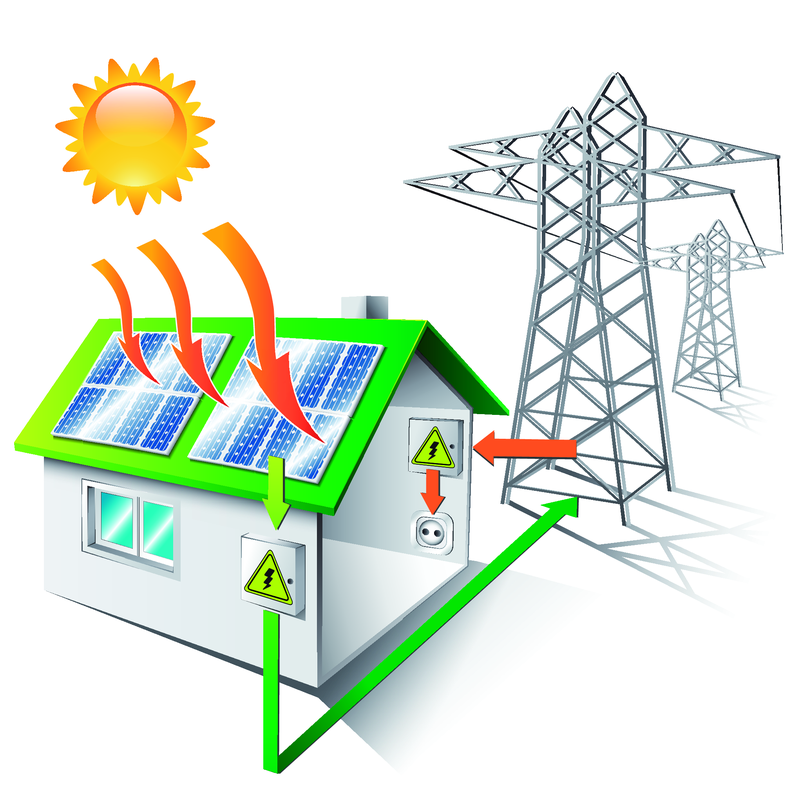
In the case of self-consumption controls, the excess energy from the own photovoltaic system is used to heat the boiler, for example. Since the heating element draws a constant power, the power consumption often exceeds the value of the excess power produced. Ideally, the boiler should consume exactly the excess power which otherwise would be exported to the grid. The output of the boiler can be flexibly controlled with a silicon controlled rectifier. However, the question arises what perturbations appear by such a power converter and whether the relevant standards can be met.
Goals

  • Research and evaluation of such converters available on the market, taking into account the standards and specifications.
  • Experimental setup with the evaluated device in the institute's smart grid laboratory.
  • Proof of function and compliance with the regulations for the planned use by means of measurement series and simulations.
  • Control of the converter via an interface in order to be able to specify the heating power from 0 to 100%.

Results

The stated project goals were successfully completed. With a silicon controlled rectifier and the corresponding control method, where the operating point can be set via an interface, it is possible to feed the excess produced instantaneous output power to a hot water storage tank while complying with the applicable standards.

Project information

Execution

FHNW Institute of Electric Power Systems

Duration

3 months

Funding

Service contract without funding

Project team

Tobias Strittmatter (Projektleiter), Thomas Tarnowski, Felix Jenni

School of
Engineering and Environment FHNW University of Applied Sciences and Arts Northwestern Switzerland

  • About the School
    • FHNW School of Engineering and Environment
    • Degree Programmes
    • Continuing Education
    • Collaboration in Research and Services
  • Social Media
    • LinkedIn
    • Instagram
    • Facebook
    • TikTok
    • YouTube
  • About FHNW
    • Organisation
    • Schools
    • Locations
    • FHNW Library
    • Media Relations
  • Support
    • IT Support
    • Inside FHNW
    • Webmail
Logo FHNW - 20 Years
Logo Swiss Universities
Logo European University Association
© University of Applied Sciences and Arts Northwestern Switzerland (FHNW)
  • Data Protection
  • Imprint
  • Accessibility
  • DE
  • EN