Skip to main contentSkip to search barSkip to navigationSkip to footer
Logo of the University of Applied Sciences and Arts Northwestern Switzerland
  • DE
  • EN
  • Home
  • Degree programmes
  • Continuing education

Ten Schools One Goal

The FHNW comprises 10 schools with different specializations. Select a school to see its specific courses, study programmes and information.

Applied Psychology

Architecture, Construction and Geomatics

Art and Design

Business

Computer Science

Engineering and Environment

Life Sciences

Music

School of Education

Social Work

  • Research

    • Research fields
    • Projects
  • International

    • Outgoing Students
    • Incoming Students
  • Updates and insights

    • News and stories
  • Events

  • Media corner

  • About the School of Engineering and Environment

    • People directory
    • Management Board
  • Institutes

    • Institute of Automation
    • Institute of Bioenergy and Resource Efficiency
    • Institute of Business Engineering
    • Institute of Electric Power Systems
    • Institute of Technology and Society
    • Institute of Polymer Engineering
    • Institute of Applied Mathematics and Physics
    • Institute of Polymer Nanotechnology
    • Institute of Optometry
    • Institute of Product and Production Engineering
    • Institute for Sensors and Electronics
    • Institute of Thermal and Fluid Engineering
    • Laboratories of the School of Engineering and Environment
Logo of the University of Applied Sciences and Arts Northwestern Switzerland
  • About the School
    • FHNW School of Engineering and Environment
    • Degree Programmes
    • Continuing Education
    • Collaboration in Research and Services
  • Social Media
    • LinkedIn
    • Instagram
    • Facebook
    • TikTok
    • YouTube
  • About FHNW
    • Organisation
    • Schools
    • Locations
    • FHNW Library
    • Media Relations
  • Support
    • IT Support
    • Inside FHNW
    • Webmail
  • Data Protection
  • Imprint
  • Accessibility
  • Research

    • Research fields
    • Projects
  • International

    • Outgoing Students
    • Incoming Students
  • Updates and insights

    • News and stories
  • Events

  • Media corner

  • About the School of Engineering and Environment

    • People directory
    • Management Board
  • Institutes

    • Institute of Automation
    • Institute of Bioenergy and Resource Efficiency
    • Institute of Business Engineering
    • Institute of Electric Power Systems
    • Institute of Technology and Society
    • Institute of Polymer Engineering
    • Institute of Applied Mathematics and Physics
    • Institute of Polymer Nanotechnology
    • Institute of Optometry
    • Institute of Product and Production Engineering
    • Institute for Sensors and Electronics
    • Institute of Thermal and Fluid Engineering
    • Laboratories of the School of Engineering and Environment

Type a search term and search continuing education,degree programmes, events, documents and other content.

  • Engineering and Environment
  • Research and services
  • Research
  • Projects
Projects

Quality enhancement through digitalisation, FHNW School of Engineering and Environment

School of Engineering and Environment


  • Project details
  • Contact

Using digital technologies, Biotronik significantly increases the quality of its products.
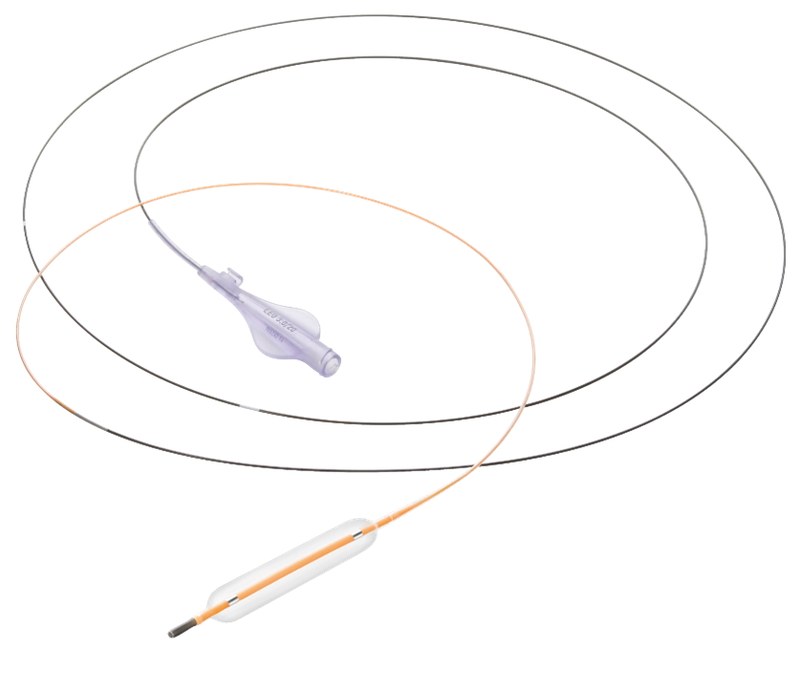
A balloon catheter developed by Biotronik [Source: Biotronik AG].

Technology

  • Industry 4.0
  • medical technology
  • Extrusion
  • Digital twin

Background

The production of catheter balloons at Biotronik runs in a multi-stage process, whereby the individual process steps are carried out largely independently of each other. No digital data evaluation or control systems were used.

Due to the lack of integration of the individual process steps, irregularities could not be detected sufficiently well and suitable intervention in the process was only possible to a limited extent. As a result, catheter balloons of very different quality were produced, including those of poor quality. The testing effort and waste was high and impaired the economic efficiency of the balloon production.

Goals

The main objective was to bring together the production steps in the manufacture of catheter balloons and to record a complete set of measured values for each manufactured catheter balloon. This makes it possible to easily monitor and optimize production digitally.

Production should be optimized across all processes regarding the properties of the products and production efficiency. For this purpose, a software application should be developed that centrally collects all data and makes it easily accessible for visualization, optimization, and prediction.
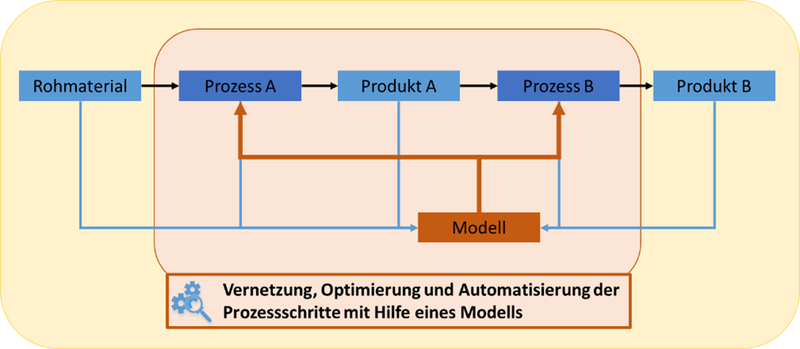
Newly developed production scheme of the digitized production of balloon catheters.

Results

Throughout the entire process, modules for automatic data acquisition were installed, which capture all relevant data of a single balloon. On the one hand, this made it possible to investigate isolated interrelationships from a plastics technology perspective, and on the other hand, to develop and implement a flexible and adaptive, model-based end-to-end optimization approach. In the course of the project, it was thus possible to specifically collect new data to improve the model.

With the help of this approach, the scrap rate as well as the setup time can now be consistently reduced, and catheter balloons can be systematically produced with a more consistent and better quality.
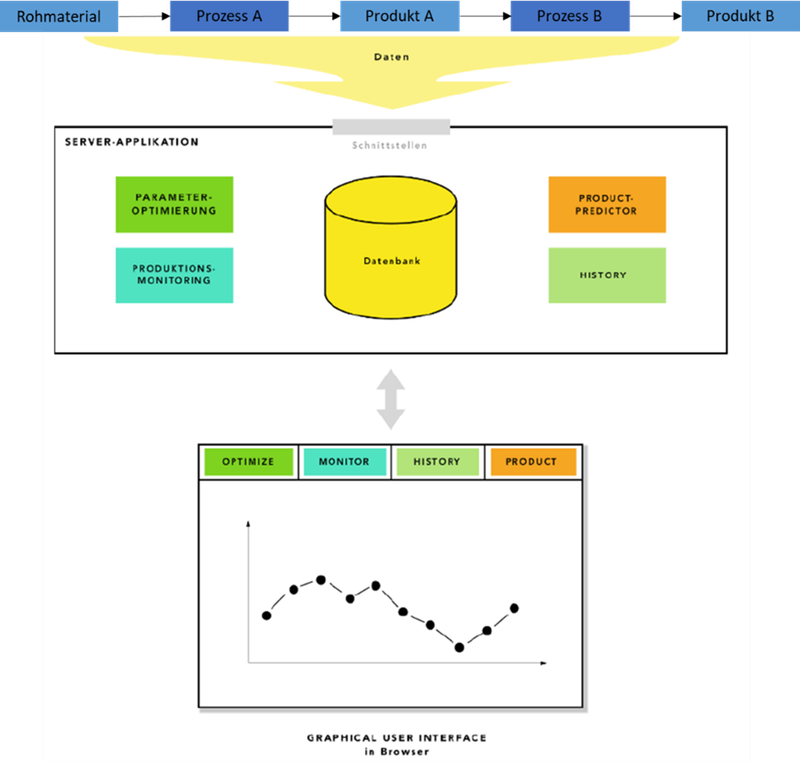
Quality improvement through digitalization of balloon catheter production.

Project details

Type
Research project
University
FHNW School of Engineering and Environment / Institute of Data Science, Institute of Polymer Engineering, Institute of Interactive Technologies
Partner
Biotronik AG
Funding
Innosuisse
Running time
2 years
Collaboration
FHNW Institute of Polymer Engineering: Stephanie Wegmann, Alex Massenbauer, Prof. Dr. Christian Rytka

FHNW Institute for Data Science: Simon Beck, Wai Tsun Chen, Prof. Dr. Michael Graber, Prof. Dr. Daniel Perruchoud

FHNW Institute for Interactive Technologies: Cédric Merz, Mia Braunwalder, Prof. Dr. Doris Agotai

Biotronik AG: Martial Willimann, Metie Morina, Sascha Spitzenberg, Franz Frison, Beat Furrer

Contact
Christian Rytka

Prof. Dr. Christian Rytka

Group Leader Polymer Processing and Sustainability
Phone
+41 56 202 73 81 (Direct)
E-Mail
christian.rytka@fhnw.ch

School of
Engineering and Environment FHNW University of Applied Sciences and Arts Northwestern Switzerland

  • About the School
    • FHNW School of Engineering and Environment
    • Degree Programmes
    • Continuing Education
    • Collaboration in Research and Services
  • Social Media
    • LinkedIn
    • Instagram
    • Facebook
    • TikTok
    • YouTube
  • About FHNW
    • Organisation
    • Schools
    • Locations
    • FHNW Library
    • Media Relations
  • Support
    • IT Support
    • Inside FHNW
    • Webmail
Logo FHNW - 20 Years
Logo Swiss Universities
Logo European University Association
© University of Applied Sciences and Arts Northwestern Switzerland (FHNW)
  • Data Protection
  • Imprint
  • Accessibility
  • EN
  • DE