Skip to main contentSkip to search barSkip to navigationSkip to footer
Logo of the University of Applied Sciences and Arts Northwestern Switzerland
  • DE
  • EN
  • Home
  • Degree programmes
  • Continuing education

Ten Schools One Goal

The FHNW comprises 10 schools with different specializations. Select a school to see its specific courses, study programmes and information.

Applied Psychology

Architecture, Construction and Geomatics

Art and Design

Music

Computer Science

Life Sciences

School of Education

Social Work

Engineering and Environment

Business

  • Research

    • Research fields
    • Projects
  • Updates and insights

    • News and stories
  • Events

  • Media corner

  • About the School of Engineering and Environment

    • People directory
    • Management Board
  • Institutes

    • Institute of Automation
    • Institute of Bioenergy and Resource Efficiency
    • Institute of Business Engineering
    • Institute of Electric Power Systems
    • Institute of Humanities and Social Sciences
    • Institute of Polymer Engineering
    • Institute of Mathematics and Natural Sciences
    • Institute of Polymer Nanotechnology
    • Institute of Optometry
    • Institute of Product and Production Engineering
    • Institute for Sensors and Electronics
    • Institute of Thermal and Fluid Engineering
    • Laboratories of the School of Engineering and Environment
Logo of the University of Applied Sciences and Arts Northwestern Switzerland
  • About the School
    • FHNW School of Engineering and Environment
    • Degree Programmes
    • Continuing Education
    • Collaboration in Research and Services
  • Social Media
    • LinkedIn
    • Instagram
    • Facebook
    • TikTok
    • YouTube
  • About FHNW
    • Organisation
    • Schools
    • Locations
    • FHNW Library
    • Media Relations
  • Support
    • IT Support
    • Inside FHNW
    • Webmail
  • Data Protection
  • Imprint
  • Accessibility
  • Research

    • Research fields
    • Projects
  • Updates and insights

    • News and stories
  • Events

  • Media corner

  • About the School of Engineering and Environment

    • People directory
    • Management Board
  • Institutes

    • Institute of Automation
    • Institute of Bioenergy and Resource Efficiency
    • Institute of Business Engineering
    • Institute of Electric Power Systems
    • Institute of Humanities and Social Sciences
    • Institute of Polymer Engineering
    • Institute of Mathematics and Natural Sciences
    • Institute of Polymer Nanotechnology
    • Institute of Optometry
    • Institute of Product and Production Engineering
    • Institute for Sensors and Electronics
    • Institute of Thermal and Fluid Engineering
    • Laboratories of the School of Engineering and Environment

Type a search term and search continuing education,degree programmes, events, documents and other content.

  • Engineering and Environment
  • Research and services
  • Research
  • Projects
Projects

Reusability of blister packaging from the medical technology industry, FHNW School of Engineering and Environment

School of Engineering and Environment


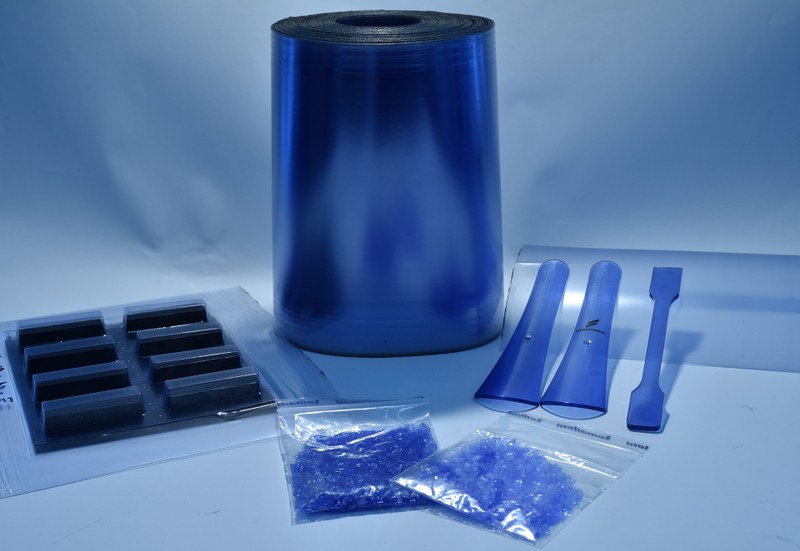
To save raw materials and protect our environment, it is necessary to return plastic waste to the economic cycle by recycling.
Project details

University
FHNW School of Engineering and Environment / School of Engineering and Environment
Recycling of medical packaging into new extruded, thermoformed and injection-molded products

Technologies

  • Medical technology
  • Recycling
  • PET
  • Packaging
  • Circular economy

Background

Straumann Holding AG, based in Basel, Switzerland, is an internationally active company providing solutions for implantology and restorative and regenerative dentistry. Straumann researches and develops implants, instruments and tissue regeneration products for tooth replacement solutions and tooth loss prevention with clinics, research institutions and universities.

In the production facilities, various medical products are manufactured, then packed in blister packs and shipped to customers (dental clinics, dental practices, dental laboratories). After the blister sheets are sealed, they are cut into individual blisters, generating around 30 tons of waste per year from the cutting process in production. The Blister Sheets are a 3-layer multilayer film (PET-GAG) made of polyethylene terephthalate (PET) as the core layer and a glycol-modified PET as the top and counter layer. As there are other materials (e.g. HDPE sealing sheets) and adhesives in the blister sheets apart from PET, the blister waste cannot be sent directly for PET recycling. The blister waste generated during production and by customers is currently thermally recycled.

Goals

As part of the student project, an investigation was carried out on the blister waste produced by Straumann AG.

The suitability of recycling the blister waste was investigated, and various processing procedures and analyses were carried out to determine the characteristic values.

The influence of the processing of the blister sheets without the addition of additives was investigated. Various manufacturing processes were tested to obtain information on the processability of the PET-GAG and the properties obtained. The evaluation of the characteristic values was carried out with the aid of thermal, mechanical and rheological analyses.

A data sheet was compiled from the various processing methods and analyses in order to find suitable applications for the recycled PET-GAG material.

Results

The investigation of blister packaging from the medical technology sector has shown that the rPET-GAG material can be reused with various processing methods. The suitability of the material regarding processing was investigated in detail. The rPET-GAG can be reused to produce consumer goods and packaging material by injection molding or film extrusion with subsequent thermoforming process. This blister waste is a high quality and low contaminated material that should be recycled in the future.

Project information

Client
Straumann Holding AG

Execution

Institute of Polymer Engineering FHNW, within the framework of project 5 and bachelor thesis work

Duration

12 months

Project team

Straumann Holding AG: Marcel KunzInstitute for Polymer Technology: Prof. Dr. Christian Rytka, Prof. Dr. Jürg De Pietro, Stephanie Wegmann, Alex Massenbauer, Thierry Thommen

School of
Engineering and Environment FHNW University of Applied Sciences and Arts Northwestern Switzerland

  • About the School
    • FHNW School of Engineering and Environment
    • Degree Programmes
    • Continuing Education
    • Collaboration in Research and Services
  • Social Media
    • LinkedIn
    • Instagram
    • Facebook
    • TikTok
    • YouTube
  • About FHNW
    • Organisation
    • Schools
    • Locations
    • FHNW Library
    • Media Relations
  • Support
    • IT Support
    • Inside FHNW
    • Webmail
Logo FHNW - 20 Years
Logo Swiss Universities
Logo European University Association
© University of Applied Sciences and Arts Northwestern Switzerland (FHNW)
  • Data Protection
  • Imprint
  • Accessibility
  • DE
  • EN