With precise sensor technology for healthy soil and safe wheat: In the EU project WHEATWATCHER, the FHNW is developing a smart monitoring system for sustainable agriculture. The goal is to intelligently combine environmental protection, resource efficiency, and food security.
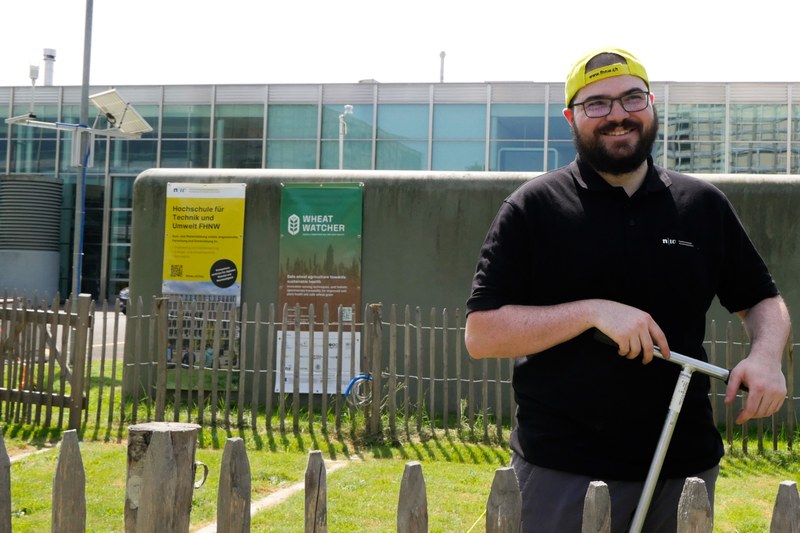
Food security, resource conservation, and environmental protection are among the greatest challenges of our time. Climate change, increasing weather extremes, and a growing global population demand innovative solutions in agriculture. In the international research project WHEATWATCHER, FHNW is working together with European partners to develop an intelligent soil monitoring system that enables sustainable and efficient wheat cultivation. Through precise sensor data, automated evaluations, and practice-oriented recommendations, the project makes a valuable contribution to food security, the reduction of environmental impacts, and the adaptation of agriculture to regional needs.
Background
For a long time, the use of synthetic fertilizers and pesticides was considered a guarantee for high yields. Today, we know that over-fertilization and pollutants not only damage the soil but also pose risks to the environment and human health. At the same time, farmers are under increasing pressure to manage their land in a climate-resilient, sustainable, and efficient way. Modern sensor technologies offer new opportunities: through continuous monitoring, soil and plant conditions can be accurately analyzed and agronomic measures optimally adapted.
Objectives
The WHEATWATCHER project aims to develop a holistic digital soil monitoring system that:
measures soil quality in real time (e.g. moisture, nutrient content),
evaluates biological and chemical factors affecting plant health,
ensures full traceability of food products from the field to the mill,
generates recommendations for soil management using machine learning and automated mapping,
and maximizes user-friendliness through a mobile app and locally adapted systems.
FHNW is responsible for developing the stationary sensor technology, including wireless data transmission and integration into a European data network.
Results
A first field lab has been set up on the FHNW campus in Brugg-Windisch, where a prototype is currently being tested. The sensors are reliably capturing environmental parameters under real-world conditions. The next step will be installing the system on test fields in Belgium, Germany, Greece, and Poland. The goal is to develop recommendations for environmentally friendly, resource-efficient agriculture – with direct benefits for farmers, policymakers, and the environment.
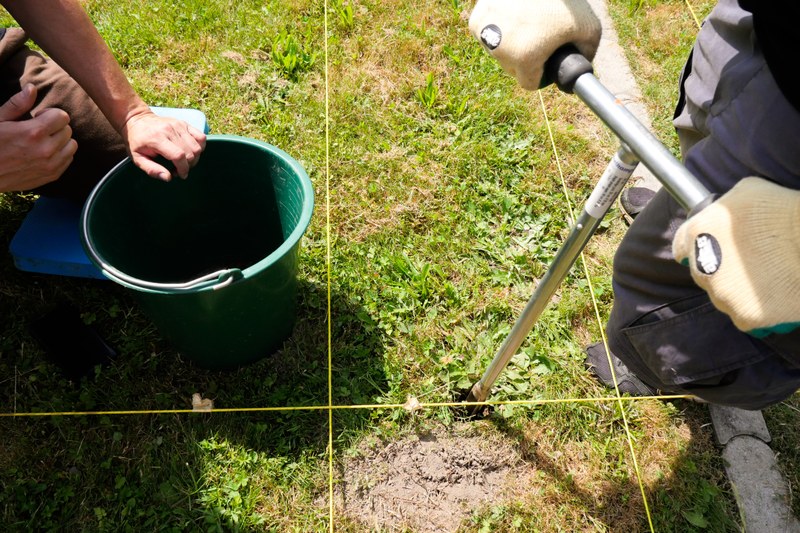
Sensor hole 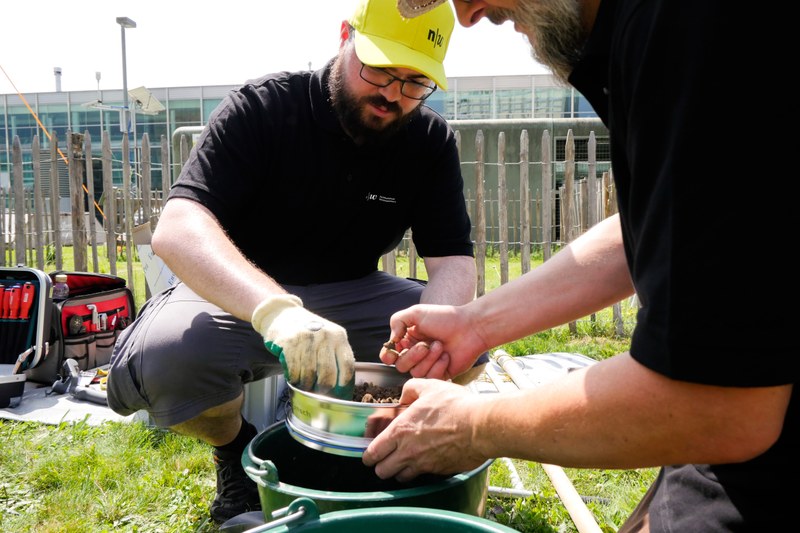
Sieve the soil 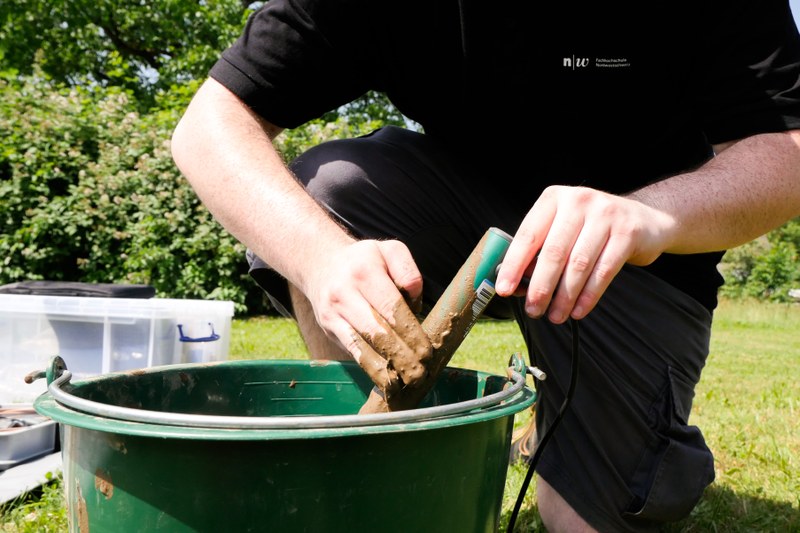
Cover the sensor with soil 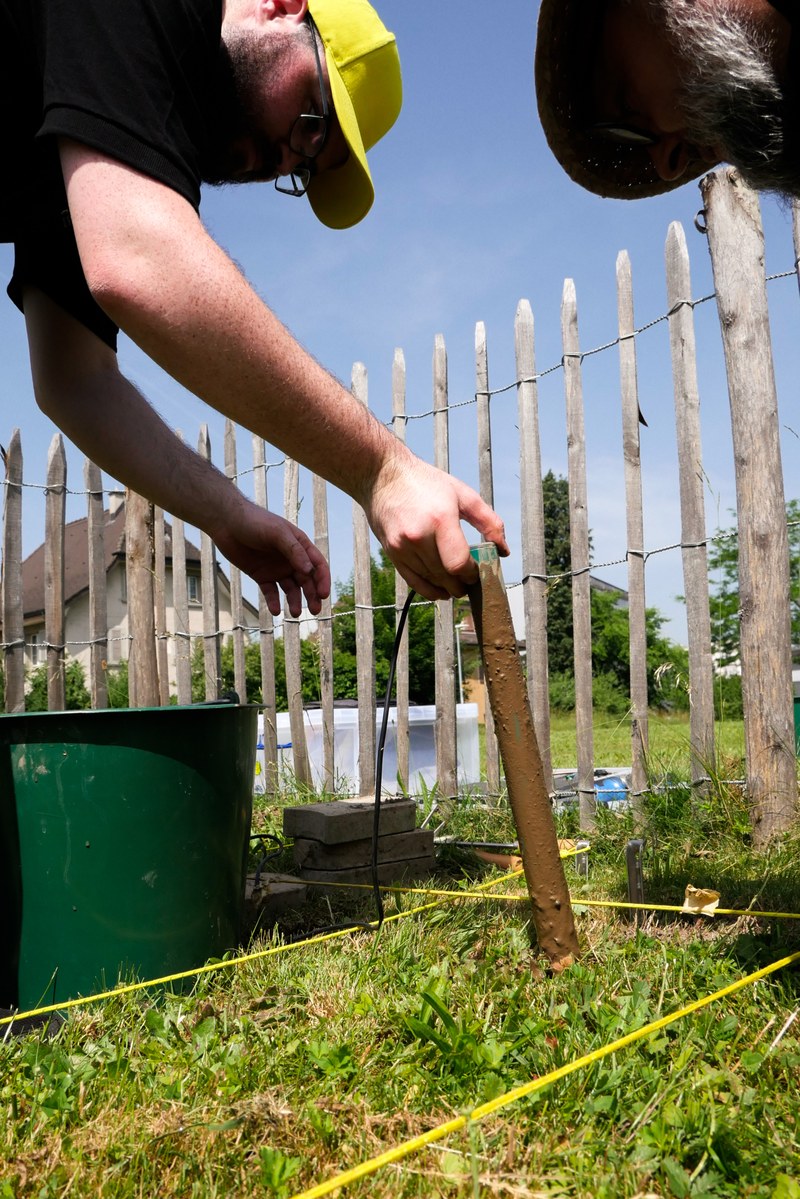
Insert the sensor into the ground 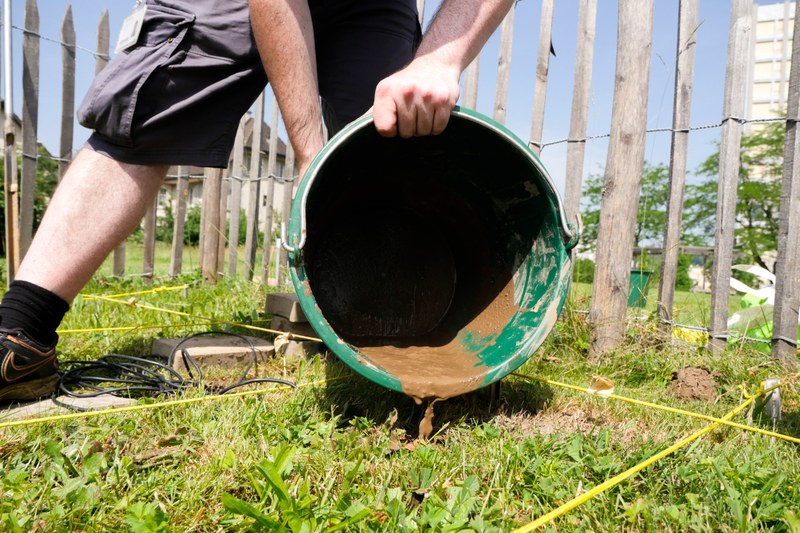
Pour soil over the sensor
Outlook
FHNW aims to translate the insights gained into practical devices and services for agriculture. In cooperation with regional farms, the project will develop solutions tailored to local needs – for example, a system that displays a field's current water requirements via a smartphone app. In doing so, the project contributes not only to European food security but also to the sustainable transformation of agriculture in Switzerland and beyond.
Press Releases about the Project
Sensoren von Aargauer Forschenden helfen griechischen Landwirten, Wasser zu sparen
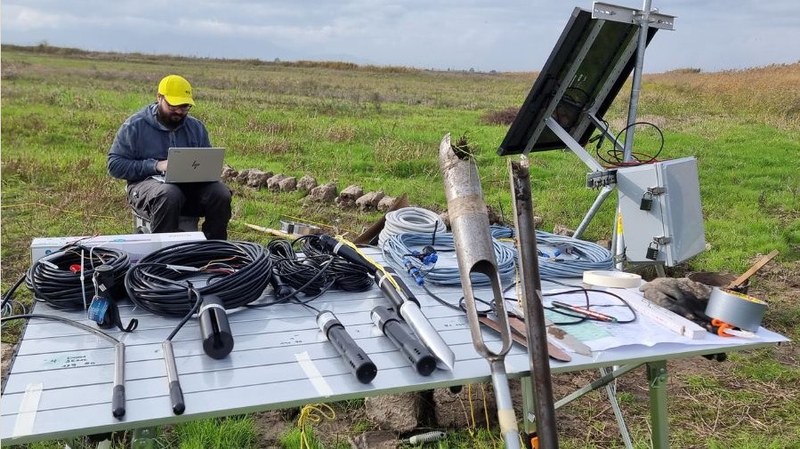
Stationäre Sensoren gehen am griechischen Pilotstandort in Betrieb
Further Information
WHEATWATCHER
Project details
- Type
- Research project
- Research field
- Electrical engineering
- Topics
- Electrical engineering and measurement technology, Environment and sustainability, Environmental technology and recycling
- School
- FHNW School of Engineering and Environment / Institute for Sensors and Electronics
- Partners
- HORIZON-MISS-2023-SOIL-01-03
- Funding
- Horizon Europe
- Duration
- 3 years
- Project lead
- Prof. Dr. Gerd Simons
- Team
- Luca Colombi (Research Assistant), Prof. Dominique Kunz (Embedded Systems), Stefan Muhr (Electronics technician)
Contact

Prof. Dr. Gerd Simons
- Phone
- +41 56 202 75 68 (Direct)
- gerd.simons@fhnw.ch