Skip to main contentSkip to search barSkip to navigationSkip to footer
Logo of the University of Applied Sciences and Arts Northwestern Switzerland
  • DE
  • EN
  • Home
  • Degree programmes
  • Continuing education

Ten Schools One Goal

The FHNW comprises 10 schools with different specializations. Select a school to see its specific courses, study programmes and information.

Applied Psychology

Architecture, Construction and Geomatics

Art and Design

Music

Computer Science

Life Sciences

School of Education

Social Work

Engineering and Environment

Business

  • Research

    • Research fields
    • Projects
  • Updates and insights

    • News and stories
  • Events

  • Media corner

  • About the School of Engineering and Environment

    • People directory
    • Management Board
  • Institutes

    • Institute of Automation
    • Institute of Bioenergy and Resource Efficiency
    • Institute of Business Engineering
    • Institute of Electric Power Systems
    • Institute of Humanities and Social Sciences
    • Institute of Polymer Engineering
    • Institute of Mathematics and Natural Sciences
    • Institute of Polymer Nanotechnology
    • Institute of Optometry
    • Institute of Product and Production Engineering
    • Institute for Sensors and Electronics
    • Institute of Thermal and Fluid Engineering
    • Laboratories of the School of Engineering and Environment
Logo of the University of Applied Sciences and Arts Northwestern Switzerland
  • About the School
    • FHNW School of Engineering and Environment
    • Degree Programmes
    • Continuing Education
    • Collaboration in Research and Services
  • Social Media
    • LinkedIn
    • Instagram
    • Facebook
    • TikTok
    • YouTube
  • About FHNW
    • Organisation
    • Schools
    • Locations
    • FHNW Library
    • Media Relations
  • Support
    • IT Support
    • Inside FHNW
    • Webmail
  • Data Protection
  • Imprint
  • Accessibility
  • Research

    • Research fields
    • Projects
  • Updates and insights

    • News and stories
  • Events

  • Media corner

  • About the School of Engineering and Environment

    • People directory
    • Management Board
  • Institutes

    • Institute of Automation
    • Institute of Bioenergy and Resource Efficiency
    • Institute of Business Engineering
    • Institute of Electric Power Systems
    • Institute of Humanities and Social Sciences
    • Institute of Polymer Engineering
    • Institute of Mathematics and Natural Sciences
    • Institute of Polymer Nanotechnology
    • Institute of Optometry
    • Institute of Product and Production Engineering
    • Institute for Sensors and Electronics
    • Institute of Thermal and Fluid Engineering
    • Laboratories of the School of Engineering and Environment

Type a search term and search continuing education,degree programmes, events, documents and other content.

  • Engineering and Environment
  • Research and services
  • Research
  • Projects
Projects

SHINE: Swiss Hybrid Inverter, FHNW School of Engineering and Environment

School of Engineering and Environment


An efficient and cost-effective X-Hybrid inverter for EV is realized by combining Silicon-Carbide (SiC) and Silicon (Si) devices. The semiconductor devices design is optimized for cars with different power range and advanced diagnostics solutions will be provided for a maximal converter reliability.

Project details

University
FHNW School of Engineering and Environment / School of Engineering and Environment

Background

One of the twenty-first century most pressing challenges is an alternative, clean, efficient and reliable urban transport system. Electric vehicles, equipped with artificial intelligence, advanced control and communications, can improve energy efficiency, safety and reliability as well as cost effectiveness. The scope of the project is to address the energy challenge for the automotive sector by enabling reduction of CO2 emission, improving the efficiency and reliability of a wide range of EV/HEV at a contained cost to enable the adoption of EV on a large scale. Within this vision, we focus our research towards developing one of the next generation power electronics converters for transportation: a Si IGBT/SiC MOSFET cross hybrid Switch inverter.
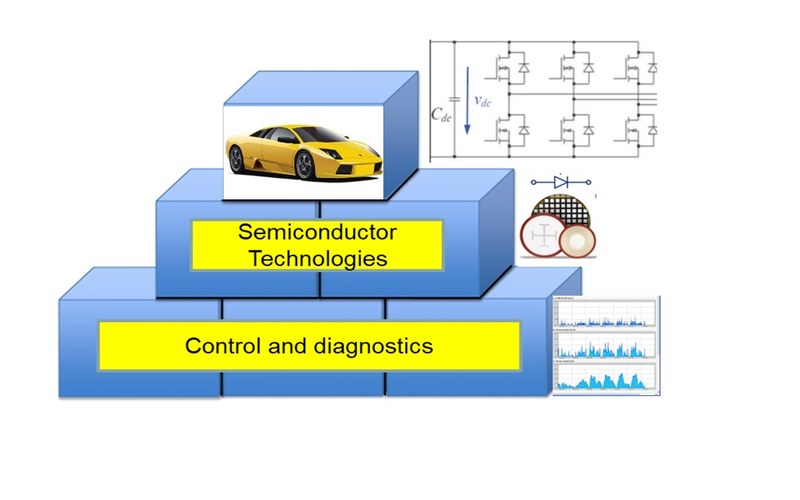
Figure 1. An holistic system level concept from the physical semiconductors to their operation and diagnostics

Goals

  • Realize design rules for the hybrid inverter based on requirements for a large spectrum of EV spanning several power ranges.
  • Develop controllers for the optimal operation of the hybrid converter.
  • Develop simulation platforms to enable performance optimization and failure mechanism understanding of the power electronic hybrid inverter system.
  • Develop in-situ and ex-situ digitalized fault detection methodologies to enhance safety and reliability of the power electronic system.

Results

  • Modular simulation platforms of the power train, from devices to system level.
  • Digitalized power electronics diagnostic system.
  • Control rules for the hybrid inverter.
  • 1200 V XS-cross hybrid inverter prototype.
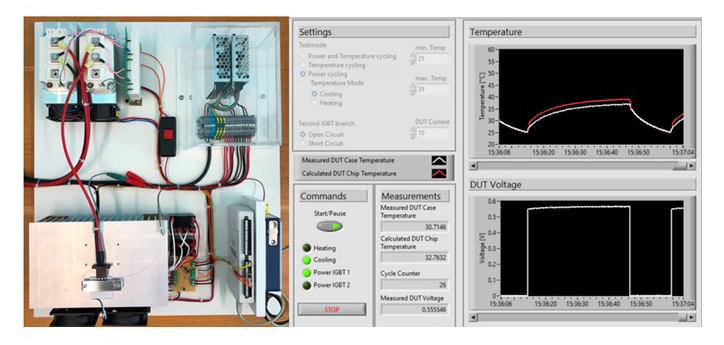
Figure 2. Computer control interface showing the different operation possibilities and power/temperature cycling equipment.
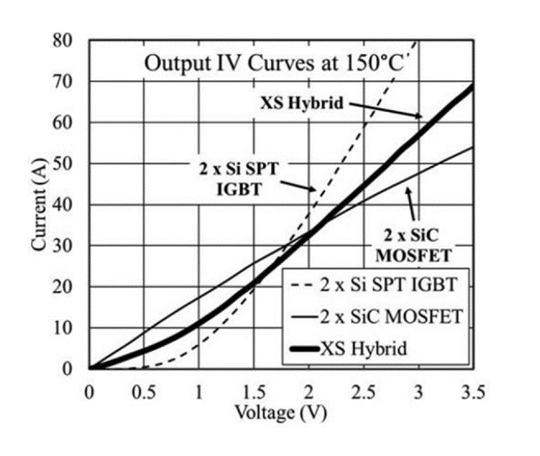
Figure 3. Hybrid switch and its output characteristics  ( Ref M. Rahimo et al., "Characterization of a Silicon IGBT and Silicon Carbide MOSFET Cross-Switch Hybrid," in IEEE Transactions on Power Electronics, vol. 30, no. 9, pp. 4638-4642, Sept. 2015, doi: 10.1109/TPEL.2015.2402595.)
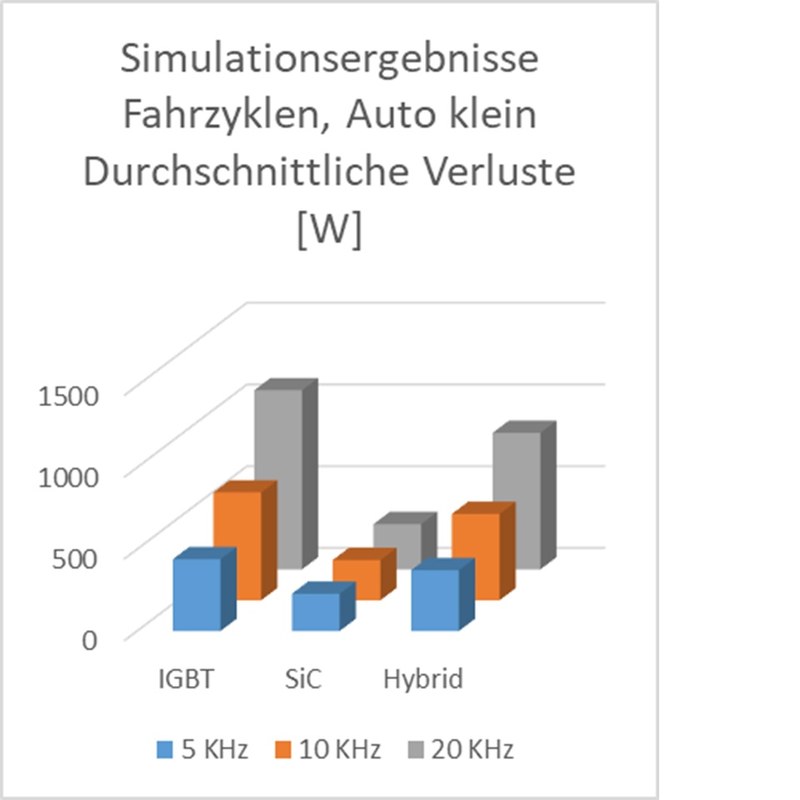
Figure 4: Preliminary results: efficiency improvement at lower cost

Project information

Client

MTAL GmbH

Execution

FHNW Institute of Electric Power Systems

Duration

4 years

Funding

Swiss Federal Office of Energy

Project team

Prof. Dr. Renato Minamisawa, Prof Dr. Silvia Mastellone, Tanya Koottungal

School of
Engineering and Environment FHNW University of Applied Sciences and Arts Northwestern Switzerland

  • About the School
    • FHNW School of Engineering and Environment
    • Degree Programmes
    • Continuing Education
    • Collaboration in Research and Services
  • Social Media
    • LinkedIn
    • Instagram
    • Facebook
    • TikTok
    • YouTube
  • About FHNW
    • Organisation
    • Schools
    • Locations
    • FHNW Library
    • Media Relations
  • Support
    • IT Support
    • Inside FHNW
    • Webmail
Logo FHNW - 20 Years
Logo Swiss Universities
Logo European University Association
© University of Applied Sciences and Arts Northwestern Switzerland (FHNW)
  • Data Protection
  • Imprint
  • Accessibility
  • DE
  • EN