Skip to main contentSkip to search barSkip to navigationSkip to footer
Logo of the University of Applied Sciences and Arts Northwestern Switzerland
  • DE
  • EN
  • Home
  • Degree programmes
  • Continuing education

Ten Schools One Goal

The FHNW comprises 10 schools with different specializations. Select a school to see its specific courses, study programmes and information.

Applied Psychology

Architecture, Construction and Geomatics

Art and Design

Music

Computer Science

Life Sciences

School of Education

Social Work

Engineering and Environment

Business

  • Research

    • Research fields
    • Projects
  • Updates and insights

    • News and stories
  • Events

  • Media corner

  • About the School of Engineering and Environment

    • People directory
    • Management Board
  • Institutes

    • Institute of Automation
    • Institute of Bioenergy and Resource Efficiency
    • Institute of Business Engineering
    • Institute of Electric Power Systems
    • Institute of Humanities and Social Sciences
    • Institute of Polymer Engineering
    • Institute of Mathematics and Natural Sciences
    • Institute of Polymer Nanotechnology
    • Institute of Optometry
    • Institute of Product and Production Engineering
    • Institute for Sensors and Electronics
    • Institute of Thermal and Fluid Engineering
    • Laboratories of the School of Engineering and Environment
Logo of the University of Applied Sciences and Arts Northwestern Switzerland
  • About the School
    • FHNW School of Engineering and Environment
    • Degree Programmes
    • Continuing Education
    • Collaboration in Research and Services
  • Social Media
    • LinkedIn
    • Instagram
    • Facebook
    • TikTok
    • YouTube
  • About FHNW
    • Organisation
    • Schools
    • Locations
    • FHNW Library
    • Media Relations
  • Support
    • IT Support
    • Inside FHNW
    • Webmail
  • Data Protection
  • Imprint
  • Accessibility
  • Research

    • Research fields
    • Projects
  • Updates and insights

    • News and stories
  • Events

  • Media corner

  • About the School of Engineering and Environment

    • People directory
    • Management Board
  • Institutes

    • Institute of Automation
    • Institute of Bioenergy and Resource Efficiency
    • Institute of Business Engineering
    • Institute of Electric Power Systems
    • Institute of Humanities and Social Sciences
    • Institute of Polymer Engineering
    • Institute of Mathematics and Natural Sciences
    • Institute of Polymer Nanotechnology
    • Institute of Optometry
    • Institute of Product and Production Engineering
    • Institute for Sensors and Electronics
    • Institute of Thermal and Fluid Engineering
    • Laboratories of the School of Engineering and Environment

Type a search term and search continuing education,degree programmes, events, documents and other content.

  • Engineering and Environment
  • Research and services
  • Research
  • Projects
Projects

Smart Scheduling Recommender System, FHNW School of Engineering and Environment

School of Engineering and Environment


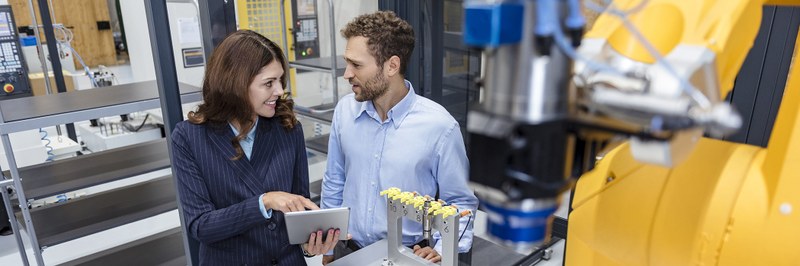
The FHNW Institute of Business Engineering is developing, in collaboration with industry partners, a Smart Scheduling Recommender System for process-centric production planning in medium sized enterprises.

topbild-ibe.jpg

Project details

University
FHNW School of Engineering and Environment / School of Engineering and Environment, Institute of Business Engineering

Objective

Proof-of-concept for the powerful combination of process mining and process simulation algorithms in a Smart Scheduling Recommender System to optimize the planning process and to achieve significantly shorter throughput times with the application of a digital twin.

Background

Switzerland's mechanical and electrical engineering industry (MEM industry) generate 7.1% (2018) of Switzerland’s GDP, thus occupying a key position in the country's economy. With exports accounting for 79% of their output, the MEM industry are highly export-oriented.

In the Swiss MEM industry, usually ERP modules for scheduling processes based on heuristics are applied in the production planning, which, often without load-dependent order control functionality, are designed to achieve high machine capacity utilization and to keep the safety stocks for final products. In connection with fast-track orders and open production orders (work in progress, overdue production orders), throughput times are constantly increasing due to long order queues at a flat and maximum achievable machine capacity utilization level. The result is cumulative fluctuating forecasts and subsequent troubleshooting, which can lead to situations that limit customer satisfaction and competitiveness.

Result

The aim of the research project is to show how the throughput times in production can be significantly reduced and thus increased flexibility and responsiveness as well as a higher readiness to deliver for medium-sized companies in the MEM industry. Existing heuristic planning algorithms are expanded by a Smart Scheduling Recommender System, which is based on an intelligent digital twin and on real production processes and machine capacities. For the first time, process mining and process simulation algorithms are combined in a real production planning environment.

Project information

Implementation

FHNW Institute of Business Engineering

Duration

18 months

Funding

Innosuisse – Swiss Innovation Agency

Project management

Prof. Dr. Raoul Waldburger

School of
Engineering and Environment FHNW University of Applied Sciences and Arts Northwestern Switzerland

  • About the School
    • FHNW School of Engineering and Environment
    • Degree Programmes
    • Continuing Education
    • Collaboration in Research and Services
  • Social Media
    • LinkedIn
    • Instagram
    • Facebook
    • TikTok
    • YouTube
  • About FHNW
    • Organisation
    • Schools
    • Locations
    • FHNW Library
    • Media Relations
  • Support
    • IT Support
    • Inside FHNW
    • Webmail
Logo FHNW - 20 Years
Logo Swiss Universities
Logo European University Association
© University of Applied Sciences and Arts Northwestern Switzerland (FHNW)
  • Data Protection
  • Imprint
  • Accessibility
  • DE
  • EN