Skip to main contentSkip to search barSkip to navigationSkip to footer
Logo of the University of Applied Sciences and Arts Northwestern Switzerland
  • DE
  • EN
  • Home
  • Degree programmes
  • Continuing education

Ten Schools One Goal

The FHNW comprises 10 schools with different specializations. Select a school to see its specific courses, study programmes and information.

Applied Psychology

Architecture, Construction and Geomatics

Art and Design

Music

Computer Science

Life Sciences

School of Education

Social Work

Engineering and Environment

Business

  • Research

    • Research fields
    • Projects
  • Updates and insights

    • News and stories
  • Events

  • Media corner

  • About the School of Engineering and Environment

    • People directory
    • Management Board
  • Institutes

    • Institute of Automation
    • Institute of Bioenergy and Resource Efficiency
    • Institute of Business Engineering
    • Institute of Electric Power Systems
    • Institute of Humanities and Social Sciences
    • Institute of Polymer Engineering
    • Institute of Mathematics and Natural Sciences
    • Institute of Polymer Nanotechnology
    • Institute of Optometry
    • Institute of Product and Production Engineering
    • Institute for Sensors and Electronics
    • Institute of Thermal and Fluid Engineering
    • Laboratories of the School of Engineering and Environment
Logo of the University of Applied Sciences and Arts Northwestern Switzerland
  • About the School
    • FHNW School of Engineering and Environment
    • Degree Programmes
    • Continuing Education
    • Collaboration in Research and Services
  • Social Media
    • LinkedIn
    • Instagram
    • Facebook
    • TikTok
    • YouTube
  • About FHNW
    • Organisation
    • Schools
    • Locations
    • FHNW Library
    • Media Relations
  • Support
    • IT Support
    • Inside FHNW
    • Webmail
  • Data Protection
  • Imprint
  • Accessibility
  • Research

    • Research fields
    • Projects
  • Updates and insights

    • News and stories
  • Events

  • Media corner

  • About the School of Engineering and Environment

    • People directory
    • Management Board
  • Institutes

    • Institute of Automation
    • Institute of Bioenergy and Resource Efficiency
    • Institute of Business Engineering
    • Institute of Electric Power Systems
    • Institute of Humanities and Social Sciences
    • Institute of Polymer Engineering
    • Institute of Mathematics and Natural Sciences
    • Institute of Polymer Nanotechnology
    • Institute of Optometry
    • Institute of Product and Production Engineering
    • Institute for Sensors and Electronics
    • Institute of Thermal and Fluid Engineering
    • Laboratories of the School of Engineering and Environment

Type a search term and search continuing education,degree programmes, events, documents and other content.

  • Engineering and Environment
  • Research and services
  • Research
  • Projects
Projects

Wood dust burner for asphalt mixing plants, FHNW School of Engineering and Environment

School of Engineering and Environment


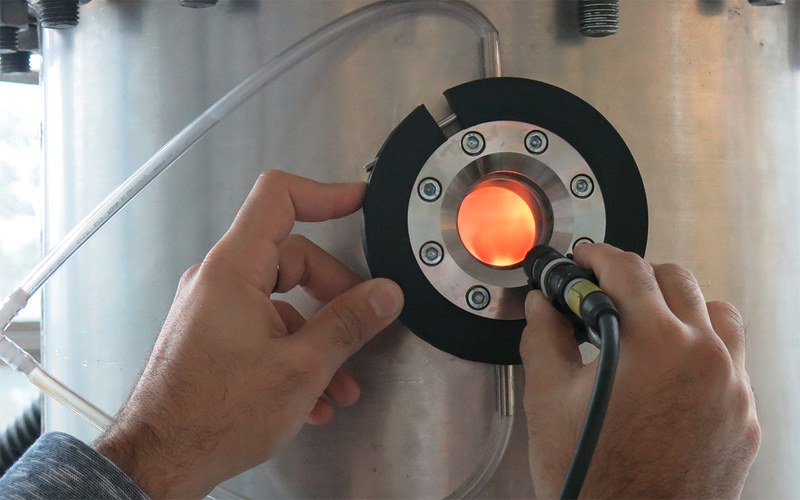
The aim is for the wood dust burner to be an environmentally friendly alternative to the pulverised coal burners currently used in asphalt mixing plants.
Project details

Objectives

  • Development of a test station with a thermal output of 400 kW
  • Optimisation of the burner unit to comply with emission limit values
  • Pilot operation with various wood and biomass dusts
  • Definition of dust properties for commercial operations

Background

At present, the substrate in asphalt mixing plants is normally dried via the incineration of pulverised coal. To increase competitiveness and contribute to climate protection, the Ammann Group is working with the FHNW to develop a new procedure whereby environmentally friendly wood dust can be incinerated in place of fossil fuels. As wood dust is very different from pulverised coal with regard to its chemical composition and particle shape, it is necessary to develop an innovative burner unit that is specifically tailored to the requirements of the alternative combustible.

Result

With regard to combustion technology, the burner is designed using complex numerical simulations. The resulting designs are tested and continuously optimised at an in-house test station that contains both the combustion chamber and the complete infrastructure for conveying the wood dust.

The measures applied are evaluated by means of the flame pattern and by measuring the emissions. The main objective of the project is to create a burner unit that can incinerate the widest possible range of wood dusts in a clean manner.

Project information

Implementation partner

Ammann Schweiz AG

Implementation

FHNW Institute of Bioenergy and Resource Efficiency, FHNW Institute of Thermal and Fluid Engineering

Duration

three years

Funding

Commission for Technology and Innovation CTI, SCCER Biosweet

Project team

Prof. Dr. Timothy Griffin, Prof. Dr. Daniel Weiss

School of
Engineering and Environment FHNW University of Applied Sciences and Arts Northwestern Switzerland

  • About the School
    • FHNW School of Engineering and Environment
    • Degree Programmes
    • Continuing Education
    • Collaboration in Research and Services
  • Social Media
    • LinkedIn
    • Instagram
    • Facebook
    • TikTok
    • YouTube
  • About FHNW
    • Organisation
    • Schools
    • Locations
    • FHNW Library
    • Media Relations
  • Support
    • IT Support
    • Inside FHNW
    • Webmail
Logo FHNW - 20 Years
Logo Swiss Universities
Logo European University Association
© University of Applied Sciences and Arts Northwestern Switzerland (FHNW)
  • Data Protection
  • Imprint
  • Accessibility
  • DE
  • EN