
You will learn how to develop digital solutions, utilise smart tools, and apply IT expertise to optimise business processes and prepare companies for the future. The German programme in Wirtschaftsinformatik at FHNW uniquely combines business administration and computer science.
Factsheet
- Degree
- Bachelor of Science FHNW in Wirtschaftsinformatik
- Study mode
- Part-time/work-study, Full-time
- Learning mode
- Onsite
- ECTS credits
- 180
- Next start
- 20.9.2027
- Duration
- 3 to 4 years
- Teaching language
- German, depending on module selection also English
- Place
- Olten
- Stay abroad
- Possible
- Application fee
- CHF 200
- Semester fee
- CHF 750 for residents of Switzerland (for details, see fees)
At a glance
- Interdisciplinary knowledge: You are equipped to act as a bridge between business processes and IT solutions.
- Practice-oriented: Practical assignments, projects, and case studies prepare you specifically for your professional career.
- Individual specialisation: Choose from various focus areas and prepare for your desired career path.
- Focus on digital innovation: Special emphasis on current topics such as artificial intelligence and cybersecurity.
Why study this?
As a Wirtschaftsinformatiker:in, you are the digital expert in the business world. In your role as an intermediary between business administration and IT, you are one of the game changers who makes companies more efficient and competitive. Whether it is smart software, data analysis, artificial intelligence (AI) or cool digital tools – you are at the forefront when it comes to optimising processes, managing projects, and developing innovative solutions. In short: you shape the digital world of tomorrow!
What do you do as a Wirtschaftsinformatiker:in?
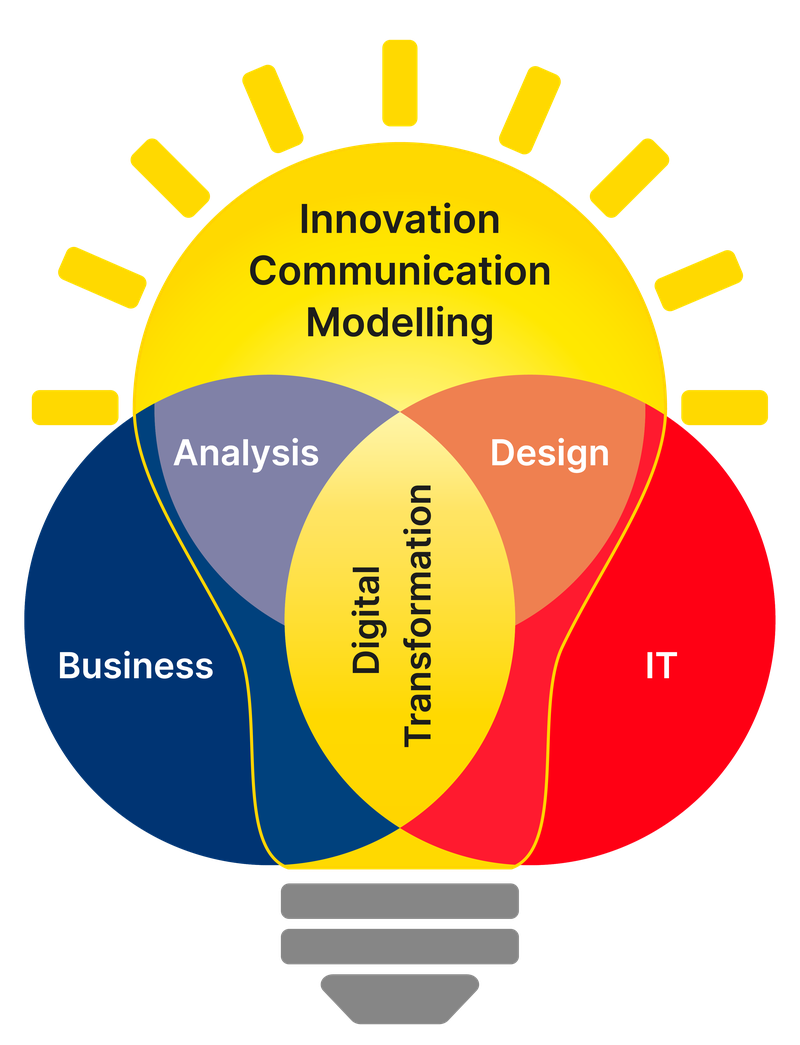
Bridge the gap between IT and the business departments
In your projects, you communicate with the people involved and recognise their challenges, expectations, and needs. You understand the language of business as well as that of IT and mediate between the two worlds. After your studies, you will be able to master complex business challenges with innovative IT solutions.
Help shaping the digital future
Thanks to your interdisciplinary knowledge, you will find and design suitable, innovative IT solutions and take on an advisory role. You optimise processes, analyse and structure data with the help of artificial intelligence, develop effective strategies or new business models. In this way, you help companies to succeed.
You know what a computer scientist is talking about
You know the possibilities and limitations of IT systems, how they are structured and how they work. You are actively involved in the implementation of projects, whether in project management, software development, quality assurance or other functions.
Get to the bottom of things
You analyse situations, regulations, and processes in order to understand them. This allows you to uncover weaknesses and create a basis for decisions. After analysing the current situation, you determine the requirements for your projects, record them in a structured manner and define the target status.
You know what the business is talking about
You know the correlations in the business world as well as the success criteria of processes and organisations. You lead projects and/or teams, act in line with the company strategy and always ensure the best cost-benefit ratio.
Convince across the board
You are able to critically evaluate and analyse actions, ventures, and contracts. You are convincing in workshops and meetings, document professionally and assess data and facts correctly.
Career prospects
As a Wirtschaftsinformatiker:in, you have the choice between many exciting job profiles in a wide range of industries. During your studies, you will find out which areas interest you the most and what best suits your particular strengths. This will allow you to decide later on whether you would prefer a technical job, plunge into the analytical world or work in management.
Typical examples of job profiles:
IT-Consultant
Requirements Engineer
(IT) Project Manager
Data Scientist
Cyber Security Consultant
(Junior) Developer
Structure and programme contents
Study content
Your studies will provide you with the ideal mix of knowledge from business administration, computer science and business information technology. You will immerse yourself in the world of business administration, learn how companies work and make decisions. At the same time, you will acquire in-depth IT knowledge, from programming to databases, machine learning and cybersecurity.
Wirtschaftsinformatik brings together both disciplines (computer science and business): you will learn to understand the needs and expectations of different groups and develop digital solutions to transform business processes and drive companies forward.
Practice orientation
Here at the FHNW University of Applied Sciences and Arts Northwestern Switzerland, you will gain real insights into the professional world as part of your studies. Whether in a practical project, during your bachelor’s thesis or in project-based modules, you will directly experience the challenges that companies have to overcome.
You use your knowledge to develop practical solutions – always at the forefront of the latest technologies, be it to optimise processes, support companies in their choice of business software or contribute your ideas on topics such as cloud computing and data management.
During your studies, you will experience how you can apply your knowledge into practice with various real-life projects in actual companies. And after a successful project you might even secure a job in that organisation.
Study structure
Full-time
Part-time
Degree course structure
Specialisations
In the second half of your studies, you will have a wide range of specialisation options available to you, which will help you prepare for your desired career. Depending on your interests and career plans, you can choose your areas of specialisation and thus lay the foundation for your successful professional development.
International
The FHNW School of Business offers numerous opportunities to gain international experience – from semesters abroad and double degrees to summer/winter schools, as well as virtual exchange formats and international projects. These opportunities will help you to develop professionally and personally, and will also prepare you for an international career.

Gain international experience during your studies
Lecturers

“What fascinates me is the ability to experiment much like in a laboratory.”
- Date
- 4.5.2026
- Institute
- Institute for Information Systems
“Give yourself permission to realize that you are capable of more than you think!”
- Date
- 24.4.2026
- Institute
- Institute for Information Systems
Requirements and admission
Direct Admission
Admission only with practical experience
Individual admission procedure
Foreign degrees
Organisational matters
Fees and Grants
Registration and deadlines
Compensation for disadvantages
Mandatory Notebook Requirements
Military and Civil Service
Downloads & Regulations
Study location
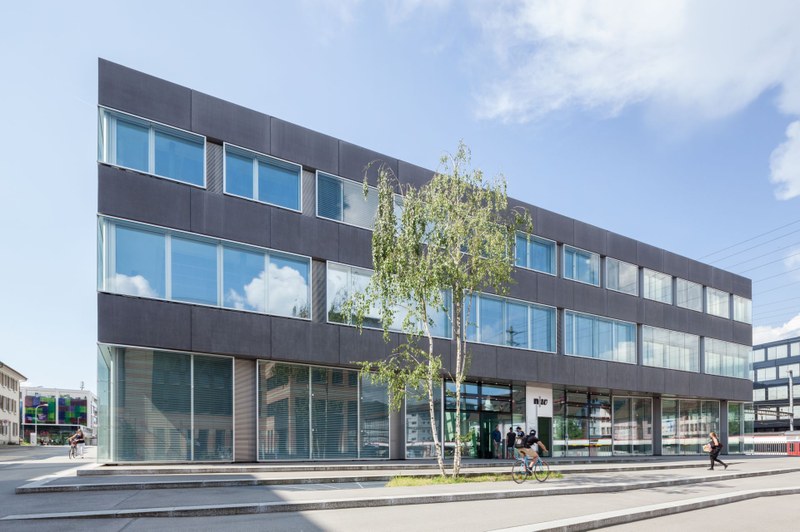
Campus Olten
Advising and information events
Info-Events
Loading...
Contact


Prof. Andreas Reber
- Phone
- +41 62 957 23 85
- andreas.reber@fhnw.ch