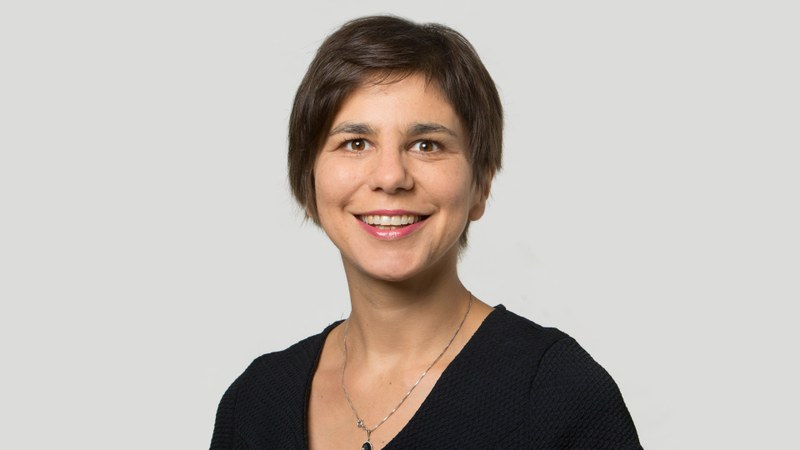
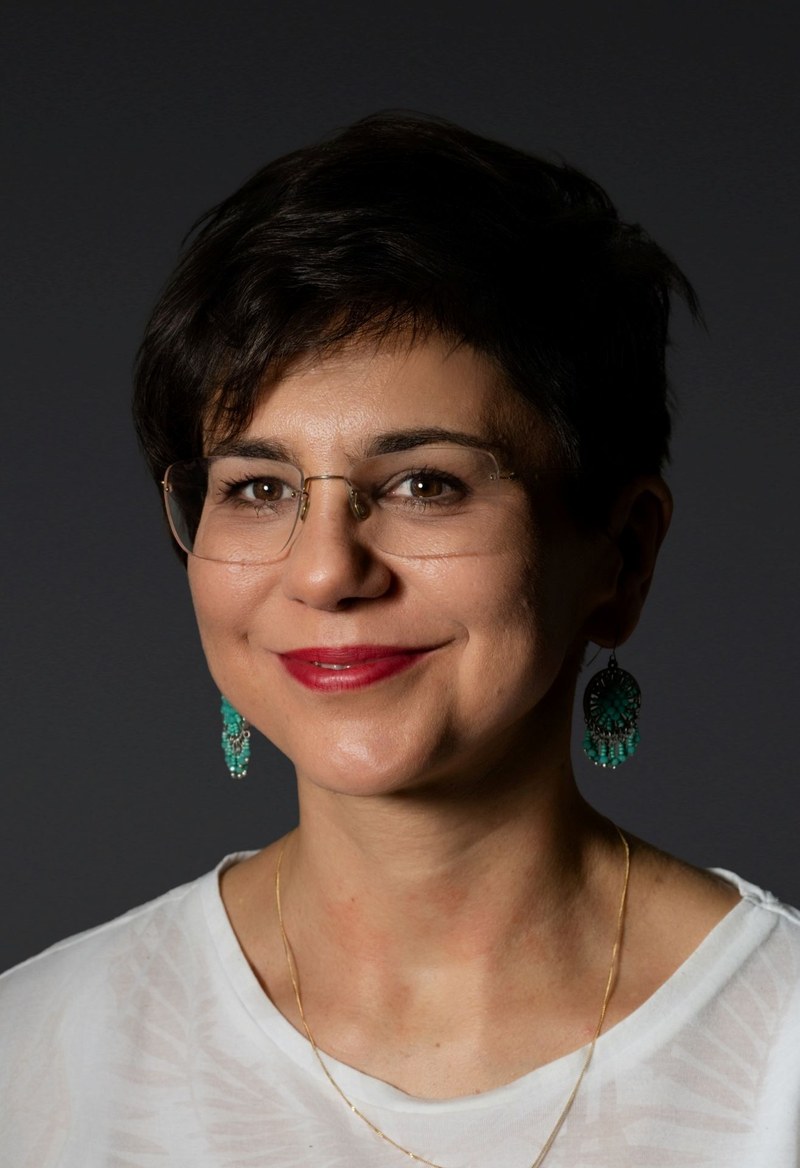
Dr. Gwendolin Wilke transforms complex data into tangible narratives and demonstrates how data analytics, machine learning and AI can be used to uncover hidden patterns. With great enthusiasm, creativity and approachability, she encourages students to push themselves and tackle complex problems with courage.
What do you teach, and what fascinates you about your field?
I teach data analysis in the modules Business Intelligence, Machine Learning and AI, Data Science, and Time Series Analysis.
What fascinates me about this field?
Patterns, trends, and relationships are extremely important for humans to understand the world around us and to make it more predictable. When we understand relationships, we can better anticipate and influence what happens next, whether technical applications like autonomous vehicles just or in business, for example in sales and marketing optimization.
However, many relationships are not even visible in a simple table or visualization! This is simply because reality is often too complex and multi-layered to be represented into a two-dimensional view. Data analytics, machine learning, and artificial intelligence allow us to explore these worlds and discover hidden relationships in high-dimensional spaces. In a way, they are like an additional sense that helps us uncover an invisible treasure.
What do you enjoy most about teaching?
I am extremely happy when I succeed in making abstract or complex topics tangible, understandable, meaningful, and interesting. I love it when I notice that the spark of enthusiasm has jumped over.
Often, abstract concepts like formulas or algorithms feel dusty or intimidating—almost like a parent’s raised finger: you’re told to do something, don’t know why, and worry about getting it wrong. I love it when students realize that it can be the other way around: they are like Lego or Minecraft – you can build anything you want with them, even -Entire worlds! The individual steps are super simple. You start small and add one block, then another one, and it grows if something doesn’t fit, you notice and adjust.. You can’t really do anything wrong. It is colorful, creative, can be a lot of fun, and if you are lucky in the end it might even take you to the moon or Mars.
What skills do students gain in your classes?
In my modules, you learn how to model data, analyze it in a structured way, and make predictions. You also get to know key algorithms and understand why they work. Ideally, you will develop a sense of enjoyment in problem-solving (if you don’t already have it!), along with curiosity, self-confidence, flexibility, and creativity in thinking, and perhaps even a bit of fascination for mathematics.
But don’t worry, my modules are not math heavy – about the focus is on application and conceptual understanding.
How would you describe your teaching style?
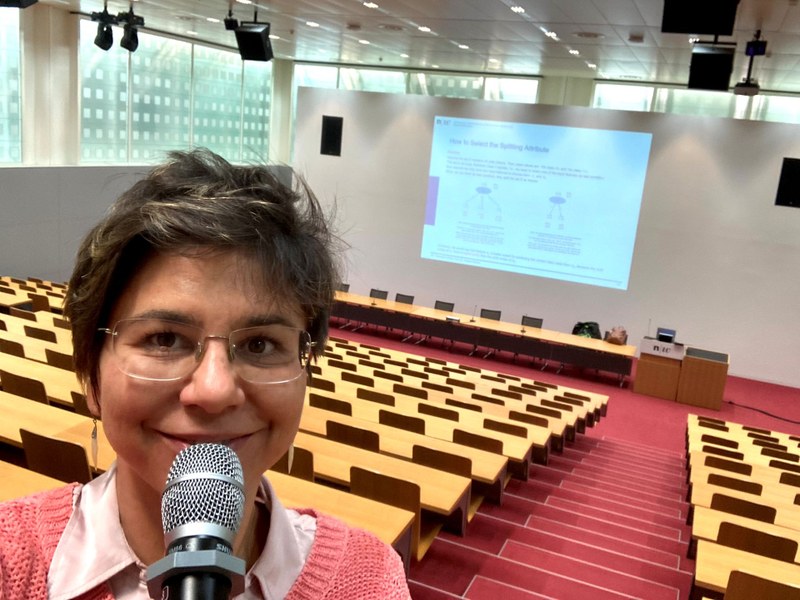
Whenever possible, I teach through guided dialogue: I start with a question and develop the solution step by step together with you.
In brainstorming sessions, you suggest possible next steps, or work on smaller sub-tasks in groups that later come together into a bigger whole. It’s important to me that algorithms and models don’t just appear as finished results but emerge from a creative process that we build together.
What advice would you give to future students?
If you ever have the opportunity: give yourself permission to realize that you are capable of more than you think!
One of the most formative experiences during my math studies was that in the first semester I thought I would need a lifetime to learn and understand all the material that was required. Then I realized that it was manageable! It felt like sticking my head out of the window at 120 km/h on the highway. It felt almost impossible and took my breath away, it was frustrating and exhausting, I complained (secretly) and endured. But in the end, it was possible!
And with that came a superpower: I knew I could work my way through thick, complex books, and nothing would intimidate me in the same way again.
This experience gave me a lot of self-confidence and showed me that it is worth trying to make the impossible possible. My advice is simple: push your boundaries.
What should students know about you?
In lectures, my enthusiasm sometimes gets the better of me. If I go over our time, please point out that it is break time. My excuse is that I am from Vienna – in Vienna, punctuality is not taken quite as seriously as here ;-).
And true to the cliché, I really do like Schnitzel and Sachertorte very much. I’d also say I’m quite approachable - so feel free to talk to me!
What do you like to do in your free time?
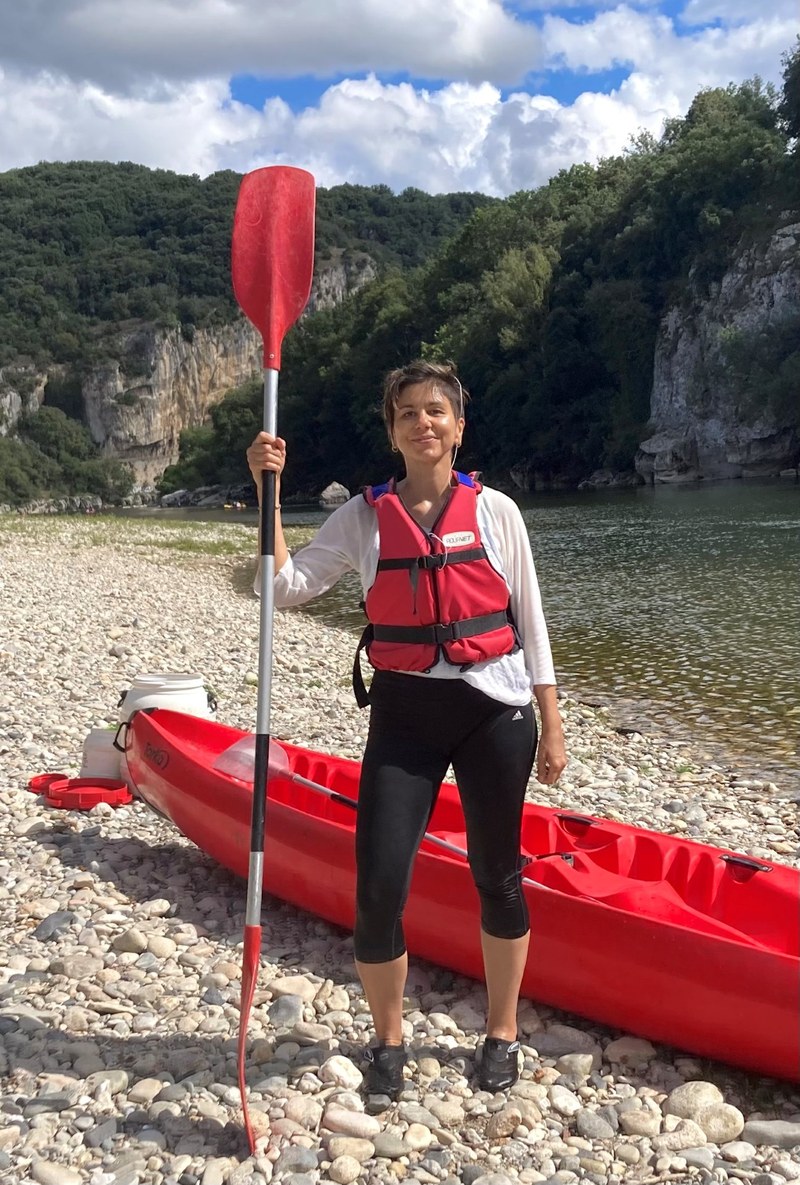
I go to a lot of concerts and enjoy a wide range of music: from minimal, jazz, pop, funk, blues to hard rock. I also love spending time in nature and often go hiking. Traveling is another passion of mine, and I sometimes go camping with a tent and a small camping stove.