Skip to main contentSkip to search barSkip to navigationSkip to footer
Logo of the University of Applied Sciences and Arts Northwestern Switzerland
  • DE
  • EN
  • Home

Ten Schools One Goal

The FHNW comprises 10 schools with different specializations. Select a school to see its specific courses, study programmes and information.

Applied Psychology

Architecture, Construction and Geomatics

Art and Design

Business

Computer Science

Engineering and Environment

Life Sciences

Music

School of Education

Social Work

  • Study offerings

    • All degree programmes
    • Bachelor programmes
    • Master programmes
    • Bachelor info events
    • Master info events
  • Study information

    • Why FHNW School of Business
    • Should I study Business?
    • Regulations
    • Student organisations
    • Success stories
  • Study internationally

    • Semester abroad
    • Double Degrees (Bachelor)
    • Dual Degrees (Master)
    • International student projects
    • Summer schools and intensive programmes
    • COIL (Collaborative International Learning)
    • Virtual exchange
  • Continuing education offerings

    • All continuing education programmes
    • MBA - Master of Business Administration
    • MAS - Master of Advanced Studies
    • DAS - Diploma of Advanced Studies
    • CAS - Certificate of Advanced Studies
    • Courses and seminars
    • Info events
  • Research

    • Research fields
    • All projects
  • Collaborate with us

    • Student projects
  • International

    • International office
    • China Centre
    • Partner universities
    • Study internationally
    • Study in Switzerland (Incoming Students)
  • Updates and insights

    • News and stories
    • Reports and publications
  • Events

    • All events
    • Information events
    • Symposia and conferences
  • Media Relations

  • About the School of Business

    • Management
    • How we teach
    • Institutional partnerships
    • Career services
    • People directory
  • Institutes

    • Institute for Finance
    • Institute for Nonprofit- and Public Management
    • Institute for Human Resource Management
    • Institute of Management
    • Institute for Information Systems
    • Institute for Competitiveness and Communication
Logo of the University of Applied Sciences and Arts Northwestern Switzerland
  • About the School
    • Degree Programmes
    • Continuing Education
    • Research and Services
    • News and Events
  • Social Media
    • Facebook
    • Instagram
    • YouTube
    • LinkedIn
    • TikTok
  • About FHNW
    • Organisation
    • Schools
    • Locations
    • FHNW Library
    • Media Relations
  • Support
    • IT Support
    • Inside FHNW
    • Webmail
  • Data Protection
  • Imprint
  • Accessibility
  • Study offerings

    • All degree programmes
    • Bachelor programmes
    • Master programmes
    • Bachelor info events
    • Master info events
  • Study information

    • Why FHNW School of Business
    • Should I study Business?
    • Regulations
    • Student organisations
    • Success stories
  • Study internationally

    • Semester abroad
    • Double Degrees (Bachelor)
    • Dual Degrees (Master)
    • International student projects
    • Summer schools and intensive programmes
    • COIL (Collaborative International Learning)
    • Virtual exchange
  • Continuing education offerings

    • All continuing education programmes
    • MBA - Master of Business Administration
    • MAS - Master of Advanced Studies
    • DAS - Diploma of Advanced Studies
    • CAS - Certificate of Advanced Studies
    • Courses and seminars
    • Info events
  • Research

    • Research fields
    • All projects
  • Collaborate with us

    • Student projects
  • International

    • International office
    • China Centre
    • Partner universities
    • Study internationally
    • Study in Switzerland (Incoming Students)
  • Updates and insights

    • News and stories
    • Reports and publications
  • Events

    • All events
    • Information events
    • Symposia and conferences
  • Media Relations

  • About the School of Business

    • Management
    • How we teach
    • Institutional partnerships
    • Career services
    • People directory
  • Institutes

    • Institute for Finance
    • Institute for Nonprofit- and Public Management
    • Institute for Human Resource Management
    • Institute of Management
    • Institute for Information Systems
    • Institute for Competitiveness and Communication

Type a search term and search continuing education,degree programmes, events, documents and other content.

  • Business
  • News and events
  • News and stories
  • All news and stories
All news and stories

"Every course had real-world relevance", FHNW School of Business

22.4.2026 – School of Business


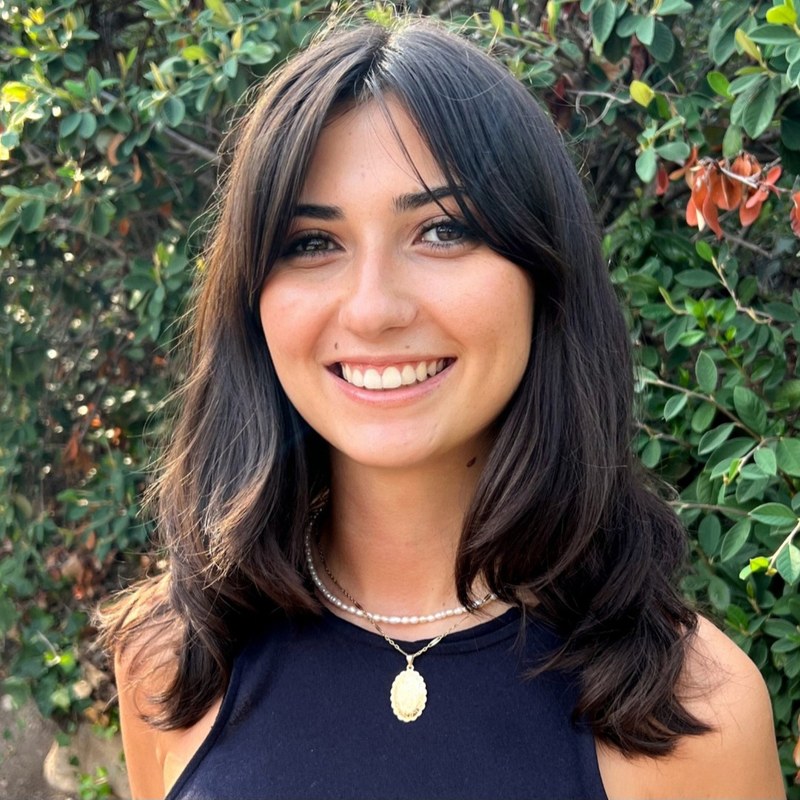
Helena Kovacevic decided for a bachelor’s degree in Business Administration (International Management) at the FHNW School of Business to expand her knowledge. In the end she didn`t just gain valuable experience, but also new and unexpected perspectives.
  • Story
Helena Kovacevic

Why did you decide to study at FHNW at the time?
I knew I wanted to study part-time so I could continue working. I enjoyed my job and felt that expanding my knowledge would accelerate my development. At that time in my career, a full-time programme would not have been the right choice. I wanted to apply what I learned directly in practice.

The FHNW stood out immediately because of its practical focus. It was not just plain theory, but real cases, real companies, and learning that connected directly to the workplace. As a pragmatist, that mattered to me. At the same time, I worked in an international environment, so the English part time programme in International Management was a perfect fit. The decision came quickly, and looking back, I would choose FHNW again.

How did the programme prepare you for your professional career?
One of the most practical skills I gained was learning to write structured academic papers. It gave me a method I still use today. Define the problem. Research properly. Build a clear framework. Then develop solutions. It taught me how to think in a structured way and how to break down complex topics.

Every course at FHNW had a level of real-world relevance. Even subjects I was less drawn to offered something applicable. That constant connection to practice changed how I approach challenges. Earlier in my education, I often questioned the relevance of what I was learning. At FHNW I had the opposite experience. I was able to connect everything to something practical.

My semester abroad was about much more than just studying in a different country.
Helena Kovacevic

How did you experience your studies abroad?
What stands out most, even before I left, was the sense of possibility. Creating shortlists. Comparing countries. Discovering completely different academic cultures. Even the preparation felt like an expansion of my world. The range of partner universities to choose from was exciting.

I chose Seville in Spain because I wanted to be in a non-English speaking country. I had already started learning Spanish in the programme, and it felt natural to build on that.

One class stayed with me long after I returned. It was a course on the history of the Spanish economy. Very specific and not something I would have taken in a regular semester. But being in Spain, it suddenly felt essential to understand the country beyond the surface. The course showed how much historical developments shape current economic realities. It taught me a surprisingly fundamental lesson. To understand the present and anticipate the future, you need to understand the past. I still use this mindset in my work. It helps me place challenges into context instead of viewing them as isolated problems.

Overall, my semester abroad became much more than just studying in a different country. It gave me the freedom to step outside my usual curriculum, to explore subjects I had not considered before, and to learn in a different academic environment. The mix of new perspectives, cultural immersion, and intellectual curiosity created insights I would never have gained if I had stayed within my familiar routine.

Which highlights from your time at FHNW do you especially like to look back on?
Without sounding too nerdy, I genuinely enjoyed writing my bachelor thesis. It felt like a real opportunity to take everything I had learned and turn it into something meaningful. I was able to apply my knowledge directly to my job, which made the whole process very rewarding.

I was also very well supported. My mentor and my company at the time gave me the space and guidance I needed, which made a big difference. The thesis became the final piece that tied everything together. It felt like finishing a puzzle and placing the last piece in the right spot.

Working on real cases helped me understand what motivates me.
Helena Kovacevic

How has the programme influenced your professional and personal development?
The strongest influence came from the programme’s future oriented perspective. It wasn’t limited to how things work today. It encouraged us to understand where fields are heading. That shaped how I think, how I evaluate opportunities, and how I make decisions.

Working on real cases helped me understand what motivates me. Whenever theory met real business situations, I realised how much I value work that creates tangible impact. A defining moment was during my specialisation in International Financial Management. We worked on a real project using data analytics, guided by a brilliant professor who placed strong emphasis on the future of the field. It was my first clear insight into how finance will be shaped by data. That experience sparked an interest that eventually led me toward analytics. The programme did not just build my knowledge. It shaped my direction.

What advice would you give to current and future students?
Use the breadth of the programme as a chance to explore. Pay attention to what each subject triggers in you. I started my studies with a clear idea of the field I wanted to work in. Through the different classes and through reflecting on them, new interests emerged that shaped my path far more than my initial plan.

Stay curious and open-minded. Let your interests guide you, not your assumptions. A bachelor’s degree gives you a rare opportunity to explore your interests before committing to a specialisation. Use that freedom to understand what genuinely motivates you.

Bachelor of Science Business Administration (International Management)

You will acquire skills for a dynamic international business environment. You will study in English, think entrepreneurially and learn to make an impact across borders.
Mehr erfahren

Contact

Anya Nikoulina

Prof. Dr. Anya Nikoulina

Programme Head Bachelor of Science in Business Administration (International Management)
Phone
+41 62 957 28 38
E-Mail
anya.nikoulina@fhnw.ch

School of
Business FHNW University of Applied Sciences and Arts Northwestern Switzerland

  • About the School
    • Degree Programmes
    • Continuing Education
    • Research and Services
    • News and Events
  • Social Media
    • Facebook
    • Instagram
    • YouTube
    • LinkedIn
    • TikTok
  • About FHNW
    • Organisation
    • Schools
    • Locations
    • FHNW Library
    • Media Relations
  • Support
    • IT Support
    • Inside FHNW
    • Webmail
Logo FHNW - 20 Years
Logo Swiss Universities
Logo European University Association
Logo AACSB International
© University of Applied Sciences and Arts Northwestern Switzerland (FHNW)
  • Data Protection
  • Imprint
  • Accessibility
  • DE
  • EN