Three countries, numerous cultures and a Europe-wide network: on the trinational Bachelor degree programme International Business Management at the FHNW, one student is gaining experience far beyond the lectures. As a Student Ambassador for ChallengeEU, she represented the university at the alliance’s first annual conference in Poland and advocated for international cooperation and student involvement.
You are studying in the trinational Bachelor’s degree programme ‘International Business Management’ at the FHNW. What made you choose this programme, and what makes it unique to you?
I chose the International Business Management programme because I knew I wanted to study business and eventually create my own company one day. At the same time, languages and international experiences have always been important to me. Growing up in Alsace, on the border between France, Germany, and Switzerland, I learned both German and English at school and wanted to continue developing these skills in a real international environment.
What makes this programme unique to me is that you do not simply study in three countries – you actually live in three countries. Every semester, you have to adapt to a new environment, a new university culture, and a new way of life. You find accommodation, learn new transport systems, meet new people, join new activities, and sometimes even step outside your comfort zone in another language.
For example, I lived in different places every semester: in a shared flat with a friend in Colmar, with a host in Germany, with a new friend in Basel, and later on my own. Each experience taught me something different about independence, adaptability, and myself. The programme has helped me grow not only academically, but also personally, and that is what makes it so special.
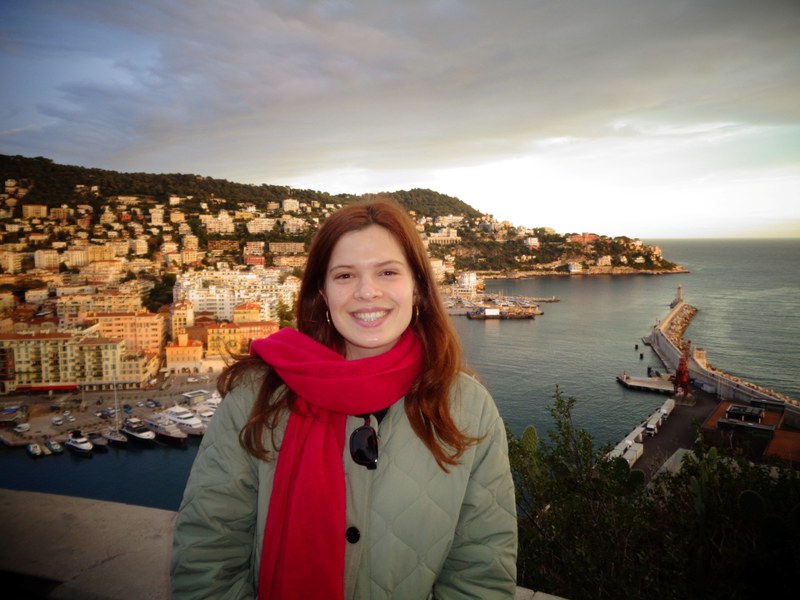
This year, you had the opportunity to take part in the ChallengeEU 1st Annual Conference as a student ambassador for the FHNW. How did that come about?
I first heard about the Student Ambassador opportunity through an FHNW email looking for two students to represent the university within the ChallengeEU alliance. I immediately applied because I wanted to become more involved in student life beyond my studies.
At the time, I was also serving as President of the IBMA Student Association, so I already enjoyed taking on responsibilities and creating opportunities for students. ChallengeEU felt like a chance to contribute in a different way, meet students from across Europe, and gain experience in an international context.
After submitting my application and participating in an interview, I was selected together with my fellow Student Ambassador, Marija. Throughout the year, we worked on various projects, interviewed students who participated in ChallengeEU activities, promoted opportunities within the alliance, and represented FHNW at different events, including the Annual Conference in Poland.
How did you prepare for your role as a Student Ambassador at the ChallengeEU Conference?
Preparation happened throughout the entire year rather than only before the conference itself. Through our activities as ambassadors, we became familiar with the alliance, its goals, and the opportunities available to students.
I also had the chance to participate in a previous ChallengeEU event in Offenburg, where I met many of the other ambassadors for the first time. That experience helped me understand the spirit of the alliance and build relationships before the Annual Conference.
For the conference itself, I prepared by learning about the programme, engaging with other participants, and working on the speech I would later deliver during one of the plenary sessions. I wanted my contribution to be authentic and to reflect what ChallengeEU genuinely meant to me personally.
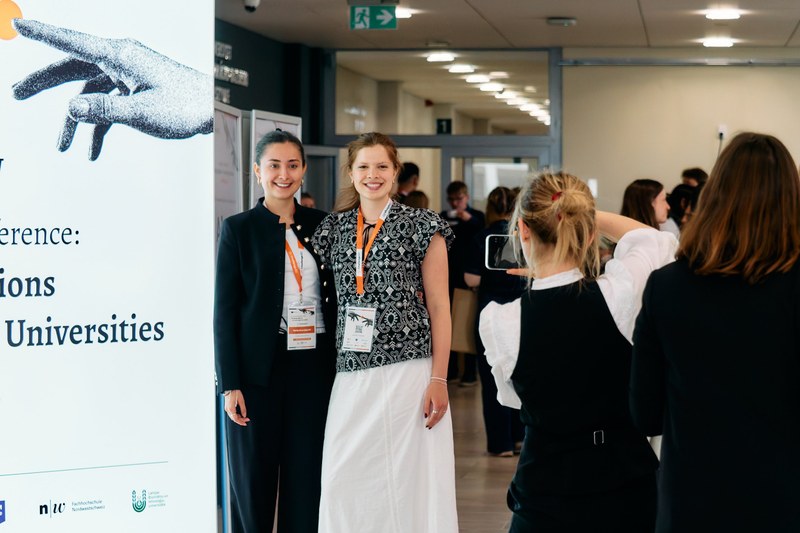
Marion Angsthelm with her fellow FHNW ambassador, Maria, with whom she built a strong friendship throughout the ChallengeEU experience. 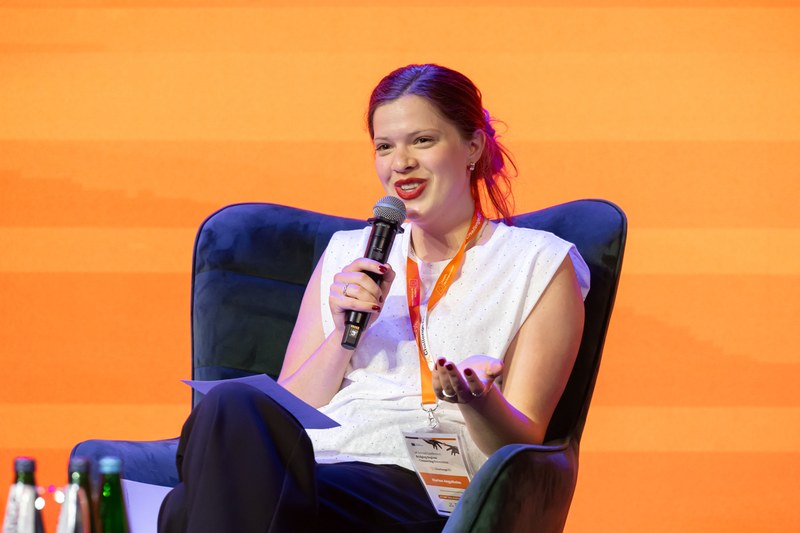
Marion Angsthelm speaking during the plenary session “People at the Heart of ChallengeEU” at the Annual ChallengeEU Conference. 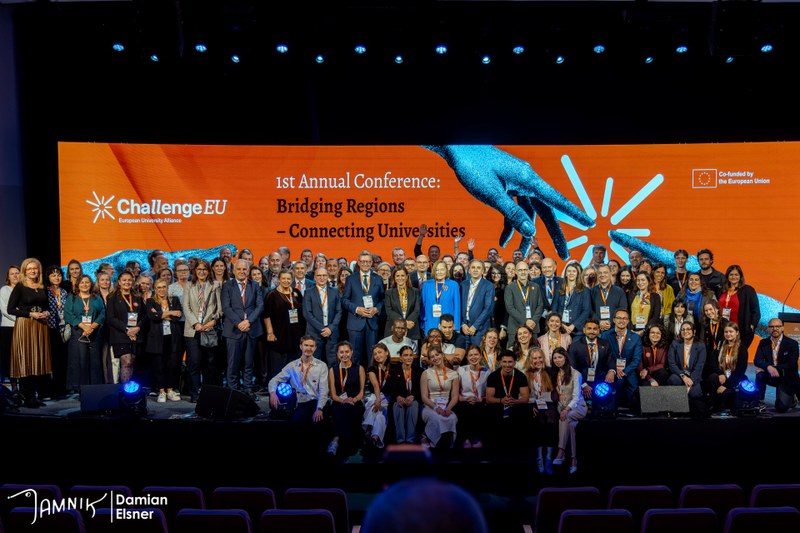
End of the Annual ChallengeEU Conference, gathering students, ambassadors, staff members, and university representatives from across the ChallengeEU alliance.
Which skills and experiences from your degree have you been able to apply in your role as a Student Ambassador, and which skills do you consider essential for this role?
My degree has helped me develop several skills that were extremely valuable in my role as a Student Ambassador. Communication in English and German was particularly important, as well as intercultural communication and the ability to work with people from different backgrounds.
However, some of the most important qualities are not necessarily learned in a classroom. Being open-minded, curious, approachable, and genuinely interested in other people makes a huge difference. As an ambassador, you represent not only your university but also your students, so listening and building connections are essential.
Public speaking was also very useful, especially when presenting in front of a large audience. Most importantly, I learned that being comfortable with different perspectives and cultures is one of the greatest strengths you can have in an international environment.
Was there a particular moment at the conference that had a significant impact on you as a person and/or a student?
One of the most meaningful moments was actually connected to a previous ChallengeEU workshop on emotional intelligence, which I later spoke about during my plenary speech.
During that workshop, students shared personal stories, experiences, and challenges from their lives. One participant told a story about her family in Jamaica during a hurricane. While she was worried and telling them to protect themselves, her family chose to dance together and enjoy the moment because they knew they could not control what was coming. The way she described it was incredibly powerful.
That workshop reminded me that every person carries a different story, shaped by different experiences, cultures, and realities. It taught me that there is always something to learn from others if we are willing to listen. That idea stayed with me throughout the conference and continues to influence how I approach people today.
You spoke at the plenary session ‘Beyond Projects: People at the Heart of ChallengeEU’. What was your key message there?
My key message was that ChallengeEU is ultimately about people.
Of course, the alliance creates projects, workshops, and opportunities, but what had the biggest impact on me were the human connections behind them. Through my experiences with ChallengeEU, I realised that every person has a different story, different challenges, and different perspectives.
Some conversations genuinely changed the way I think and helped me grow. I wanted to encourage the audience to see international cooperation not only as an academic or professional opportunity, but also as a chance to learn from one another on a human level.
Although I was a little nervous speaking in front of around 150 people, I felt proud to share something that was meaningful to me. One participant later told me that my speech was her favourite because she could truly feel the emotions behind it, and that meant a lot to me.
What does Sofiia Hecker’s statement – “You are not just ChallengeEU ambassadors – you are co-creators of the Alliance” – mean to you?
To me, this statement highlights the importance of student voices within the alliance.
ChallengeEU is designed for students, so it is essential that students actively contribute to shaping it. As ambassadors, we are not only communicating information; we are also providing feedback, sharing ideas, and helping ensure that opportunities remain relevant and meaningful for future participants.
I always felt that our opinions mattered. We were encouraged to share suggestions, discuss improvements, and contribute our own ideas. That is why the term “co-creators” feels very accurate to me. We are helping build something that future students will benefit from.
You described the experience using the three words ‘human, intercultural, family’. Could you give us an example or an explanation that illustrates these three terms particularly well?
“Human” because the most important part of the experience was the people. Beyond the projects and conferences, it was about conversations, shared experiences, and learning from one another.
“Intercultural” because every day we interacted with people from different countries, cultures, and languages. Even though we all communicated in English, hearing German, Polish, French, Spanish, and many other languages around us constantly reminded me how diverse Europe is.
“Family” because despite all these differences, there was a strong feeling of belonging. During the conference in Poland, students, professors, university leaders, and staff members all came together around the same goal. It felt like a large family gathering where everyone was working towards something meaningful. Even today, many of us remain in contact through our ambassador network, and I know there are people across Europe I would be happy to visit again.
What new ideas or perspectives are you bringing back to the FHNW, and how might they influence your day-to-day studies and your projects?
ChallengeEU reinforced something I strongly believe in: we should not wait for opportunities to come to us; we should create them ourselves.
The experience also reminded me of the value of diversity in teamwork. When people from different cultures and backgrounds work together, they bring different perspectives that can lead to better ideas and better solutions.
I will carry this mindset into my studies, future projects, and my professional career. It has encouraged me to stay curious, embrace different viewpoints, and actively seek international experiences whenever possible.
If you could give future FHNW students a tip on how to make the most of opportunities like ChallengeEU, what advice would you give?
My advice would be simple: Create your opportunities.
Many students hesitate because they feel nervous, do not know anyone, or are unsure whether they are qualified enough. But some of the most valuable experiences happen when you step outside your comfort zone.
ChallengeEU taught me that growth often begins when you take the first step. Apply for opportunities, attend events, talk to people, and do not be afraid to try something new. Even if you do not know exactly where it will lead, you will learn something, meet inspiring people, and gain experiences that cannot be taught in a classroom.
Some of the most important lessons I learned during my studies happened outside the classroom, and ChallengeEU was one of those experiences.
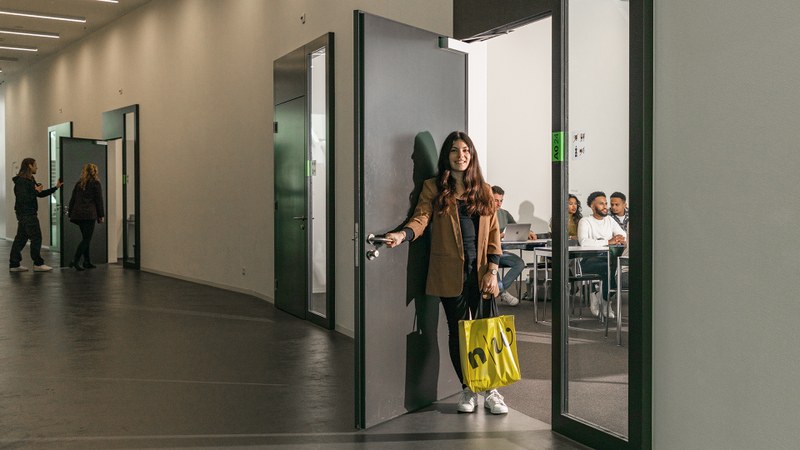
Bachelor of Science International Business Management (trinational)
Contact
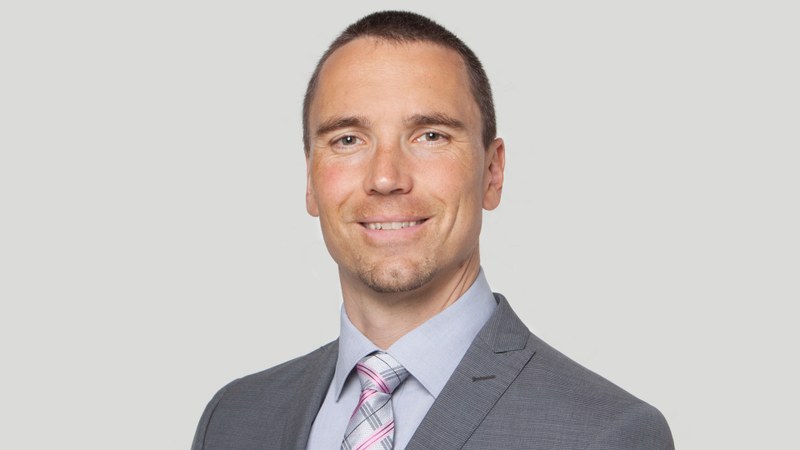
Prof. Dr. Jörg Wombacher
- Phone
- +41 61 279 18 87
- joerg.wombacher@fhnw.ch