Lea Straub heads her organisation's addiction counselling service, a field where business questions long played no part. When she took on responsibility for a team of thirteen, she chose a part-time MBA at the FHNW School of Business. Today she says the programme gave her above all one thing: more confidence in her day-to-day role as a leader.
From therapy into leadership
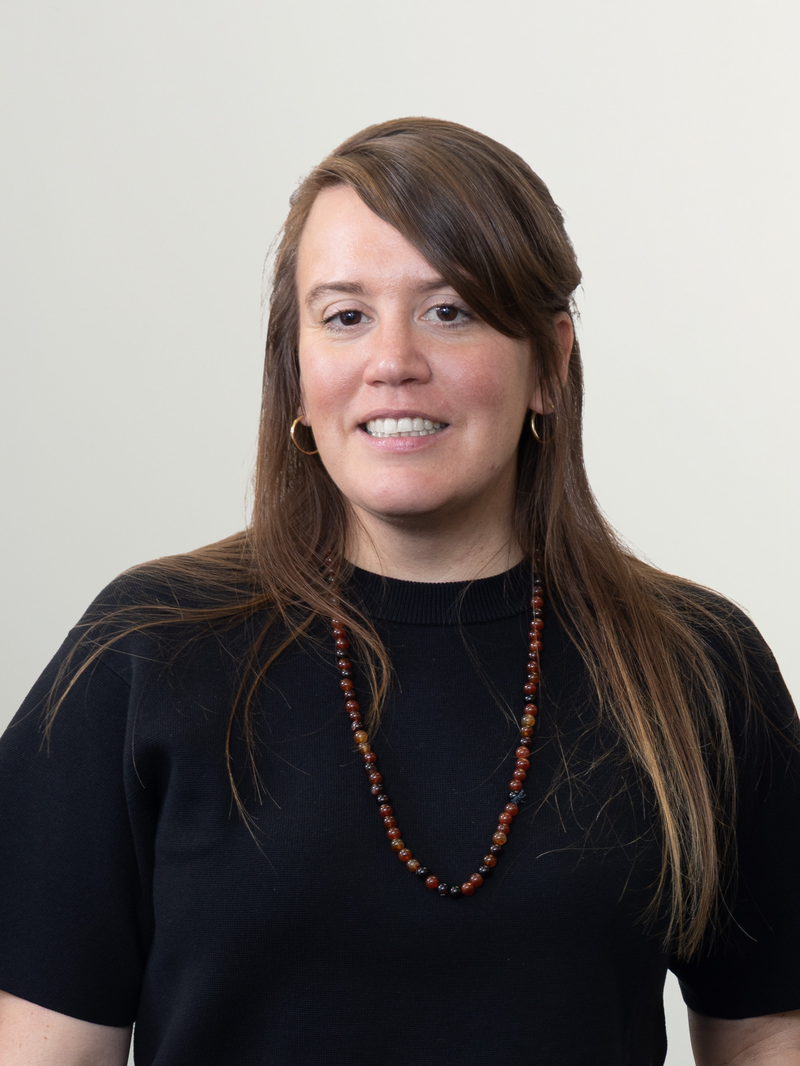
Her background is social and therapeutic. Lea Straub studied social work and went on to complete a master's in addiction therapy, along with two separate therapy trainings, one in behavioural therapy and one in systemic therapy. She moved into leadership through a series of coincidences, she says, and once she held responsibility for addiction counselling, it quickly became clear that she needed to engage far more with business and leadership topics. What also drew her in was that managers in addiction support usually come either from professional practice or from management, while the blend of the two is rare. That was exactly what she wanted. “If I'm going to train as a leader, then I want to do it properly.”
Two worlds closer than expected
At first she feared she was stepping into an entirely foreign world, but that worry soon fell away. Much of it connected with her social perspective, and in many parts of the programme she could contribute a different angle. A social organisation, after all, has to be financed and soundly run, she says, and that is precisely where the social and the economic meet.
What stays from the programme
Accounting was the furthest from her everyday work, and it is exactly there that a great deal stuck. When she discusses her service's budget today, she knows what she is looking at and can follow what the finance specialist is talking about, and broader economic connections have become clearer too. In managing people her therapeutic training helped, yet many aspects came into sharper focus that she had not seen this way before.
People and network
She describes the exchange with fellow students from very different industries as especially valuable. Her view, she says, had been more narrowly focused on the social sphere, and during the programme she encountered other perspectives, values and ideas. On top of that, many lecturers taught with visible enthusiasm. She did not hold back in discussions, but brought in her point of view with conviction. Through study trips and events, FHNW also created plenty of room for networking, including in professional fields she would otherwise rarely reach.
Japan, Brazil and a view beyond her own field
She chose the programme deliberately after looking around. The curriculum appealed to her, and the two study trips to Japan and Brazil were a particular draw, precisely because her own working life is not internationally oriented. Japan impressed her deeply, since she was not there as a tourist but gained real insight into companies. In terms of content, the parts that stayed with her most were the economics module, where she saw how the social sector fits in, and the people-management block.
Balancing work and study
Throughout the programme, Lea Straub kept working at 80 percent, with classes on Fridays and Saturdays and the rest of the week for her job. It was an intensive time that demanded clear structure. What helped was knowing it was a fixed window, around a year and a half of on-site teaching and then the master's thesis, something you have to prepare for from the outset. “It also has an end, it's self-contained, and afterwards you hold the MBA.”
A thesis for more women in the MBA
Her master's thesis addresses how more women can be won for an MBA. From the very start she was unsure what the balance of women and men would be, and that there were so few in the end (just two in her own class) both surprised her and spurred her on. Her central idea is that women can of course do an MBA, but the real question is whether they also want to. She has reviewed numerous studies and now plans to interview women who decided against an MBA, in order to derive recommendations for FHNW. For her, it is clear that turning more attention to women is worth it.
Her recommendation
Lea Straub would recommend the MBA especially to women, and explicitly to those who do not come from a business or technical background. It is precisely then, she says, that it helps enormously to position yourself better and to gain a more confident standing. Anyone who takes it on should be ready for a demanding, focused period. What remains for her, she sums up in a single sentence:
The programme at a glance
A part-time MBA at the FHNW School of Business. Teaching takes place mainly on Fridays and Saturdays at the FHNW campus in Windisch. Around a year and a half of on-site teaching is followed by the master's thesis. The programme includes international study trips to changing destinations; Lea, for example, travelled to Japan and Brazil.
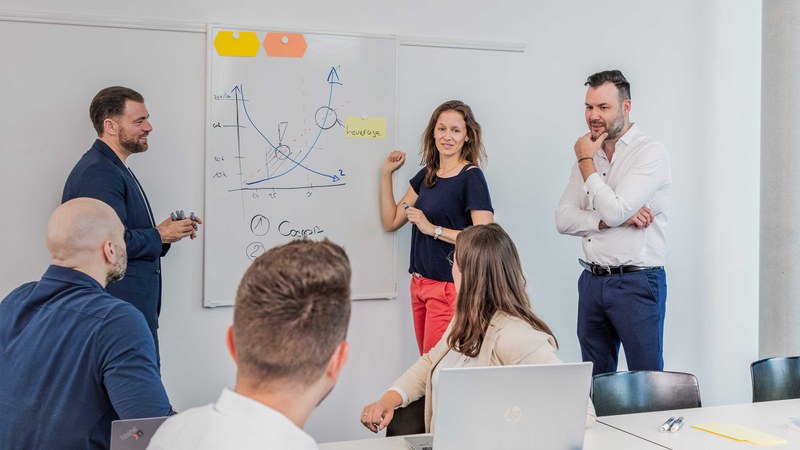
Master of Business Administration (MBA) FHNW
Contact
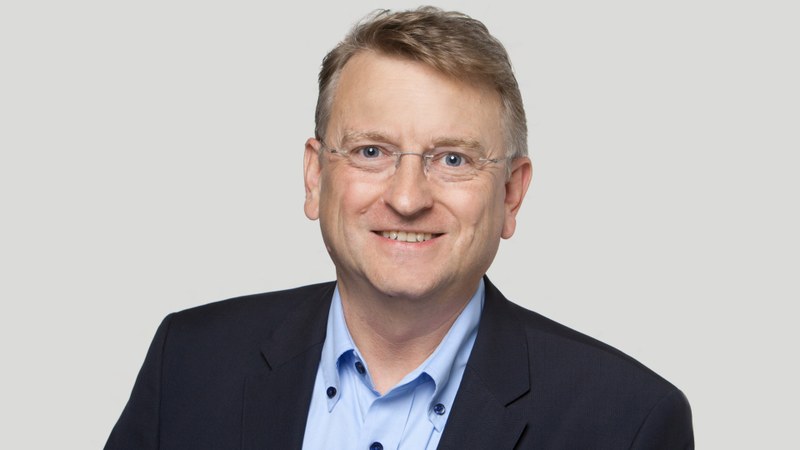
Dr. Beat Birkenmeier
- Phone
- +41 56 202 81 94 (Direct)
- beat.birkenmeier@fhnw.ch
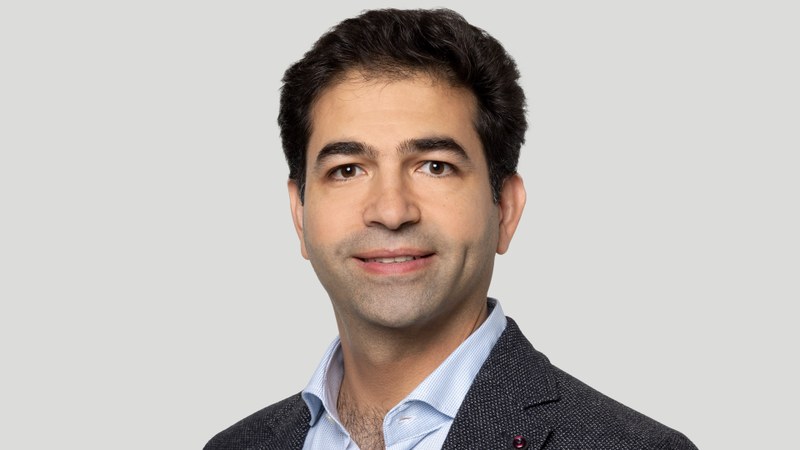
Prof. Dr. Mahmoud Al-Kilani
- Phone
- +41 56 202 81 04
- mahmoud.alkilani@fhnw.ch