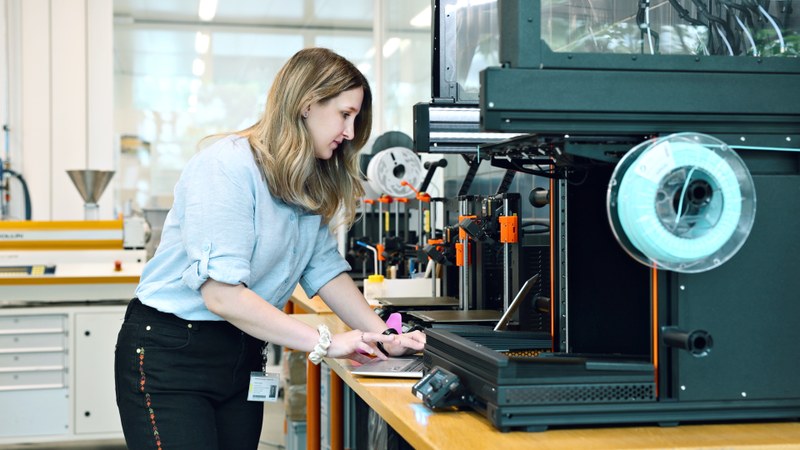
The climate crisis, digital transformation, and sustainable mobility demand strong engineering solutions. The Master of Science in Engineering (MSE) prepares you for responsible roles in industry and society. You deepen your expertise through practice-oriented learning and work on solutions with sustainable impact.
Key facts
- Degree
- Master of Science FHNW in Engineering MSE
- Study mode
- Full-time, Part-time/work-study
- Next start
- 22.2.2027
- Teaching language
- English
- Place
- Brugg-Windisch und weitere Standorte
At a glance
- Your Career Launchpad in Technology and Management: The MSE opens the door to demanding specialist and leadership positions.
- Learning at the Cutting Edge of Practice: During your studies, you work on real industry projects with real-world challenges – often in close collaboration with your employer.
- Your Studies, Your Specialization: Choose from a wide range of specialization profiles.
- Combine Studies with Professional Experience: Thanks to flexible study models, you can ideally combine your studies with employment or a practice-based project.
- Well Connected – Also Internationally: Benefit from the extensive network of FHNW, including opportunities for exchange semesters and interdisciplinary projects.
Career prospects
With the Master of Science in Engineering (MSE), you can advance your career in a targeted way. You deepen your technical expertise, expand your competencies, and qualify for demanding roles in engineering, innovation, and management.
You learn to analyze complex technical and economic relationships and develop practical solutions. In collaboration with companies, you work on real-world projects, apply modern technologies, and gain valuable professional experience.
The MSE prepares you to design products and processes, lead projects, and take on responsibility—both in technical development and in strategic roles. Your skills in communication, analytical thinking, and interdisciplinary collaboration make you a sought-after specialist or leader.
Whether in industry, research, or public institutions, the MSE enables you to take an active role in shaping the future development of society and the economy.
Structure and content
The MSE programme comprises 90 ECTS credits and is clearly structured: you combine solid theoretical foundations with practice-oriented project work while systematically developing your individual profile. The modular structure allows you to tailor your studies to your professional goals—in close collaboration with experts from academia, industry, and research.
Throughout the programme, you learn to think abstractly while acting in an application- and solution-oriented way. You build strong methodological expertise, understand complex relationships, and solve challenging problems independently. In practice-oriented projects, you deepen your competencies and gain valuable professional experience. You develop products and processes using the latest technologies, acquire solid project management skills, and gain an understanding of business and economic contexts.
When tackling complex challenges, you make important analytical, conceptual, and technical contributions to innovative solutions. With strong communication skills, you are also well prepared to operate confidently in an international environment.
Programme structure
30 ECTS – Core theory modules
One third of the programme consists of nationally coordinated theory modules. These provide advanced scientific and methodological foundations and are attended together with students from other Swiss universities of applied sciences.
24 ECTS – Specialization
Your individual specialization takes place at an institute of the FHNW School of Engineering and Environment or the FHNW School of Computer Science. Within your chosen profile, you work on application- or research-oriented projects, attend specialized courses, and develop advanced technical expertise.
30 ECTS – Master’s Thesis
Finally, you will tackle a complex real-world problem. As part of your individual master's thesis, you will demonstrate your ability to analyse problems in a structured manner and to develop and implement innovative solutions.
6 ECTS – Ergänzende Veranstaltungen (EVA)
Throughout your degree programme, you will attend complementary courses (EVAs) in addition to the central theory modules.
Some of these are offered by the departments and/or organised across campuses. They are designed to teach theoretical knowledge that, due to its specialised nature, is not covered in the central theory modules.
The advisors, together with the students, are responsible for selecting these courses and ensuring that they are attended.
Developing your individual profile
The core of the MSE programme is your individual specialization within a professional profile. From the very beginning, you are supported by a personal advisor who helps you align your studies with your interests and career goals.
You shape your profile through:
- selecting one of the specialization profiles
- collaborating with an FHNW institute
- choosing suitable theory modules, EVA courses, and project topics
- participating in research or industry projects
MSE profiles at the FHNW School of Engineering and Environment
MSE Profile Business Engineering
- Studying mode
- Full-time, Part-time/work-study
- Teaching language
- English
- Place
- Other, Brugg-Windisch
- Next start
- 22.2.2027
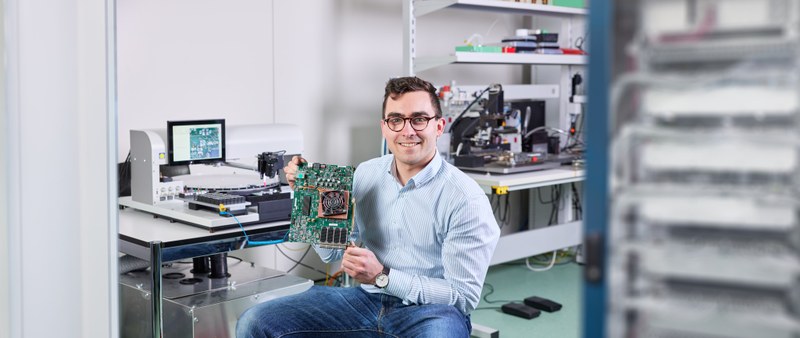
MSE Profile Electrical Engineering
- Studying mode
- Full-time, Part-time/work-study
- Teaching language
- English
- Place
- Other, Brugg-Windisch
- Next start
- 22.2.2027
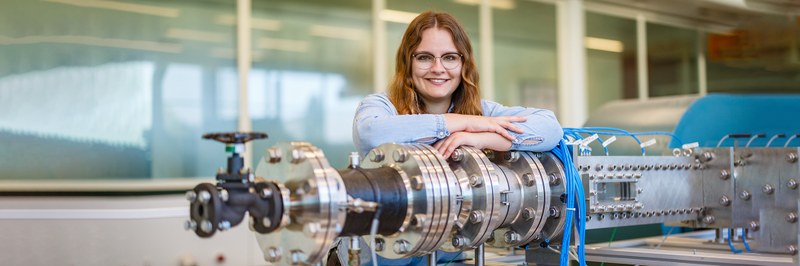
MSE Profile Energy and Environment
- Studying mode
- Full-time, Part-time/work-study
- Teaching language
- English
- Place
- Other, Brugg-Windisch
- Next start
- 22.2.2027
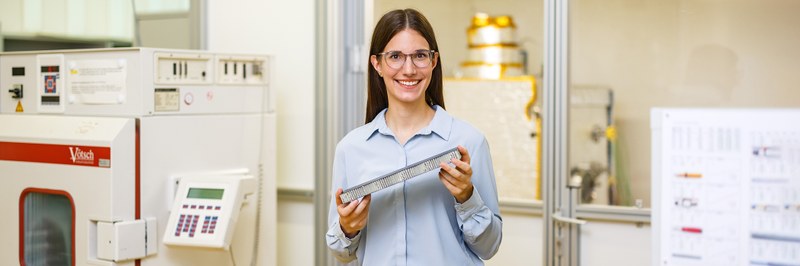
MSE Profile Mechanical Engineering
- Studying mode
- Full-time, Part-time/work-study
- Teaching language
- English
- Place
- Other, Brugg-Windisch
- Next start
- 22.2.2027
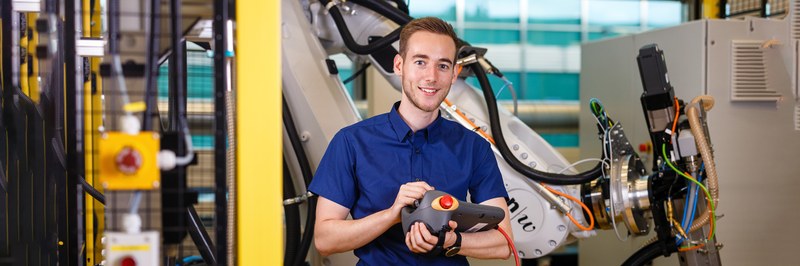
MSE Profile Mechatronics and Automation
- Studying mode
- Full-time, Part-time/work-study
- Teaching language
- English
- Place
- Other, Brugg-Windisch
- Next start
- 22.2.2027
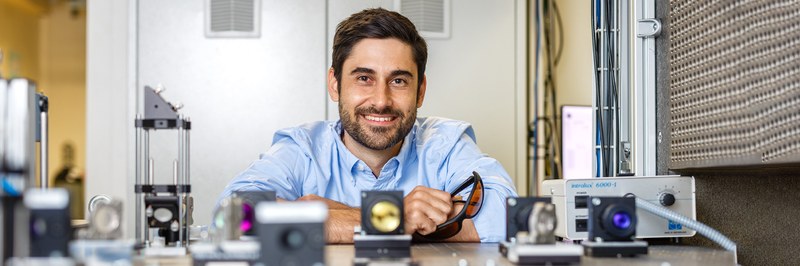
MSE Profil Photonics and Laser Engineering
- Studying mode
- Full-time, Part-time/work-study
- Teaching language
- English
- Place
- Other, Brugg-Windisch
- Next start
- 22.2.2027
Additional MSE profiles at FHNW
Further MSE profiles are offered by other FHNW schools.
FHNW School of Architecture, Construction and Geomatics
FHNW School of Computer Science
How to start your studies
- Get informed: Contact the person responsible for your chosen profile or an advisor at an early stage.
- Apply: Submit your application for the MSE programme.
- Admission decision: The admissions committee reviews your application documents and decides on your admission.
- Define your study agreement: After admission, you and your advisor will define your Individual Study Agreement (ISA), including your chosen profile, modules, and project work.
Requirements and admission
The master’s programme is intended for graduates of a bachelor’s degree programme with very good academic performance (ECTS grades A or B).
Your previous field of study should be closely related to the chosen specialization profile. Applicants with equivalent qualifications (e.g., HTL or older FH degrees) may also be admitted.
After the application deadline, the admissions committee reviews your documents and decides on your admission. If necessary, an additional admission interview may be conducted.
The MSE programme typically follows directly after a bachelor’s degree. In the case of several years of professional experience, individual assessments will be made.
Organizational information
Language of instruction
Full-time or part-time study
Fees
Important Dates
Downloads and further Information
Advising and information events
Contact

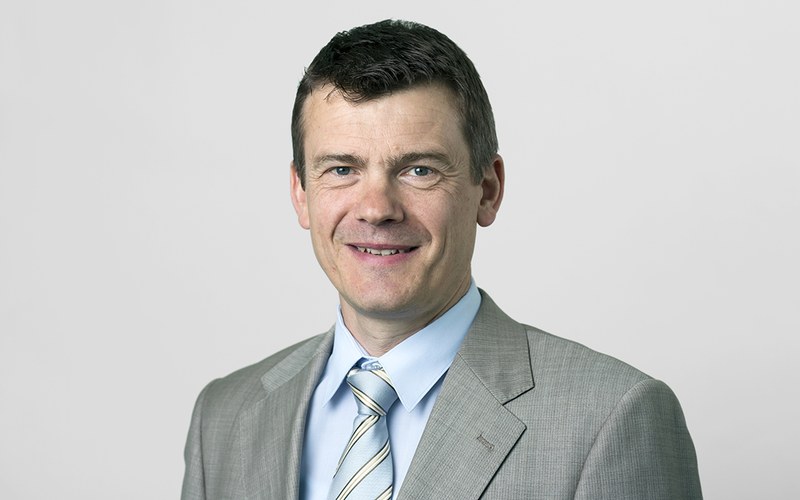
Prof. Dr. Gregor Burkhard
- Phone
- +41 56 202 74 58
- gregor.burkhard@fhnw.ch
Information events
Loading...
Information events
Application
Master of Science in Engineering MSEMaster of Science in Engineering MSE
- Date
- 22.2.2027
- Place
- Brugg-Windisch und weitere Standorte
- Final application date
- 30.9.2026