Skip to main contentSkip to search barSkip to navigationSkip to footer
Logo of the University of Applied Sciences and Arts Northwestern Switzerland
  • DE
  • EN
  • Home
  • Degree programmes
  • Continuing education

Ten Schools One Goal

The FHNW comprises 10 schools with different specializations. Select a school to see its specific courses, study programmes and information.

Applied Psychology

Architecture, Construction and Geomatics

Art and Design

Business

Computer Science

Engineering and Environment

Life Sciences

Music

School of Education

Social Work

  • Research

    • Research fields
    • Projects
  • Updates and insights

    • News and stories
  • Events

  • Media corner

  • About the School of Engineering and Environment

    • People directory
    • Management Board
  • Institutes

    • Institute of Automation
    • Institute of Bioenergy and Resource Efficiency
    • Institute of Business Engineering
    • Institute of Electric Power Systems
    • Institute of Humanities and Social Sciences
    • Institute of Polymer Engineering
    • Institute of Mathematics and Natural Sciences
    • Institute of Polymer Nanotechnology
    • Institute of Optometry
    • Institute of Product and Production Engineering
    • Institute for Sensors and Electronics
    • Institute of Thermal and Fluid Engineering
    • Laboratories of the School of Engineering and Environment
Logo of the University of Applied Sciences and Arts Northwestern Switzerland
  • About the School
    • FHNW School of Engineering and Environment
    • Degree Programmes
    • Continuing Education
    • Collaboration in Research and Services
  • Social Media
    • LinkedIn
    • Instagram
    • Facebook
    • TikTok
    • YouTube
  • About FHNW
    • Organisation
    • Schools
    • Locations
    • FHNW Library
    • Media Relations
  • Support
    • IT Support
    • Inside FHNW
    • Webmail
  • Data Protection
  • Imprint
  • Accessibility
  • Research

    • Research fields
    • Projects
  • Updates and insights

    • News and stories
  • Events

  • Media corner

  • About the School of Engineering and Environment

    • People directory
    • Management Board
  • Institutes

    • Institute of Automation
    • Institute of Bioenergy and Resource Efficiency
    • Institute of Business Engineering
    • Institute of Electric Power Systems
    • Institute of Humanities and Social Sciences
    • Institute of Polymer Engineering
    • Institute of Mathematics and Natural Sciences
    • Institute of Polymer Nanotechnology
    • Institute of Optometry
    • Institute of Product and Production Engineering
    • Institute for Sensors and Electronics
    • Institute of Thermal and Fluid Engineering
    • Laboratories of the School of Engineering and Environment

Type a search term and search continuing education,degree programmes, events, documents and other content.

  • Engineering and Environment
  • Research and services
  • Research
  • Research fields
  • Electrical engineering
Electrical engineering

Power Electronics and Drives, FHNW School of Engineering and Environment

School of Engineering and Environment


elektrotechnik_forschung-feld.jpeg

We investigate issues at various levels (from semiconductors, magnetic materials up to system level). We extensively use simulations, develop innovative control and measurement techniques, and deliver tailor-made solutions that work efficiently and reliably.

Discover our range of tests in the field of power semiconductors and power electronics.
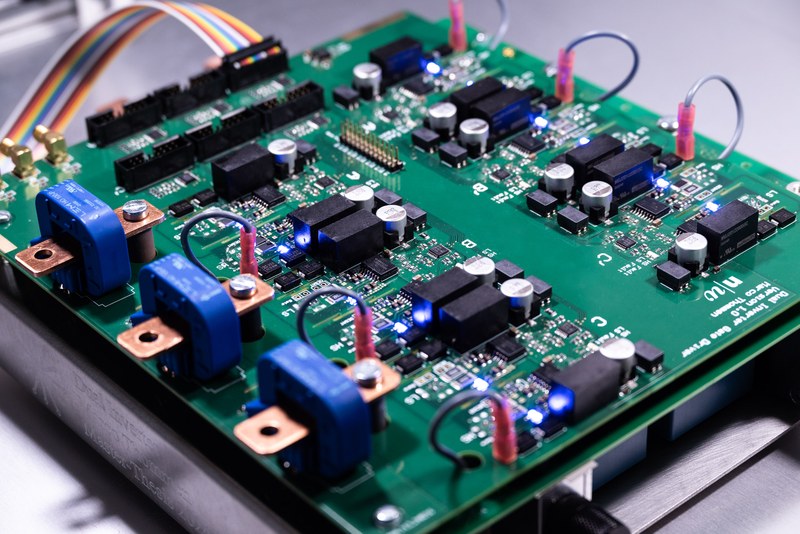
Power Electronics Lab
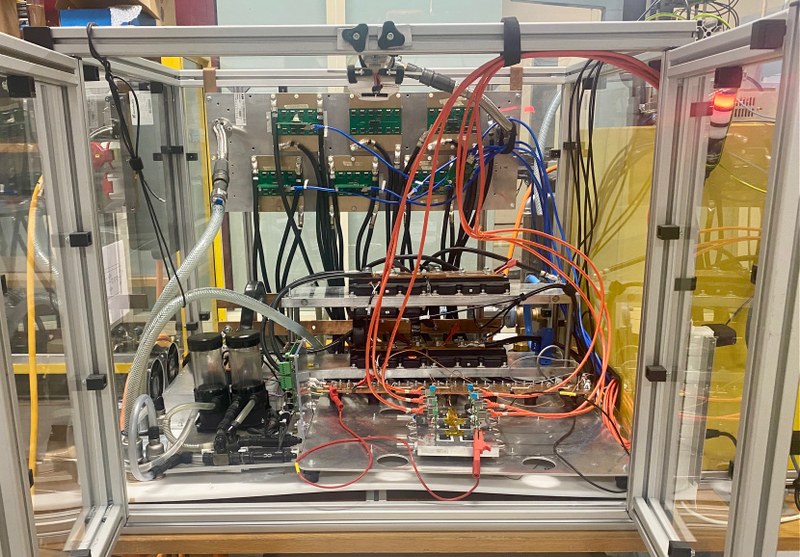
In the Power Electronics Lab, we develop, investigate and optimize power electronic components and systems. An extensive infrastructure is available for this purpose.
More information

Testing power semiconductors and power electronics

We offer to our partners and customers various test methods for power semiconductors, components, power converters and drives.
Our testing services

Our Competences

We use a range of design and simulation tools to develop power electronic converters. Our expertise in control, embedded software, reliability, and electromagnetics enables a holistic system perspective and targeted optimization. Hardware prototypes can be thoroughly tested in our laboratory.

Our activities include:

  • Hardware design and construction of customized prototypes

  • Electromagnetic design optimization using simulations

  • Investigation of control methods and their implementation in hardware and software (microcontrollers, DSPs, FPGA)

  • System-level reliability optimization through design and monitoring

  • Investigation and evaluation of grid impacts of grid-connected systems

Power Semiconductors

In addition to classical silicon transistors (IGBTs, MOSFETs), novel silicon carbide (SiC) power semiconductors are increasingly becoming a focus. Beyond their static and dynamic electrical behavior, module-level reliability is a key area of our research.

Key topics include:

  • Reliability analysis and optimization using simulations and testing

  • High-current power cycling test benches (ampere to kiloampere range) for lifetime assessment

  • Monitoring methods for electrical and thermal operating parameters

  • Algorithms for continuous estimation of aging conditions during operation

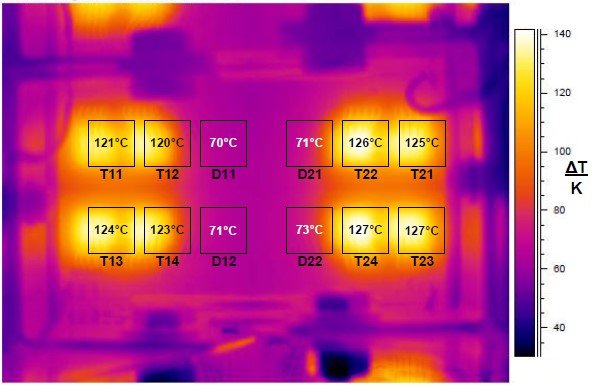
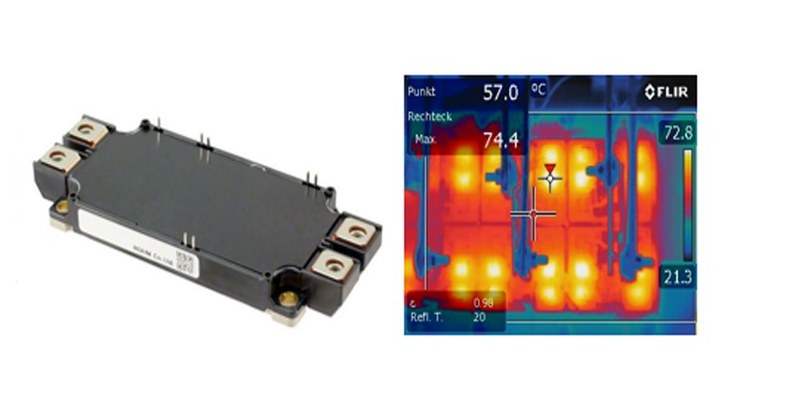
Left: Silicon carbide MOSFET module. Right: Infrared image of a power semiconductor module in operation.
Left: Silicon carbide MOSFET module. Right: Infrared image of a power semiconductor module in operation.

Electromagnetics

Inductive components such as chokes and transformers play a central role in power electronics. Through field simulations and testing of magnetic materials, we contribute to the development of compact and efficient drive systems.

Our activities include:

  • Measurement of magnetic properties of inductive components

  • Field simulations of static components and electrical machines

  • Test bench for determining core losses of magnetic materials under various signal waveforms
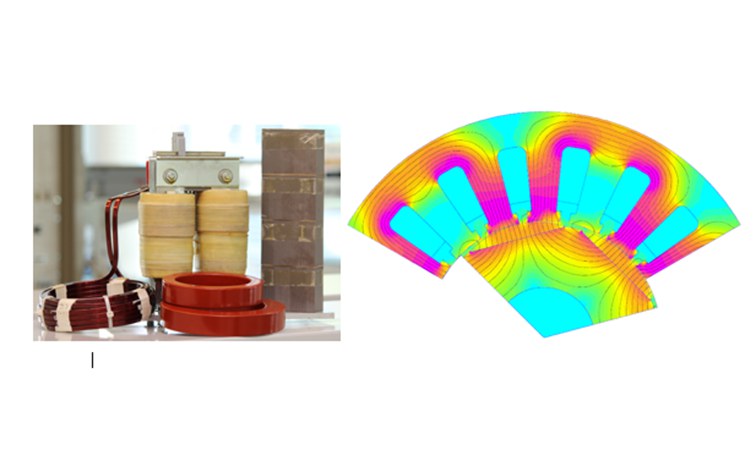
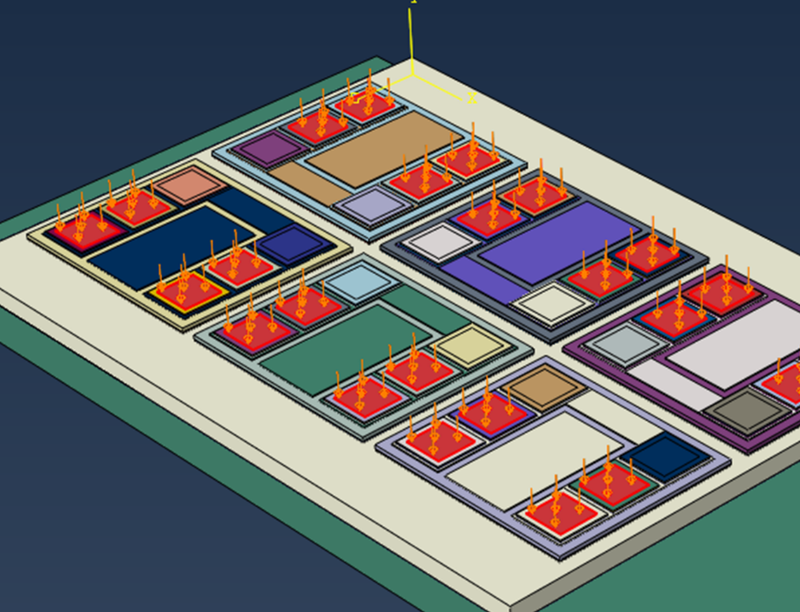
Electromagnetic design and simulation of magnetic components.

Selected Projects

Simulationsgestützte Leistungs-Optimierung von IGCT (Thyristor)

Ein Team der FHNW optimiert das Packaging und damit die Leistungsfähigkeit eines Halbleiter-Bauelements.

Überwachung des Alterungszustandes von Leistungshalbleitern

Mithilfe einer neuen Methode, basierend auf der Bestimmung der Sperrschichttemperatur von Leistungsmodulen mit Insulated-Gate Bipolar Transistoren (IGBT).
Institute
Institute of Electrical Power Systems and Institute of Thermal and Fluid Engineering
Research field
Elektrotechnik

Zuverlässigkeit von Leistungselektronik

Wir untersuchen, überwachen und optimieren die Zuverlässigkeit, von den Halbleitern bis zur Systemebene.
Institute
Institute of Electrical Power Systems

Contact
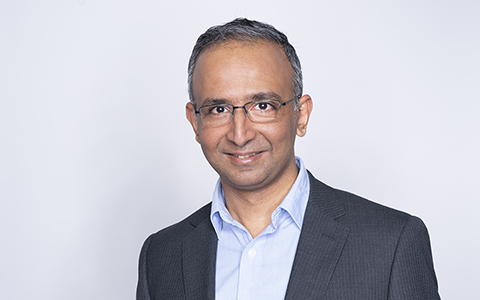
Prof. Dr. Ishan Pendharkar

Lecturer for control systems and power electronics
Phone
+41 56 202 82 08
E-Mail
ishan.pendharkar@fhnw.ch

Prof. Dr. Nicola Schulz

Lecturer for Electric Power Systems
Phone
+41 56 202 75 73 (Direct)
E-Mail
nicola.schulz@fhnw.ch

School of
Engineering and Environment FHNW University of Applied Sciences and Arts Northwestern Switzerland

  • About the School
    • FHNW School of Engineering and Environment
    • Degree Programmes
    • Continuing Education
    • Collaboration in Research and Services
  • Social Media
    • LinkedIn
    • Instagram
    • Facebook
    • TikTok
    • YouTube
  • About FHNW
    • Organisation
    • Schools
    • Locations
    • FHNW Library
    • Media Relations
  • Support
    • IT Support
    • Inside FHNW
    • Webmail
Logo FHNW - 20 Years
Logo Swiss Universities
Logo European University Association
© University of Applied Sciences and Arts Northwestern Switzerland (FHNW)
  • Data Protection
  • Imprint
  • Accessibility
  • DE
  • EN