Skip to main contentSkip to search barSkip to navigationSkip to footer
Logo of the University of Applied Sciences and Arts Northwestern Switzerland
  • DE
  • EN
  • Home

Ten Schools One Goal

The FHNW comprises 10 schools with different specializations. Select a school to see its specific courses, study programmes and information.

FHNW School of Applied Psychology

Applied Psychology

FHNW School of Architecture, Construction and Geomatics

Architecture, Construction and Geomatics

Basel Academy of Art and Design

Art and Design

FHNW School of Business

Business

FHNW School of Computer Science

Computer Science

FHNW School of Engineering and Environment

Engineering and Environment

FHNW School of Life Sciences

Life Sciences

Basel Academy of Music

Music

FHNW School of Education

School of Education

FHNW School of Social Work

Social Work

  • Study offerings

    • All degree programmes
    • Master in Life Sciences
    • Master in Medical Informatics
    • Joint Degree Master in Biomedical Engineering
    • Info Events
  • About degree programmes

    • Tuition fees and scholarships
    • Digital Life Sciences
  • International

    • Outgoing Students
    • Incoming Students
    • Double Degree
    • Partner universities
    • Student stories
    • Buddy programme
    • News and stories
  • Continuing education offerings

    • All continuing educations
    • MAS - Master of Advanced Studies
    • DAS - Diploma of Advanced Studies
    • CAS - Certificate of Advanced Studies
    • SAS - Short Advanced Studies
    • Specialist seminars
    • Info Events
  • Organisation

    • Consulting services
  • Research

    • Research fields
    • Projects
    • Institutes and centres
  • Collaboration

    • Process Technology Centre
    • Facilities and services
    • Tech Transfer Office
    • Student projects
  • International

    • Study abroad
    • International research projects
  • Updates and insights

    • News and stories
    • Research highlights
  • Events

    • All events
    • Info Events
    • Research seminars
  • Media corner

  • About the School of Life Sciences

    • Strategy and values
    • Management board
    • Administration and service staff
    • Advisory board
    • People directory
    • Diversity and equal opportunities
    • Media corner
    • Infrastructure and campus
  • Institutes and centres

    • Institute for Chemistry and Bioanalytics
    • Institute for Ecopreneurship
    • Institute for Medical Engineering and Medical Informatics
    • Institute for Pharma Technology and Biotechnology
    • Centre for Teaching and Learning
    • Process Technology Centre
Logo of the University of Applied Sciences and Arts Northwestern Switzerland
  • About the School
    • School
    • Degree Programmes
    • Continuing Education
    • Research
    • Events
  • Social Media
    • Facebook
    • Instagram
    • YouTube
    • LinkedIn
  • About FHNW
    • Organisation
    • Schools
    • Locations
    • FHNW Library
    • Media Relations
  • Support
    • IT Support
    • Inside FHNW
    • Webmail
  • Data Protection
  • Imprint
  • Accessibility
  • Study offerings

    • All degree programmes
    • Master in Life Sciences
    • Master in Medical Informatics
    • Joint Degree Master in Biomedical Engineering
    • Info Events
  • About degree programmes

    • Tuition fees and scholarships
    • Digital Life Sciences
  • International

    • Outgoing Students
    • Incoming Students
    • Double Degree
    • Partner universities
    • Student stories
    • Buddy programme
    • News and stories
  • Continuing education offerings

    • All continuing educations
    • MAS - Master of Advanced Studies
    • DAS - Diploma of Advanced Studies
    • CAS - Certificate of Advanced Studies
    • SAS - Short Advanced Studies
    • Specialist seminars
    • Info Events
  • Organisation

    • Consulting services
  • Research

    • Research fields
    • Projects
    • Institutes and centres
  • Collaboration

    • Process Technology Centre
    • Facilities and services
    • Tech Transfer Office
    • Student projects
  • International

    • Study abroad
    • International research projects
  • Updates and insights

    • News and stories
    • Research highlights
  • Events

    • All events
    • Info Events
    • Research seminars
  • Media corner

  • About the School of Life Sciences

    • Strategy and values
    • Management board
    • Administration and service staff
    • Advisory board
    • People directory
    • Diversity and equal opportunities
    • Media corner
    • Infrastructure and campus
  • Institutes and centres

    • Institute for Chemistry and Bioanalytics
    • Institute for Ecopreneurship
    • Institute for Medical Engineering and Medical Informatics
    • Institute for Pharma Technology and Biotechnology
    • Centre for Teaching and Learning
    • Process Technology Centre

Type a search term and search continuing education,degree programmes, events, documents and other content.

  • Life Sciences
  • Continuing education
  • Continuing education offerings
  • All continuing education programmes
All continuing education programmes

SAS The 3Rs: Optimizing animal studies through Reduction and Refinement strategies, FHNW School of Life Sciences

School of Life Sciences


  • Factsheet
  • Aims and benefits
  • Target audience
  • Structure and programme contents
  • Requirements and admission
  • Organisational matters
  • Advising and Info Events
  • Registration

Learn how to design robust studies while reducing animal use in research. Gain practical skills in experimental planning, statistics, and innovative technologies such as AI-supported tools and advanced imaging. You will also explore strategies to improve animal welfare, housing, care, and monitoring, strengthening your expertise in responsible and future-oriented biomedical research.

sas-the-3rs-optimizing-animal-studies-through-reduction-hls-fhnw.jpeg

Factsheet

Degree
Module Certificate for Short Advanced Studies (Microcredential) FHNW
Learning mode
Online, Onsite
ECTS credits
3
Next start
11.3.2027
Duration
4 days
Teaching language
English
Place
Online and FHNW Campus Muttenz
Fee
CHF 2 100

At a glance

  • Optimize design: Use planning frameworks and statistical methods to maximize scientific robustness while minimizing animal use.
  • Discover how emerging technologies contribute to reduction strategies.
  • Learn how animal welfare is assessed and managed in research settings.
  • Identify ways to enhance animal housing, husbandry, and procedures using modern monitoring technologies.

Aims and benefits

You will discover practical tools and technologies that support better study planning and reduction of animal use. Furthermore, this SAS examines practical approaches to refining animal housing, handling, and care across different research environments.

After completing the SAS, you will be able to:

  • Apply planning frameworks and guidelines to improve experimental design and reduce unnecessary animal use.
  • Use statistical and methodological approaches to optimise study design, ensuring robust scientific outcomes while minimising the number of animals required.
  • Understand how emerging technologies can contribute to reduction strategies in biomedical research.
  • Understand the principles of animal welfare, severity assessment, and severity grading, and how these are applied in research environments.
  • Identify opportunities to refine animal housing, husbandry, and experimental procedures across different research contexts.
  • Evaluate approaches for monitoring animal welfare and behaviour with monitoring technologies.

Target audience

This SAS is for you if you operate at the interface of regulation, science and institutional practice and you are seeking practical ways to advance 3Rs implementation beyond minimum compliance and integrate them more strategically within your organisation.

It is particularly suited for professionals involved in animal experimentation and its governance in research institutions, universities, regulatory bodies and public authorities, as well as in the pharmaceutical, biotechnology, chemical and consumer goods industries.

It is especially relevant for:

  • Heads and managers of animal facilities
  • 3Rs officers, animal welfare officers and designated veterinarians
  • Members of cantonal animal experimentation committees and veterinary authorities
  • Preclinical and translational researchers
  • Study directors, principal investigators and senior scientists
  • Research strategy, governance and compliance professionals
  • Regulatory affairs professionals

Structure and programme contents

This SAS is the third of four modules within the CAS Strategic 3Rs Implementation in Biomedical Research and Testing. Day one, two and four are online, day three is onsite at the FHNW Campus Muttenz.

This SAS provides practical training in designing robust biomedical studies while reducing animal use through improved planning, statistical methods, and innovative technologies. You will learn how emerging tools such as AI-supported systems and advanced imaging can support reduction strategies, while also exploring approaches to improve animal welfare, housing, care, and monitoring in research environments. The course combines scientific quality with responsible research practices and equips you with applied skills for future-oriented biomedical research.

At the end of the SAS, a multiple-choice questionnaire (pass/fail) is available, if you would like to receive ECTS credits. The SAS can be allocated to the CAS Strategic 3Rs Implementation in Biomedical Research and Testing within 3 years.


Requirements and admission

The following programme admission requirements apply:

  • Tertiary A: Higher education qualification (at least a Bachelor’s degree) and at least 2 years’ practical experience relevant to the programme,
  • Tertiary B: Colleges of Higher Education Diploma (HF), Advanced Federal Diploma of Higher Education (HFP) or Federal Diploma Higher Education (BP), and at least 5 years’ practical experience relevant to the programme,
  • Individuals without a Tertiary A or B qualification may be admitted if they cumulatively meet the following admission criteria:
    • at least 10 years’ professional experience in a field relevant to the programme, of which at least 5 years in a managerial or senior specialist role
    • additional qualifications (various non-formal, extensive further training courses or partial completion (>50%) of a tertiary qualification)
    • evidence of knowledge of academic work or a willingness to acquire this in advance.

Organisational matters

Programme partners
Programme schedule
Legal terms

Advising and Info Events

Contact

Laura Suter-Dick

Prof. Dr. Laura Suter-Dick

Head of Programme BSc Bioanalytics & Cell Biology Team Leader Cell Biology and in vitro Toxicology
Phone
+41 61 228 56 59
E-Mail
laura.suterdick@fhnw.ch
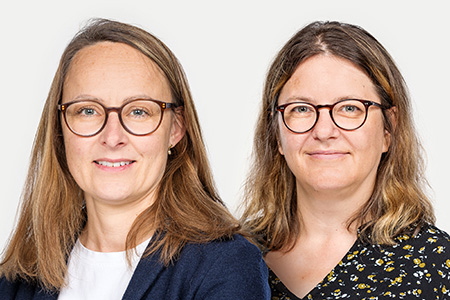
Elzbieta Lehmann and Nicole Widmann

Elzbieta Lehmann and Nicole Widmann

Phone
+41 61 228 55 40
E-Mail
weiterbildung.lifesciences@fhnw.ch

Info Events

Loading...


Registration

SAS The 3Rs: Optimizing animal studies through Reduction and Refinement strategies

Date
11.3.2027
Place
Online and onsite
Course management
Laura Suter-Dick
Final application date
3.12.2026
Register

School of
Life Sciences FHNW University of Applied Sciences and Arts Northwestern Switzerland

  • About the School
    • School
    • Degree Programmes
    • Continuing Education
    • Research
    • Events
  • Social Media
    • Facebook
    • Instagram
    • YouTube
    • LinkedIn
  • About FHNW
    • Organisation
    • Schools
    • Locations
    • FHNW Library
    • Media Relations
  • Support
    • IT Support
    • Inside FHNW
    • Webmail
Logo FHNW - 20 Years
Logo Swiss Universities
Logo European University Association
© University of Applied Sciences and Arts Northwestern Switzerland (FHNW)
  • Data Protection
  • Imprint
  • Accessibility
  • EN
  • DE