Open-source data models as the foundation for digital sovereignty and AI in medicine
Key data
- Organized by
- FHNW School of Life Sciences
- Event language
- English
- Expenses
- Free of charge; Registration required.
- Address
- Hofackerstrasse 30
4132 Muttenz - Occasions
- 26.11.2026, 16:00–18:00, Room 01.W.09
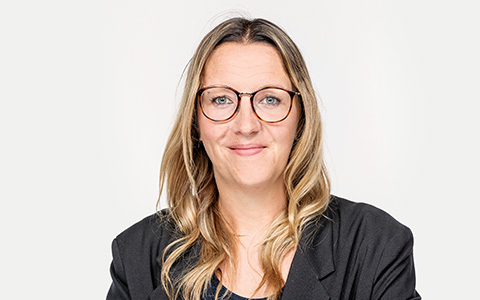
Prof. Dr. Bram Stieltjes joined the Institute for Medical Engineering and Medical Informatics in September 2026 as lecturer and professor of medical information systems.
In his inaugural lecture on Thursday, November 26 2026, he will discuss why open-source data models are the foundation for digital sovereignty and AI in medicine.
Get to know Prof. Dr. Stieltjes and gain insights into research and education in medical information systems at the FHNW School of Life Sciences.
The lecture will be followed by an apéro. This event is free of charge but registration is required. Please complete the form below.
Abstract
Open-source data models as the foundation for digital sovereignty and AI in medicine
The digitalisation of medicine is generating an ever-increasing volume of health data produced across different systems, formats and institutions. The use of health data in research, healthcare and artificial intelligence is hampered by a lack of interoperability and fragmented models, systems and providers. Open, standardised and traceable data models can provide a foundation: they make it possible to link medical information across systems, ensure its long-term usability and make it available for a variety of applications.
In his inaugural lecture, Dr Bram Stieltjes, MD, PhD, explains why open-source approaches and data models are a prerequisite for digital sovereignty in the healthcare sector. Using examples from research and clinical practice, he highlights how heterogeneous health data can be structured, linked together and made usable for clinical information systems and medical decision-making tools. This goes beyond technical interoperability to include governance: who can design, further develop and control data models.
Finally, he will demonstrate how open data models, interoperable clinical information systems and AI can work together to enable sustainable and digitally sovereign healthcare. This opens up prospects for research and teaching in clinical information systems at the FHNW School of Life Sciences, as well as for partnerships and implementation within clinical settings.
Particular attention is paid to the importance of such open structures for the use of artificial intelligence in medicine. AI systems rely on high-quality, accessible and contextually interpretable data. Open data models can help to make data usable across system and institutional boundaries, thereby supporting the development, validation and application of AI in medicine. At the same time, data protection, traceability, standardisation and the secure use of sensitive health data are key requirements.