Skip to main contentSkip to search barSkip to navigationSkip to footer
Logo of the University of Applied Sciences and Arts Northwestern Switzerland
  • DE
  • EN
  • Home

Ten Schools One Goal

The FHNW comprises 10 schools with different specializations. Select a school to see its specific courses, study programmes and information.

Applied Psychology

Architecture, Construction and Geomatics

Art and Design

Music

Computer Science

Life Sciences

School of Education

Social Work

Engineering and Environment

Business

  • Study offerings

    • All degree programmes
    • Master in Life Sciences
    • Master in Medical Informatics
    • Joint Degree Master in Biomedical Engineering
    • Info events
  • About degree programmes

    • Tuition fees and scholarships
    • Digital Life Sciences
  • International

    • Outgoing Students
    • Incoming Students
    • Double Degree
    • Partner universities
    • Student stories
    • Buddy programme
    • News and stories
  • Continuing education offerings

    • All continuing educations
    • CAS - Certificate of Advanced Studies
    • Modules and Seminars
    • Info events
  • Organisation

    • Consulting services
    • Legal information and terms & conditions
  • Research

    • Research fields
    • Projects
  • Collaboration

    • Process Technology Centre
    • Services
    • Tech Transfer Office
    • Student projects
  • International

    • Study abroad
    • International research projects
  • Updates and insights

    • News and stories
    • Research highlights
  • Events

    • All events
    • Info events
  • Media corner

  • About the School of Life Sciences

    • Strategy and values
    • Management board
    • Staff
    • Advisory board
    • People directory
    • Diversity and equal opportunities
    • Media corner
    • Infrastructure and campus
  • Institutes and centres

    • Institute for Chemistry and Bioanalytics
    • Institute for Ecopreneurship
    • Institute for Medical Engineering and Medical Informatics
    • Institute for Pharma Technology and Biotechnology
    • Centre for Teaching and Learning
    • Process Technology Centre
Logo of the University of Applied Sciences and Arts Northwestern Switzerland
  • About the School
    • School
    • Degree Programmes
    • Continuing Education
    • Research
    • Events
  • Social Media
    • Facebook
    • Instagram
    • YouTube
    • LinkedIn
  • About FHNW
    • Organisation
    • Schools
    • Locations
    • FHNW Library
    • Media Relations
  • Support
    • IT Support
    • Inside FHNW
    • Webmail
  • Data Protection
  • Imprint
  • Accessibility
  • Study offerings

    • All degree programmes
    • Master in Life Sciences
    • Master in Medical Informatics
    • Joint Degree Master in Biomedical Engineering
    • Info events
  • About degree programmes

    • Tuition fees and scholarships
    • Digital Life Sciences
  • International

    • Outgoing Students
    • Incoming Students
    • Double Degree
    • Partner universities
    • Student stories
    • Buddy programme
    • News and stories
  • Continuing education offerings

    • All continuing educations
    • CAS - Certificate of Advanced Studies
    • Modules and Seminars
    • Info events
  • Organisation

    • Consulting services
    • Legal information and terms & conditions
  • Research

    • Research fields
    • Projects
  • Collaboration

    • Process Technology Centre
    • Services
    • Tech Transfer Office
    • Student projects
  • International

    • Study abroad
    • International research projects
  • Updates and insights

    • News and stories
    • Research highlights
  • Events

    • All events
    • Info events
  • Media corner

  • About the School of Life Sciences

    • Strategy and values
    • Management board
    • Staff
    • Advisory board
    • People directory
    • Diversity and equal opportunities
    • Media corner
    • Infrastructure and campus
  • Institutes and centres

    • Institute for Chemistry and Bioanalytics
    • Institute for Ecopreneurship
    • Institute for Medical Engineering and Medical Informatics
    • Institute for Pharma Technology and Biotechnology
    • Centre for Teaching and Learning
    • Process Technology Centre

Type a search term and search continuing education,degree programmes, events, documents and other content.

3D printed implants, FHNW School of Life Sciences

12.12.2017 – School of Life Sciences, Institute for Medical Engineering and Medical Informatics


  • Life Sciences
  • News and events
  • News and Stories
  • All news and stories
All news and stories
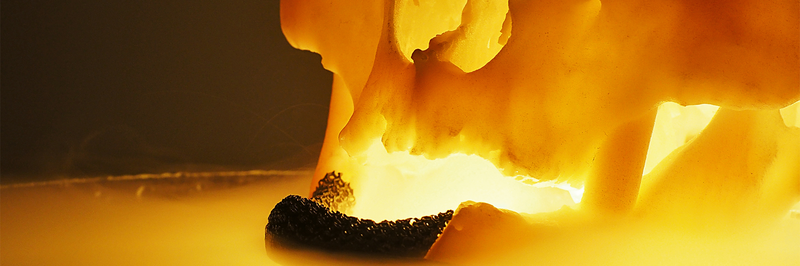
Header_Implantate.png

Design, manufacturing, and quality management of metallic and ceramic implants using 3D printing

  • Story

3D printers are revolutionising production technology. They enable the large-scale production of objects with significantly more complex three- dimensional structures than is possible with conventional production methods.

At the FHNW School of Life Sciences, Erik Schkommodau and Ralf Schumacher are making sure that medical technology also benefits from these advances. For them, the advantages of 3D printing for implantology are clear.

Schkommodau, the head of the Institute of Medical Engineering and Medical Informatics, explains: “In the future, and in some cases even today, doctors can create 3D- printed implants for patient- specific bony structures, for example for the face. We have been working on this technology for about 15 years.”

Ralf Schumacher, who heads the HLS spin-off Mimedis and also teaches and researches 3D printing and medicine at the FHNW, has a clear vision: “We want to develop 3D printing systems which doctors can use to design implants themselves in the clinic.”

To this end the two researchers are developing complete processes, from the implant design software, through to production and quality management. This vital work goes hand in hand with their research into new materials for the next generation of implants.

Applications in the human body place high demands on materials: they must not be toxic or otherwise harmful, they need to be very strong where necessary and in some cases should also interact with the body, e.g. dissolve over time or allow bone cells to grow through them. To meet these requirements, FHNW researchers are working with both metals and ceramic materials.

Titanium and its alloys have been the state of the art in implantology for many years. The Institute has established a quality management system for the manufacture of metallic implants using 3D printers, according to EU guidelines. External medical technology firms can thus outsource implant production to the FHNW and audit them as a supplier. The FHNW laboratories can provide these firms with special implants and help to cure patients with complex bone defects.

One printing process for metallic implants is Selective Laser Melting. The printer holds a layer of metal powder a few microns thick, which is melted by a laser at predetermined points. “In this way, the bone structure, its pores and hence its biomechanical properties can be replicated very precisely. It is also possible to give an implant different elastic properties”, explains Schumacher. “Artificial joint sockets can be modelled in such a way that they are dense near the joint gap and open-pore near the bone. Bone cells can then grow through the pores, strengthening the anchoring of the implant.”

In addition to traditional implant materials, the scientists are researching NiTinol, an alloy containing nickel. Not only is it more flexible than conventional titanium alloys, it also has good mechanical damping properties and has form memory. The HLS researchers have even succeeded in maintaining this form memory at body temperature: 3D printed NiTinol forms can be changed at low temperatures so that they can easily be introduced into the body; they then resume their original shape when heated in the body.

Ceramic implants that break down in the body are also being investigated. However, they are not bonded with a laser but rather with a chemical binding agent which is applied by a print head to the powder layer. The ceramics used, hydroxylapatite and tricalcium phosphate, make up the bulk of the extracellular matrix of the bone and give it its strength. However, bone also contains biopolymers such as collagen which give it flexibility. These are difficult to add to the artificial production process, since the ceramics are brittle after printing and being baked in an oven at 1200 to 1400 degrees Celsius.

Working with the Paul Scherrer Institute, the researchers are taking a different approach, using crystalline nanoparticles instead of biopolymers; the print head applies these nanoparticles with the binder. First results have shown a very promising stabilization of the implants. With all the different materials and the need to establish quality management systems for them, FHNW researchers are taking ambitious steps into the future: “Standard printers are rather limited and we do not have the range of possibilities we need. Therefore we are now developing our own printers.”

Methods

  • Computer Aided Design (CAD)
  • Free-form surface modelling
  • Material and process development for 3D printing
  • Antibacterial tests
  • Electrochemical surface treatment

Infrastructure

  • 3D printing technologies: MultiJet printing for plastics, Selective Laser Melting for metals, Binder-in-Bed printing for bioceramics, Fused Deposit Modelling, Bio-Plotter
  • Metallographic laboratory (SEM, EDX, μ-CT, confocal microscopy)
  • Mechanical test laboratory (tribology, hydropulser, tracking, optical 3D scanner)
  • Plasma cleaner
  • Dynamic differential calorimetry

Support

  • EU, SNSF, CTI, FHNW Foundation

Collaboration

  • University Hospital of Basel
  • Cantonal Hospital of Basel-Land
  • Cantonal Hospital of Aarau
  • Cantonal Hospital of Baden
  • Paul Scherrer Institute
  • University Hospital Cluj-Napoca, Romania
  • Industry

Contact

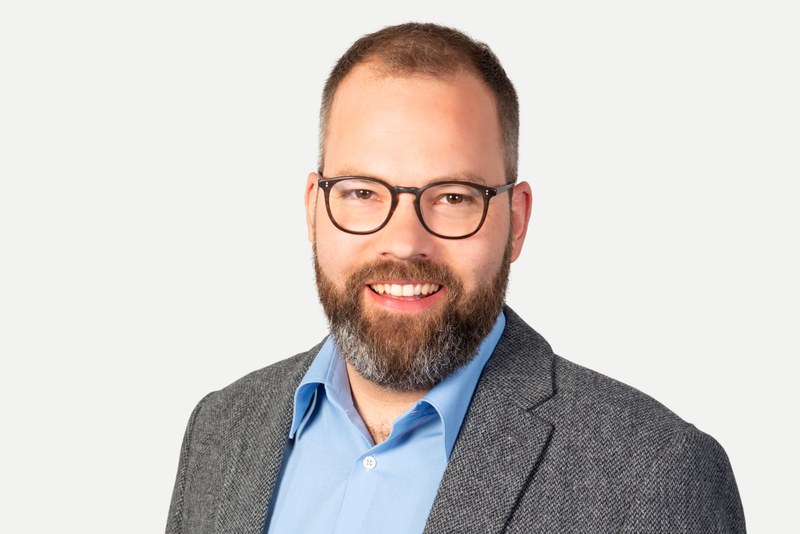
Daniel Seiler

Daniel Seiler

Team leader, Medical Additive Manufacturing
Phone
+41 61 228 58 48
E-Mail
daniel.seiler@fhnw.ch

School of
Life Sciences FHNW University of Applied Sciences and Arts Northwestern Switzerland

  • About the School
    • School
    • Degree Programmes
    • Continuing Education
    • Research
    • Events
  • Social Media
    • Facebook
    • Instagram
    • YouTube
    • LinkedIn
  • About FHNW
    • Organisation
    • Schools
    • Locations
    • FHNW Library
    • Media Relations
  • Support
    • IT Support
    • Inside FHNW
    • Webmail
Logo FHNW - 20 Years
Logo Swiss Universities
Logo European University Association
© University of Applied Sciences and Arts Northwestern Switzerland (FHNW)
  • Data Protection
  • Imprint
  • Accessibility
  • DE
  • EN