Optimisation of an enzyme based toothpaste for chemically stability and longer shelf life
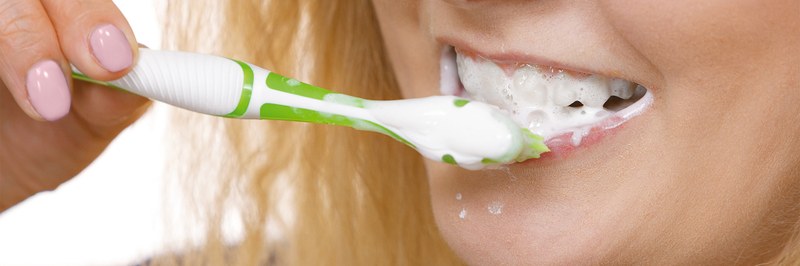
Reading the ingredients lists of some toothpastes feels like being in a chemistry lab: the well-known fluoride and menthol, antibacterial agents such as triclosan, preservatives, colouring and a substance called sodium lauryl sulphate, or SLS for short. Chemically speaking, SLS is a detergent that kills bacteria and ensures foaming when brushing teeth. But SLS has fallen out of favour, as it can irritate the oral mucosa and cause aphthae. Hence, like other manufacturers of dental care products, the Swiss firm Curaden looked for an alternative.
Enzyme-based toothpaste uses less aggressive chemical substances than normal toothpaste, enabling gentler oral hygiene. The complex action of the enzymes it contains is linked to one of the body’s own protection mechanisms. However, enzymes are sensitive and do not keep for a long time, resulting in, until now, a shorter shelf life for the toothpaste. Researchers at the Institute for Chemistry and Bioanalytics worked with Curaden to optimise the composition of an enzyme toothpaste, enabling Curaden to launch an effective, chemically stable and long-lasting product on the market.
Michel-Angelo Sciotti, a molecular biologist in the Institute for Chemistry and Bioanalytics, co-developed and tested the enzyme toothpaste. Describing the challenge, he says: “The enzyme system is much more complex than the chemical mechanism in conventional toothpaste. Enzymes are part of a biological system and are more or less stable depending on environmental conditions; their activity when brushing teeth depends on various factors.” These include the bacteria naturally living in the oral cavity, brushing duration, how soon afterwards the mouth is rinsed and how long the tube has been open. This makes enzymes difficult to use in oral hygiene products.
Nevertheless, enzyme toothpaste has one big advantage: it triggers active substances that are already present in our mouth, either created by oral mucosa cells or by saliva, and it produces others that enhance the cleaning effect. It also preserves the mouth’s microbiological balance. Sciotti says: “There are 700 different species of bacteria in the oral cavity. Our diet and lifestyle make some of them problematic since at some point they can cause tooth decay or periodontitis. We must curb their excessive growth.”
This is where enzyme toothpaste comes in. Unlike ordinary toothpaste, which acts like a detergent and breaks down all microorganisms, it cleans more gently and leaves your own protective bacteria in your mouth. This makes the toothpaste much more effective. In the development phase the research team tested two enzymes: glucose oxidase and lactoperoxidase. While they don't attacking bacteria directly, they form two active ingredients during brushing : hydrogen peroxide and hypothiocyanite. Hypothiocyanite is formed by lactoperoxidase from thiocyanate, which is present in saliva; it mainly attacks germs that enter the oral cavity from the environment.
Evolution and dietary changes have led to the development of bacteria which live in the body and cause tooth decay and periodontal disease. A different remedy is required for these, for example the antibacterial hydrogen peroxide, which is already produced in small amounts by oral mucosa cells. When brushing teeth with enzyme toothpaste, it is produced from sugar and oxygen with the aid of glucose oxidase. “In the same way bees give honey its antibacterial effect,” says Sciotti.
Although the active ingredients, hydrogen peroxide and hypothiocyanite, are effective against caries bacteria, they are very unstable and thus cannot simply be added to toothpaste. Rather, they must be freshly produced in the oral cavity with each brushing, making it difficult to regulate the toothpaste enzyme system. Moreover, the enzymes must stimulate the formation of hydrogen peroxide and hypothiocyanite rapidly, since you usually only brush for a few minutes and then rinse your mouth, causing the active ingredients to disappear again.
In order to solve this problem, Sciotti and his team have refined the formula of the toothpaste several times. Sciotti explains that initial results were surprising. “We used to think that the enzymes were unstable. Then we saw that the system was not airtight and hydrogen peroxide was being formed during the mixing process and was decomposing the enzymes in the tube. To prevent this, we had to add an exact level of antioxidants so that the production of hydrogen peroxide was only triggered by brushing, but happened as soon as brushing started.”
The researchers developed a preclinical study test procedure specifically for this project. In the lab they blended bacterial cultures with toothpaste for ten minutes and left the mixtures on a growth medium overnight. They then counted how many bacteria had survived contact with the toothpaste. During testing Sciotti and his team discovered a peculiarity of the interaction between the two enzymes. “The toothpaste which contained both glucose oxidase and lactoperoxidase had no effect on Streptococcus mutans bacteria,” says Sciotti. “It seems that all the hydrogen peroxide produced was used up to form hypothiocyanite.” In contrast, toothpaste containing only glucose oxidase was highly effective against these caries-causing bacteria. In use, it produces a certain amount of hypothiocyanite from lactoperoxidase in our saliva, but the excess unconverted hydrogen peroxide remains and has a strong antibacterial effect against Streptococcus mutans. Thus, this single enzyme formulation ultimately combines the effects of hypothiocyanite and hydrogen peroxide. By not adding lactoperoxidase, Sciotti also reduced production costs and increased the stability of the toothpaste. As well as ongoing long-term studies, the researcher is also working with Curaden on other innovative products for oral hygiene.
Methods
- Enzyme systems, enzyme kinetics
- Stability and stress studies
- Enzyme immobilisation
- Oral microbiology, Streptococcus mutans
- Microculture-based antibacterial assays
- Short exposure antibacterial assays
- Preclinical and clinical studies
- Toothpaste formulation
Infrastructure
- Plate reader spectrophotometer
- Microbiology laboratory safety level 2
- Glove box workstation
Support
- Innosuisse
Collaboration
- Curaden AG
- Centre for Dentistry at University Hospital Zurich