Skip to main contentSkip to search barSkip to navigationSkip to footer
Logo of the University of Applied Sciences and Arts Northwestern Switzerland
  • DE
  • EN
  • Home

Ten Schools One Goal

The FHNW comprises 10 schools with different specializations. Select a school to see its specific courses, study programmes and information.

Applied Psychology

Architecture, Construction and Geomatics

Art and Design

Music

Computer Science

Life Sciences

School of Education

Social Work

Engineering and Environment

Business

  • Study offerings

    • All degree programmes
    • Master in Life Sciences
    • Master in Medical Informatics
    • Joint Degree Master in Biomedical Engineering
    • Info events
  • About degree programmes

    • Tuition fees and scholarships
    • Digital Life Sciences
  • International

    • Outgoing Students
    • Incoming Students
    • Double Degree
    • Partner universities
    • Student stories
    • Buddy programme
    • News and stories
  • Continuing education offerings

    • All continuing educations
    • CAS - Certificate of Advanced Studies
    • Modules and Seminars
    • Info events
  • Organisation

    • Consulting services
    • Legal information and terms & conditions
  • Research

    • Research fields
    • Projects
  • Collaboration

    • Process Technology Centre
    • Services
    • Tech Transfer Office
    • Student projects
  • International

    • Study abroad
    • International research projects
  • Updates and insights

    • News and stories
    • Research highlights
  • Events

    • All events
    • Info events
  • Media corner

  • About the School of Life Sciences

    • Strategy and values
    • Management board
    • Staff
    • Advisory board
    • People directory
    • Diversity and equal opportunities
    • Media corner
    • Infrastructure and campus
  • Institutes and centres

    • Institute for Chemistry and Bioanalytics
    • Institute for Ecopreneurship
    • Institute for Medical Engineering and Medical Informatics
    • Institute for Pharma Technology and Biotechnology
    • Centre for Teaching and Learning
    • Process Technology Centre
Logo of the University of Applied Sciences and Arts Northwestern Switzerland
  • About the School
    • School
    • Degree Programmes
    • Continuing Education
    • Research
    • Events
  • Social Media
    • Facebook
    • Instagram
    • YouTube
    • LinkedIn
  • About FHNW
    • Organisation
    • Schools
    • Locations
    • FHNW Library
    • Media Relations
  • Support
    • IT Support
    • Inside FHNW
    • Webmail
  • Data Protection
  • Imprint
  • Accessibility
  • Study offerings

    • All degree programmes
    • Master in Life Sciences
    • Master in Medical Informatics
    • Joint Degree Master in Biomedical Engineering
    • Info events
  • About degree programmes

    • Tuition fees and scholarships
    • Digital Life Sciences
  • International

    • Outgoing Students
    • Incoming Students
    • Double Degree
    • Partner universities
    • Student stories
    • Buddy programme
    • News and stories
  • Continuing education offerings

    • All continuing educations
    • CAS - Certificate of Advanced Studies
    • Modules and Seminars
    • Info events
  • Organisation

    • Consulting services
    • Legal information and terms & conditions
  • Research

    • Research fields
    • Projects
  • Collaboration

    • Process Technology Centre
    • Services
    • Tech Transfer Office
    • Student projects
  • International

    • Study abroad
    • International research projects
  • Updates and insights

    • News and stories
    • Research highlights
  • Events

    • All events
    • Info events
  • Media corner

  • About the School of Life Sciences

    • Strategy and values
    • Management board
    • Staff
    • Advisory board
    • People directory
    • Diversity and equal opportunities
    • Media corner
    • Infrastructure and campus
  • Institutes and centres

    • Institute for Chemistry and Bioanalytics
    • Institute for Ecopreneurship
    • Institute for Medical Engineering and Medical Informatics
    • Institute for Pharma Technology and Biotechnology
    • Centre for Teaching and Learning
    • Process Technology Centre

Type a search term and search continuing education,degree programmes, events, documents and other content.

Italy, MSc Environmental Technologies, Double Degree, FHNW School of Life Sciences

25.6.2024 – School of Life Sciences


  • Life Sciences
  • News and events
  • News and Stories
  • All news and stories
All news and stories
header_bastien.png

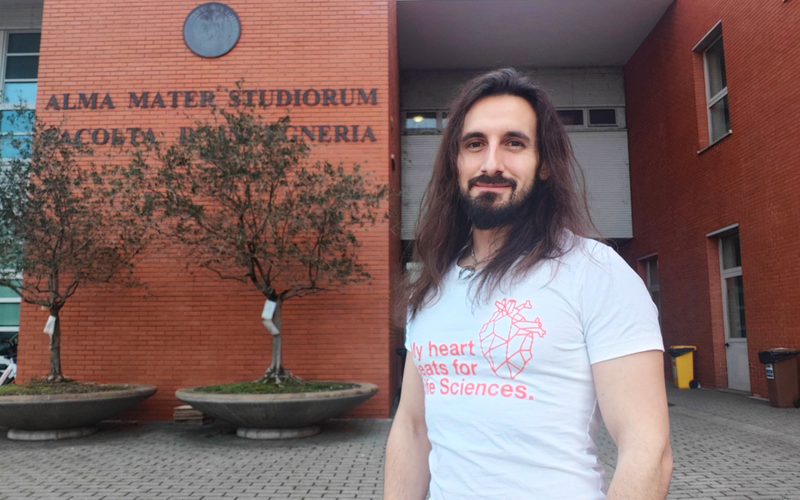
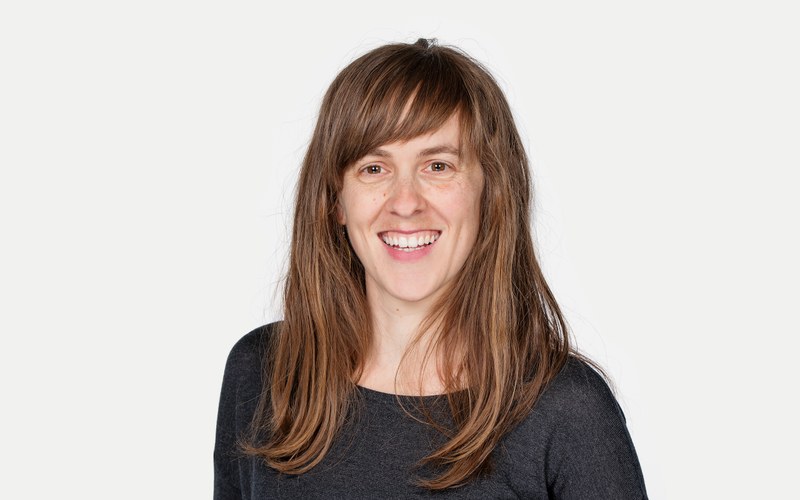
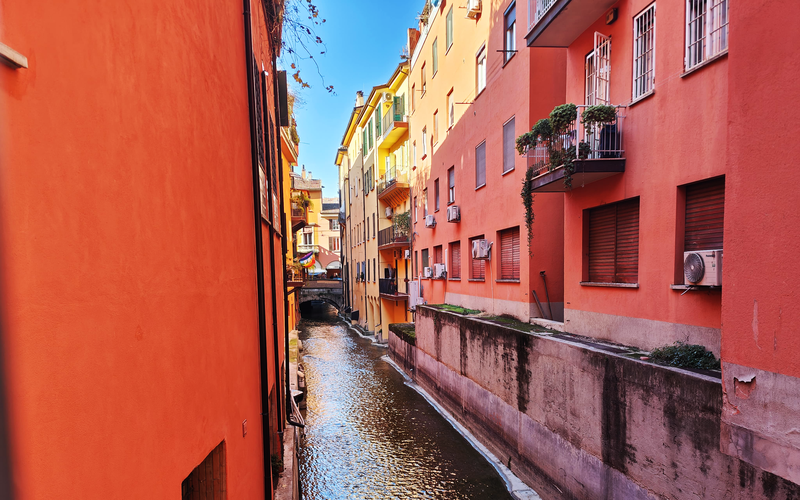
In 2023, Bastien Vallat took the opportunity to do a double degree in Italy and spent one additional semester at the University of Bologna.

  • Story

What made you decide, what motivated you to go abroad?
I wanted to have my first experience of life abroad, as I am considering traveling more in the future. Additionally, I thought it would be interesting to discover a new culture, see what daily life is like elsewhere, and understand different mentalities. From an academic perspective, studying abroad gave me access to fields and courses not available in Muttenz. Moreover, the double degree programme is very appealing to me as I am thinking of pursuing a PhD.

Why did you choose your host institution/country?
Language and Culture: I was eager to learn Italian both for personal affinity and because it is an official language in Switzerland. What better place to immerse myself in the language than in Italy itself?
The university offered a diverse range of lectures and courses that I could not find in Muttenz, in topics that were totally new to me, such as Subsurface Energy Systems (Petroleum Engineering) and Engineering Geology.
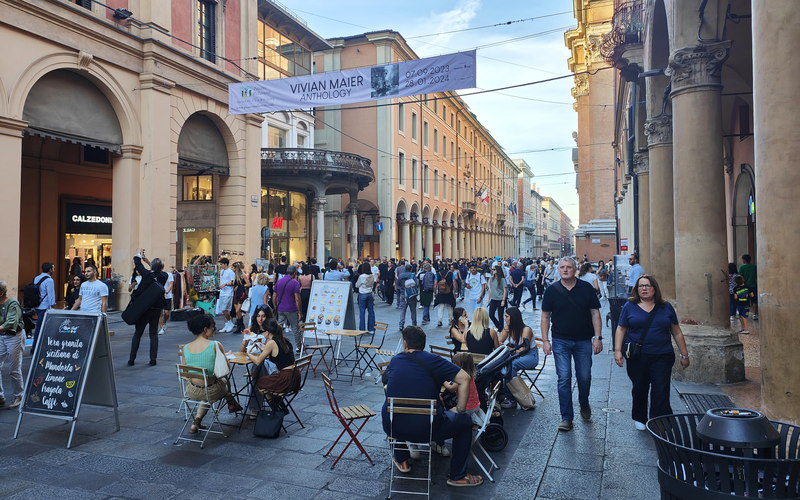
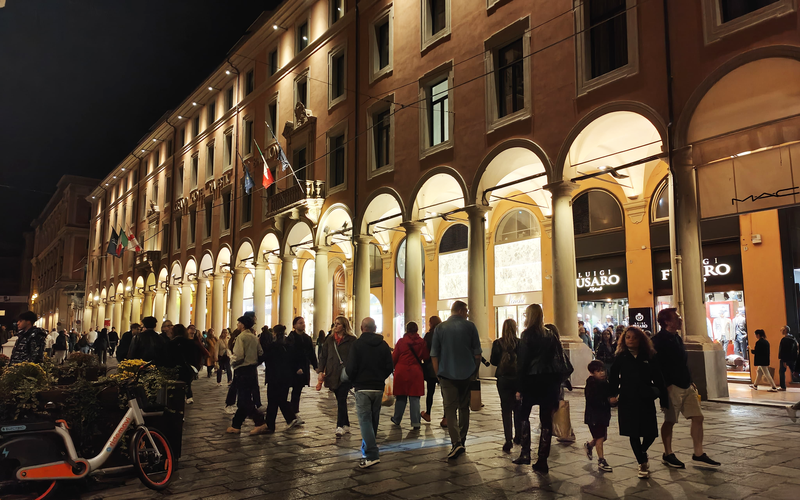
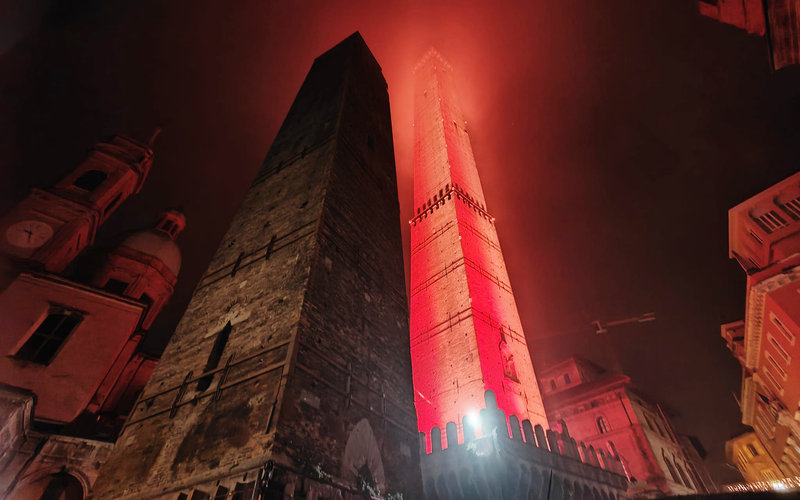
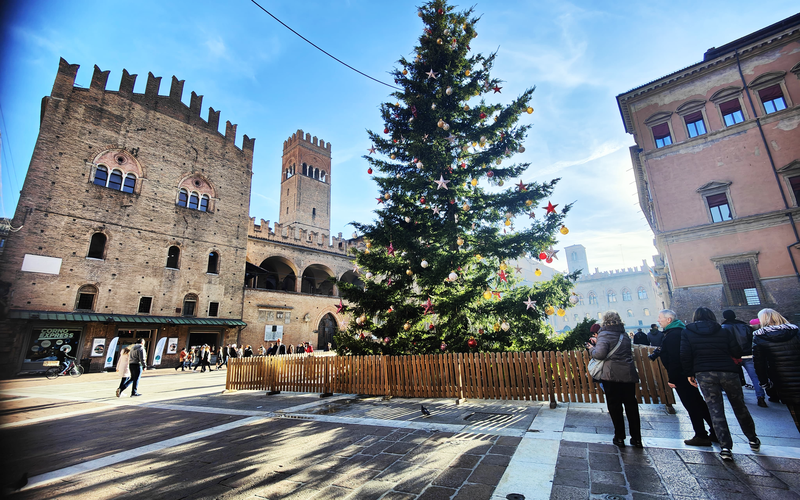
Beyond academics, I wanted to discover the country. Italy is a treasure trove of history, art, and natural beauty. Choosing the University of Bologna allowed me to explore not only the city but also nearby regions, from the historic streets of Bologna to the picturesque landscapes of Tuscany and beyond.
The University of Bologna holds a special place in history as it is considered the oldest university in the Western world, founded in 1088. In my opinion, this makes the institution quite unique, and I am honored to have been selected to study there.

What is your everyday life like?
Get up around 7:30 a.m., walk a few kilometers through old stone streets to get to class, discovering new historical details you hadn't noticed before. Come across a nice café and stop for a double espresso before continuing on your way. Take a few hours of classes in a small room with fewer than 10 other people. Around midday, grab a quick bite to eat (there's plenty of food on every street, and almost every bar has at least one option for a quick snack). Then, use a bike from the bike-sharing programme to get quickly to the next course on the other side of town. At the end of the course, meet up with a few students for a spritz somewhere and discuss upcoming Erasmus events for the weekend or evening, or plan the next city to visit. Finally, go for a workout at a fitness center and do some shopping for dinner (shops usually close much later than in Switzerland). Go home, cook, study the day's lessons, and go to sleep.

What surprised you the most about your stay abroad?
How quickly I felt at home! I have the impression that it's a very pleasant city, and the feeling of freedom you get when you move for the first time to a completely new place is both stimulating and pleasant. Although, I don't think I've ever followed Swiss news as much as I did when I was abroad.

What tips would you give to future exchange students?

Accommodation in Bologna: Finding accommodation in Bologna is really (really) complicated. The best approach is to go on-site, even after lectures have started, and look at the small ads displayed inside the university buildings. Booking an Airbnb in the meantime can be a good temporary solution.

Learn Italian Early: Start learning Italian as soon as possible. It really helps with integration into everyday life, making local friends, and exploring less touristy places where people don’t always speak English. Additionally, it's a form of respect for the host country to make the effort to speak the local language.

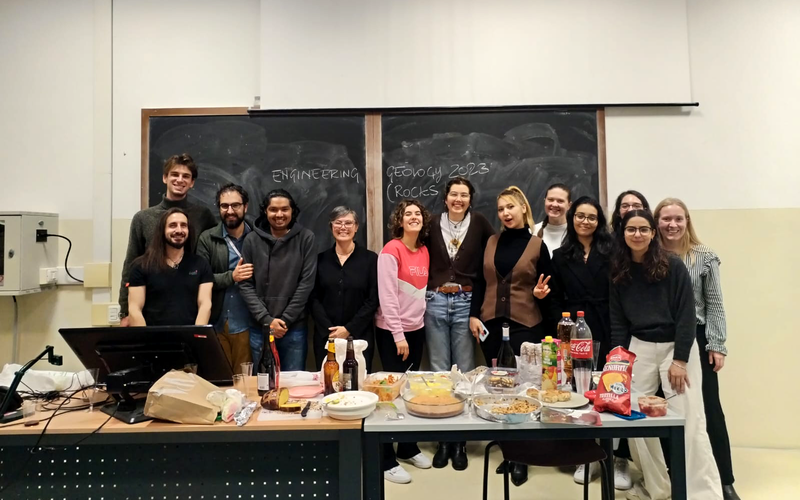
Make Friends with Erasmus Students: As double degree students, we’re technically not part of the Erasmus community and don’t receive invitations for their activities. However, making friends with Erasmus students can help you get invited to WhatsApp/Telegram groups or similar platforms, keeping you informed about upcoming events and registration details.

Travel and Transport: The city is quite large, and the different university buildings are spread apart. The best way to travel efficiently is by bike; bike lanes are everywhere in the city and are often faster than public transportation. For visiting other cities, Italy has a very efficient public transport system for large and mid-sized cities, with both luxury and high-speed trains at reasonable prices. Buses are also incredibly cheap if you’re not in a hurry, sometimes costing less than 4 euros for routes like Bologna to Siena or Bologna to Milan.

Is there anything else you would like to share?
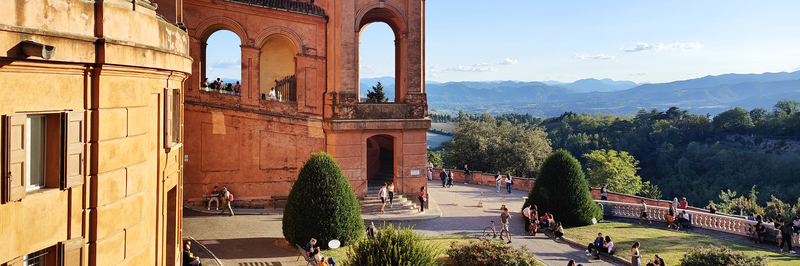
I particularly enjoyed the visit to San Leo, which was a field study as part of the Engineering Geology course. It was very instructive from a technical point of view, and at the same time, the scenery and the village were just magnificent. It was also very pleasant because the two professors organized a meal together at a local restaurant, where we were able to sample many local specialties, from the wine to the food. It was really nice to get to know everyone better in this context.
  • 01_bastien.png
  • 02_bastien.png
  • 03_bastien.png
  • 04_bastien.png
  • 08_bastien.png
  • 10_bastien.png
  • 11_bastien.png

Take your chance to study abroad!
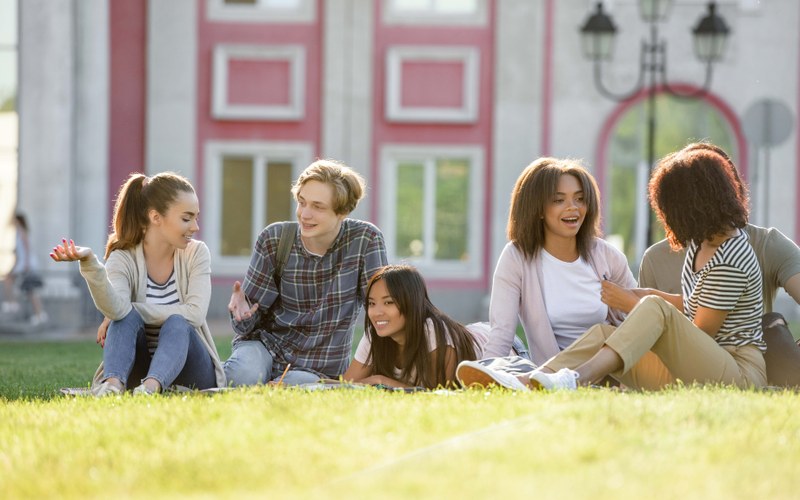
Thinking about a semester abroad or an international thesis? Find all the necessary information for outgoing students here:
DE - Outgoing StudierendeEN - Outgoing students

Contact

Irina Hauri

Irina Hauri

Leiterin International Office und Weiterbildungsmanagement
Phone
+41 61 228 50 66
E-Mail
international.lifesciences@fhnw.ch
Sarah Lehmann

Sarah Lehmann

Assistentin International Office
Phone
+41 61 228 50 66
E-Mail
international.lifesciences@fhnw.ch

School of
Life Sciences FHNW University of Applied Sciences and Arts Northwestern Switzerland

  • About the School
    • School
    • Degree Programmes
    • Continuing Education
    • Research
    • Events
  • Social Media
    • Facebook
    • Instagram
    • YouTube
    • LinkedIn
  • About FHNW
    • Organisation
    • Schools
    • Locations
    • FHNW Library
    • Media Relations
  • Support
    • IT Support
    • Inside FHNW
    • Webmail
Logo FHNW - 20 Years
Logo Swiss Universities
Logo European University Association
© University of Applied Sciences and Arts Northwestern Switzerland (FHNW)
  • Data Protection
  • Imprint
  • Accessibility
  • DE
  • EN