Skip to main contentSkip to search barSkip to navigationSkip to footer
Logo of the University of Applied Sciences and Arts Northwestern Switzerland
  • DE
  • EN
  • Home

Ten Schools One Goal

The FHNW comprises 10 schools with different specializations. Select a school to see its specific courses, study programmes and information.

Applied Psychology

Architecture, Construction and Geomatics

Art and Design

Music

Computer Science

Life Sciences

School of Education

Social Work

Engineering and Environment

Business

  • Study offerings

    • All degree programmes
    • Master in Life Sciences
    • Master in Medical Informatics
    • Joint Degree Master in Biomedical Engineering
    • Info events
  • About degree programmes

    • Tuition fees and scholarships
    • Digital Life Sciences
  • International

    • Outgoing Students
    • Incoming Students
    • Double Degree
    • Partner universities
    • Student stories
    • Buddy programme
    • News and stories
  • Continuing education offerings

    • All continuing educations
    • CAS - Certificate of Advanced Studies
    • Modules and Seminars
    • Info events
  • Organisation

    • Consulting services
    • Legal information and terms & conditions
  • Research

    • Research fields
    • Projects
  • Collaboration

    • Process Technology Centre
    • Services
    • Tech Transfer Office
    • Student projects
  • International

    • Study abroad
    • International research projects
  • Updates and insights

    • News and stories
    • Research highlights
  • Events

    • All events
    • Info events
  • Media corner

  • About the School of Life Sciences

    • Strategy and values
    • Management board
    • Staff
    • Advisory board
    • People directory
    • Diversity and equal opportunities
    • Media corner
    • Infrastructure and campus
  • Institutes and centres

    • Institute for Chemistry and Bioanalytics
    • Institute for Ecopreneurship
    • Institute for Medical Engineering and Medical Informatics
    • Institute for Pharma Technology and Biotechnology
    • Centre for Teaching and Learning
    • Process Technology Centre
Logo of the University of Applied Sciences and Arts Northwestern Switzerland
  • About the School
    • School
    • Degree Programmes
    • Continuing Education
    • Research
    • Events
  • Social Media
    • Facebook
    • Instagram
    • YouTube
    • LinkedIn
  • About FHNW
    • Organisation
    • Schools
    • Locations
    • FHNW Library
    • Media Relations
  • Support
    • IT Support
    • Inside FHNW
    • Webmail
  • Data Protection
  • Imprint
  • Accessibility
  • Study offerings

    • All degree programmes
    • Master in Life Sciences
    • Master in Medical Informatics
    • Joint Degree Master in Biomedical Engineering
    • Info events
  • About degree programmes

    • Tuition fees and scholarships
    • Digital Life Sciences
  • International

    • Outgoing Students
    • Incoming Students
    • Double Degree
    • Partner universities
    • Student stories
    • Buddy programme
    • News and stories
  • Continuing education offerings

    • All continuing educations
    • CAS - Certificate of Advanced Studies
    • Modules and Seminars
    • Info events
  • Organisation

    • Consulting services
    • Legal information and terms & conditions
  • Research

    • Research fields
    • Projects
  • Collaboration

    • Process Technology Centre
    • Services
    • Tech Transfer Office
    • Student projects
  • International

    • Study abroad
    • International research projects
  • Updates and insights

    • News and stories
    • Research highlights
  • Events

    • All events
    • Info events
  • Media corner

  • About the School of Life Sciences

    • Strategy and values
    • Management board
    • Staff
    • Advisory board
    • People directory
    • Diversity and equal opportunities
    • Media corner
    • Infrastructure and campus
  • Institutes and centres

    • Institute for Chemistry and Bioanalytics
    • Institute for Ecopreneurship
    • Institute for Medical Engineering and Medical Informatics
    • Institute for Pharma Technology and Biotechnology
    • Centre for Teaching and Learning
    • Process Technology Centre

Type a search term and search continuing education,degree programmes, events, documents and other content.

Nanotechnology in cleanrooms, FHNW School of Life Sciences

12.12.2017 – School of Life Sciences, Institute for Chemistry and Bioanalytics


  • Life Sciences
  • News and events
  • News and Stories
  • All news and stories
All news and stories
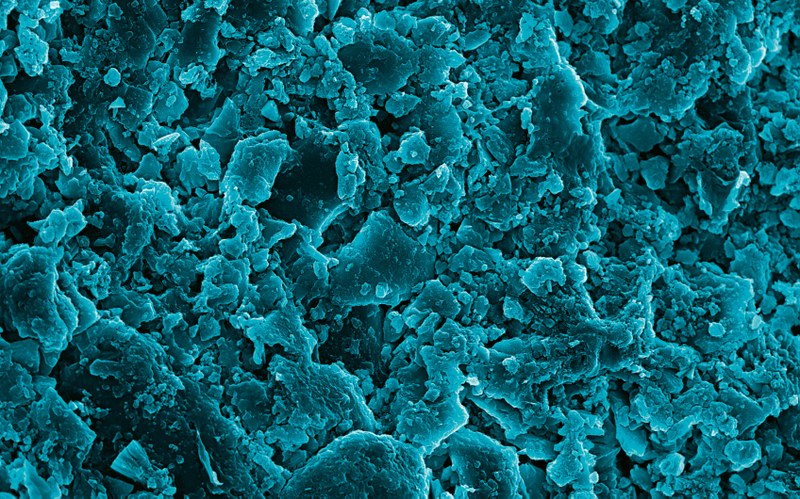
Nanotechnologie.jpg

Catalyst system breaks down hydrogen peroxide used to sterilise clean rooms

  • Story

Medicines must be produced in sterile conditions. Industry and research organisations use hydrogen peroxide for disinfection and sterilization but the extremely reactive oxidizing agent must not come into contact with humans, reagents and products. Therefore researchers at the Institute of Chemistry and Bioanalytics have developed a catalyst system to break down hydrogen peroxide more efficiently, working with the firm Skan AG. The nanotechnology- based manufacturing process is simple and scalable.

In the pharmaceutical industry, product purity is everything. To ensure this quality, strict conditions must be met during production, packaging and analysis; micro-organisms and germs must not come into contact with pharmaceutical products. In cleanroom environments therefore, both industry and research use so-called containments: isolators and workbenches, separated from the ambient air by filter systems which can be decontaminated automatically.

For their disinfection and sterilization, pharmacists and food technicians use evaporated hydrogen peroxide. The H2O2 molecule is a very reactive oxidant due to an oxygen-oxygen single bond; it reliably destroys bacteria and other microorganisms. There is a catch though: hydrogen peroxide reacts just as quickly with other organic substances, including active ingredients in medicines. To avoid this, an insulator must not contain any hydrogen peroxide when in use.

The traditional method of removing hydrogen peroxide from the isolator is by ventilation with large quantities of sterile air. In order not to simply discharge this air and hydrogen peroxide mix into the environment, it is circulated in a closed system through a catalyst which converts the remaining hydrogen peroxide into harmless water and oxygen. However, conventional catalysts do not work efficiently unless the air is warm and a powerful fan is needed to overcome the high pressure differential of about 1100 Pascals and penetrate the catalyst. These temperature and pressure criteria increase energy consumption and therefore costs.

In order to reduce air volume, energy costs and time, a team of researchers led by Uwe Pieles at the Institute of Chemistry and Bioanalytics (ICB) have developed a more effective technology, in collaboration with the market leader in insulators, Skan AG. Their project was funded by the Swiss Nanoscience Institute and the Commission for Technology and Innovation and the new process was ready for the market within four years.

Pieles and his team have succeeded by using nanotechnology. Instead of applying the catalyst on a solid support material as before, the researchers coated porous ceramic spheres with a layer of metallic nanoparticles and the catalyst. The porosity of the carrier material creates an enormous surface area and thus much more capacity for catalysis. For example, a 50 x 50 cm module with the new technology achieves a surface area of about one hundred soccer fields. “The layer can only be a few nanometers thick, otherwise the pores would become clogged. However, it cannot be too thin, or sufficient catalysis does not take place”, explains Gerhard Grundler, Head of the Institute. The exhaust air penetrates from the insulator into the pores; the large surface area guarantees a high hydrogen peroxide decomposition rate.

In order to find the right catalyst, researchers analysed and tested various materials using computer simulations. During simulated ageing experiments for example, the research team found a metal compound that can be used for more than ten years. “A good catalyst does not wear out with time because it is not involved in the reaction but only mediates between the reagent and the product”, says Grundler.

In addition to the search for the right catalyst, the team also solved the problem of packing the material as closely as possible into a catalyst module. As a result, they were able to reduce the pressure at which the exhaust air is forced through the catalyst by 80%.

Finding the right combination of catalyst, carrier material and packing density makes the higher efficiency possible. Grundler explains: “The highly efficient catalyst allows us to circulate the air: we extract the air from the isolator and after catalysis it is sent back. The heat thus remains in the building and is not wasted.” This makes the catalyst process independent of a complex ventilation system and the insulator can be used much more flexibly.

Methods

  • Proof of concept studies

Infrastructure

  • FHNW analytical equipment and chemical laboratories
  • SKAN isolator systems and catalyst test system
  • SKAN catalyst production

Support

  • CTI, SNI

Collaboration

  • SKAN AG
  • University of Basel (Swiss Nanoscience Institute)
Contact

Sina Saxer

Dr. Sina Saxer

Research Associate
Phone
+41 61 228 57 01
E-Mail
sina.saxer@fhnw.ch

School of
Life Sciences FHNW University of Applied Sciences and Arts Northwestern Switzerland

  • About the School
    • School
    • Degree Programmes
    • Continuing Education
    • Research
    • Events
  • Social Media
    • Facebook
    • Instagram
    • YouTube
    • LinkedIn
  • About FHNW
    • Organisation
    • Schools
    • Locations
    • FHNW Library
    • Media Relations
  • Support
    • IT Support
    • Inside FHNW
    • Webmail
Logo FHNW - 20 Years
Logo Swiss Universities
Logo European University Association
© University of Applied Sciences and Arts Northwestern Switzerland (FHNW)
  • Data Protection
  • Imprint
  • Accessibility
  • DE
  • EN