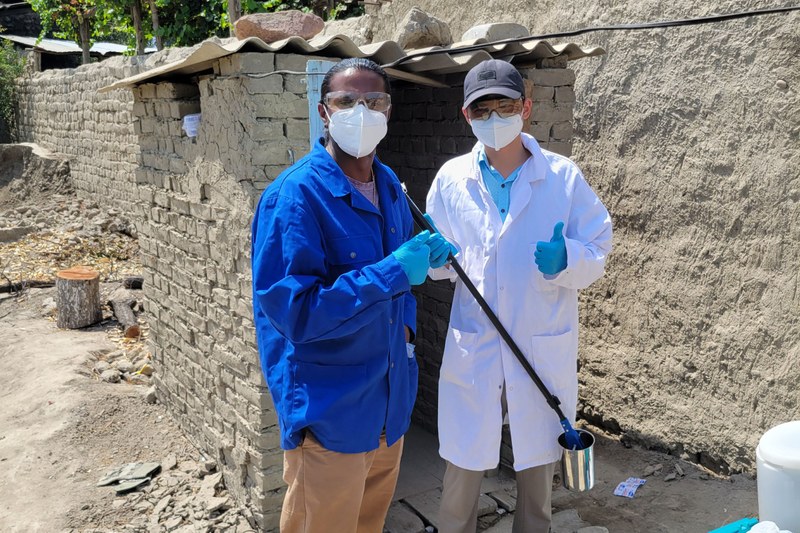
From laboratory assistant to FHNW staff member in international development cooperation: an interview with Pravin Ganesanandamoorthy, a graduate of the FHNW School of Life Sciences. Pravin explains how a double degree at the University of Chemistry and Technology in Prague and his Master’s thesis in Tajikistan not only shaped his career but also changed his life for the better.
You completed your MSc in Environmental Technologies at the FHNW School of Life Sciences (HLS), opting for a double degree as well as a Master’s thesis abroad. What motivated you to take this step?
It was a combination of several factors. Academically speaking, a double degree is a huge opportunity: alongside the FHNW Master’s, you also gain another university MSc straight away. That opens up a lot of doors in academia – for example, if you want to do a PhD (though I eventually decided against it). It also allows you to expand your network enormously.
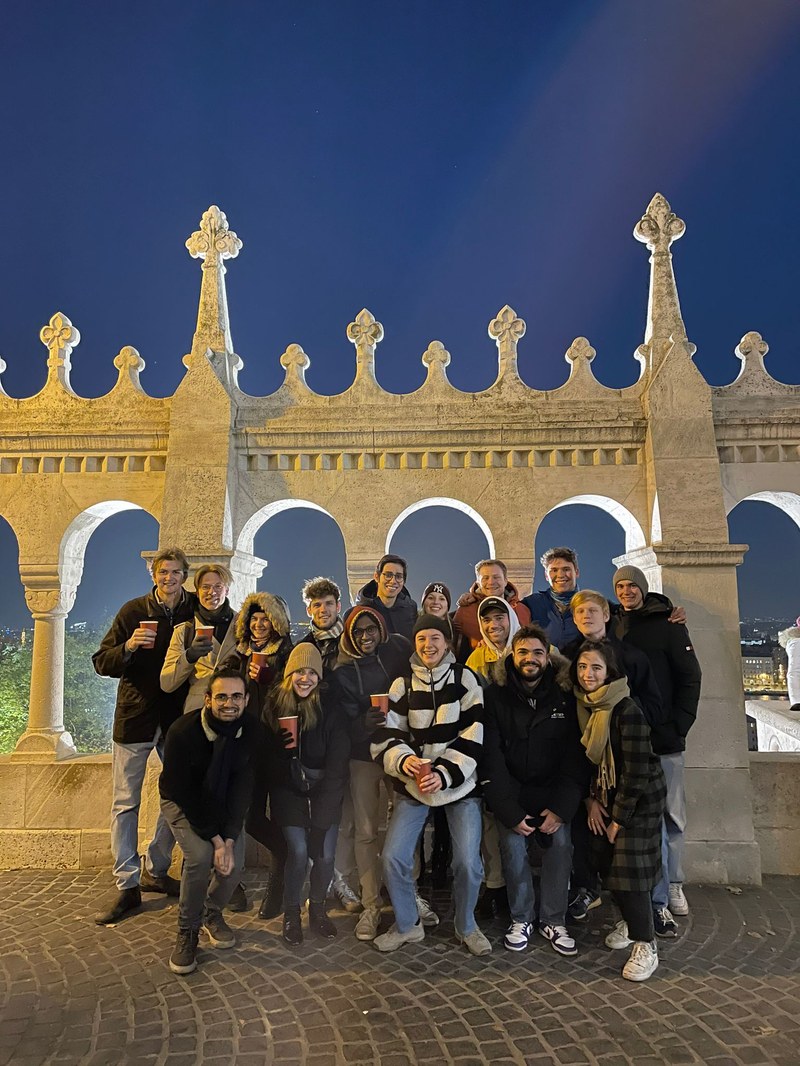
But my strongest motivation was personal: I wanted to step out of my comfort zone, live in a new place and grow as a person. You get to know new people, cultures and cuisines. And being a beer lover, Prague was simply the perfect choice!
And how did it come about that you wrote your Master’s thesis in Tajikistan?
I’d long wanted to start working in international cooperation, in the field of water and wastewater management. Studying in Switzerland and enjoying this high standard of education is a huge privilege and not something everyone can take for granted. The progress we enjoy is, in part, at the expense of other countries and their resources. For this reason, it’s important to me to pass on technical knowledge and skills, and to ‘give something back’ – even if, given the scale of this structural problem, it’s just a drop in the ocean. On a personal level, it was an absolute adventure: I went to a country I’d never even heard of before.
That sounds like an intense experience. What has stayed with you?
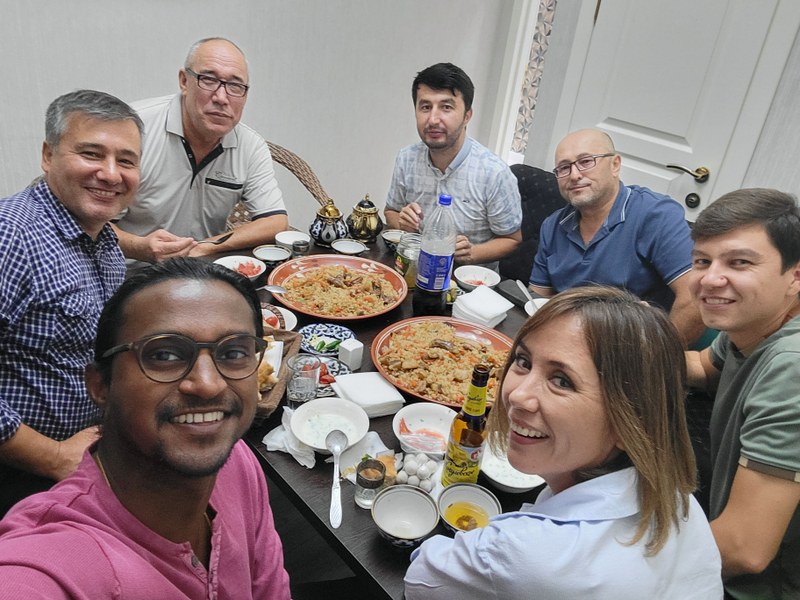
Definitely working with the local people. It was an incredibly enriching experience on every level – culturally, professionally and personally. I had the chance to get to know warm and open-hearted people with a wealth of knowledge. Deep friendships developed during that time. This experience had such a lasting impact on me that I still travel to Tajikistan every year to visit my friends and support projects.
A formative time! After graduating, you didn’t end up in the business world but remained at the FHNW as a permanent member of staff. How did this transition come about?
I owe the fact that I was able to take this step to my supervisor, Dr Maryna Peter, research group leader and lecturer in WASH at the HLS Institute for Ecopreneurship. She gave me enormous support in gaining a foothold in international cooperation. My background as a laboratory technician and my experience in wastewater management were certainly helpful in putting this into practice. But without her backing, it wouldn’t have been so straightforward – especially when you consider how research funding is currently being cut.
In your current role at the FHNW, you’re still heavily involved in international projects. To what extent does your experience abroad help you with this?
I’ve learnt to improvise quickly and just get on with things – even when not all the information is available yet. In Tajikistan, I learnt to be extremely creative rather than just relying on standard methods. And local people taught me a great deal about alternative methods for treating sewage sludge. This shows me that international cooperation isn’t a one-way street. It’s a partnership from which everyone involved learns and benefits.
And what are you working on at the moment?
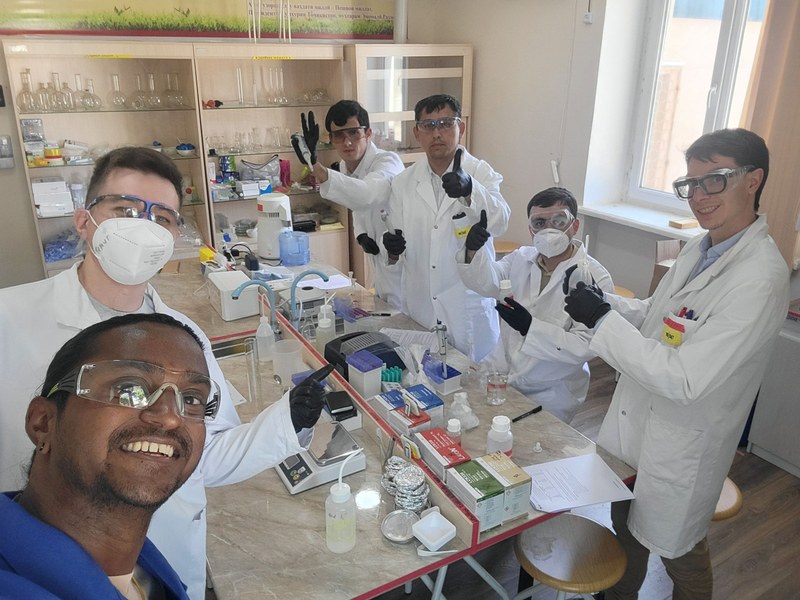
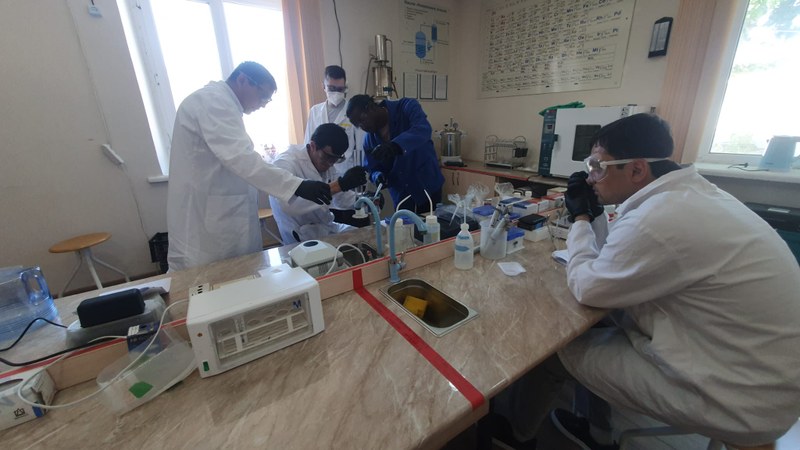
It never gets boring! I was recently back in Tajikistan to train local laboratory users in chemical analysis methods for drinking water and wastewater, which I’d set up during my Master’s thesis work there. In another project, I tested soaps and disinfectants from African hospitals for bacterial contamination. And at the moment, I’m using GIS data processing to support a project in Madagascar aimed at evaluating sites for water kiosks. The scope is broad and I’m constantly learning new things.
If you meet students who are still hesitating about going abroad for a semester or a thesis project, what advice would you give them?
To be perfectly honest: just go for it! It will enrich you incredibly – academically and as a person – and shape your life in a very positive way. Remember: you don’t often get an opportunity like this in life – you can live and study in another country without taking on any major financial or organisational risk. The HLS International Office provides excellent support, and once you’re there, you’ll be welcomed straight away through student networks such as ESN. And even in the very worst-case scenario, it’s only for just under six months. You really have absolutely nothing to lose, but you stand to gain unforgettable moments and friendships that will last a lifetime!
Take your chance to study abroad!