Skip to main contentSkip to search barSkip to navigationSkip to footer
Logo of the University of Applied Sciences and Arts Northwestern Switzerland
  • DE
  • EN
  • Home

Ten Schools One Goal

The FHNW comprises 10 schools with different specializations. Select a school to see its specific courses, study programmes and information.

Applied Psychology

Architecture, Construction and Geomatics

Art and Design

Music

Computer Science

Life Sciences

School of Education

Social Work

Engineering and Environment

Business

  • Study offerings

    • All degree programmes
    • Master in Life Sciences
    • Master in Medical Informatics
    • Joint Degree Master in Biomedical Engineering
    • Info events
  • About degree programmes

    • Tuition fees and scholarships
    • Digital Life Sciences
  • International

    • Outgoing Students
    • Incoming Students
    • Double Degree
    • Partner universities
    • Student stories
    • Buddy programme
    • News and stories
  • Continuing education offerings

    • All continuing educations
    • CAS - Certificate of Advanced Studies
    • Modules and Seminars
    • Info events
  • Organisation

    • Consulting services
    • Legal information and terms & conditions
  • Research

    • Research fields
    • Projects
  • Collaboration

    • Process Technology Centre
    • Services
    • Tech Transfer Office
    • Student projects
  • International

    • Study abroad
    • International research projects
  • Updates and insights

    • News and stories
    • Research highlights
  • Events

    • All events
    • Info events
  • Media corner

  • About the School of Life Sciences

    • Strategy and values
    • Management board
    • Staff
    • Advisory board
    • People directory
    • Diversity and equal opportunities
    • Media corner
    • Infrastructure and campus
  • Institutes and centres

    • Institute for Chemistry and Bioanalytics
    • Institute for Ecopreneurship
    • Institute for Medical Engineering and Medical Informatics
    • Institute for Pharma Technology and Biotechnology
    • Centre for Teaching and Learning
    • Process Technology Centre
Logo of the University of Applied Sciences and Arts Northwestern Switzerland
  • About the School
    • School
    • Degree Programmes
    • Continuing Education
    • Research
    • Events
  • Social Media
    • Facebook
    • Instagram
    • YouTube
    • LinkedIn
  • About FHNW
    • Organisation
    • Schools
    • Locations
    • FHNW Library
    • Media Relations
  • Support
    • IT Support
    • Inside FHNW
    • Webmail
  • Data Protection
  • Imprint
  • Accessibility
  • Study offerings

    • All degree programmes
    • Master in Life Sciences
    • Master in Medical Informatics
    • Joint Degree Master in Biomedical Engineering
    • Info events
  • About degree programmes

    • Tuition fees and scholarships
    • Digital Life Sciences
  • International

    • Outgoing Students
    • Incoming Students
    • Double Degree
    • Partner universities
    • Student stories
    • Buddy programme
    • News and stories
  • Continuing education offerings

    • All continuing educations
    • CAS - Certificate of Advanced Studies
    • Modules and Seminars
    • Info events
  • Organisation

    • Consulting services
    • Legal information and terms & conditions
  • Research

    • Research fields
    • Projects
  • Collaboration

    • Process Technology Centre
    • Services
    • Tech Transfer Office
    • Student projects
  • International

    • Study abroad
    • International research projects
  • Updates and insights

    • News and stories
    • Research highlights
  • Events

    • All events
    • Info events
  • Media corner

  • About the School of Life Sciences

    • Strategy and values
    • Management board
    • Staff
    • Advisory board
    • People directory
    • Diversity and equal opportunities
    • Media corner
    • Infrastructure and campus
  • Institutes and centres

    • Institute for Chemistry and Bioanalytics
    • Institute for Ecopreneurship
    • Institute for Medical Engineering and Medical Informatics
    • Institute for Pharma Technology and Biotechnology
    • Centre for Teaching and Learning
    • Process Technology Centre

Type a search term and search continuing education,degree programmes, events, documents and other content.

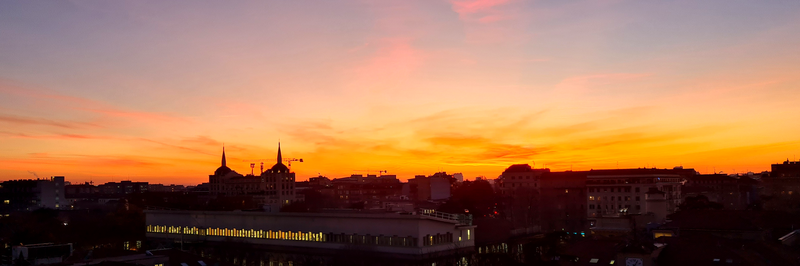
Italy, BSc Chemistry, FHNW School of Life Sciences

26.6.2024 – School of Life Sciences


  • Life Sciences
  • News and events
  • News and Stories
  • All news and stories
All news and stories
header_simon.png

In 2024, Simon Kraft immersed himself in a new research environment at Politecnico di Milano for his bachelor's thesis.

  • Story

What made you decide, what motivated you to go abroad?
I wanted to experience a new work environment and culture over a longer period. Additionally, I was curious about how laboratories outside of Switzerland operate.

Why did you choose your host institution/country?
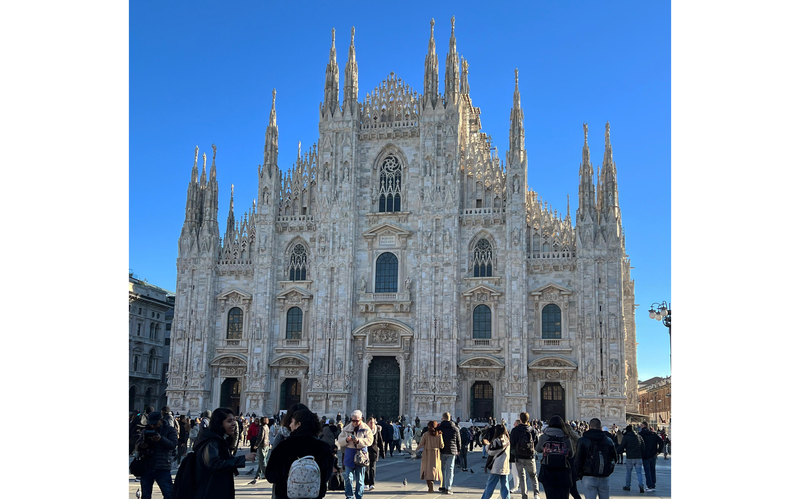
As I am half Italian, I am already familiar with Italian culture and way of life. Milan itself is a beautiful city and home to a large chemical industry. Additionally, I saw a chance to improve my Italian language skills. Writing a bachelor's thesis in the industry is unusual in Italy, so a university was the only option. Luckily, Professor Davide Moscatelli from the Politecnico di Milano was happy to give me the opportunity to work on one of his projects.

What does a typical day at the host institution look like?
The working hours were flexible, but in our group, we agreed to be present at 9:30. We usually started the day with a reaction that would take between 10 minutes and 3 hours. At lunchtime, the doctoral candidates and us, the thesis students, usually ate together. Those who did not bring anything could get lunch from the various food trucks on campus. In Italy, lunchtime usually lasts from 13:00 to 14:00, which takes some getting used to as a Swiss person, where people eat as early as 11:30. After lunch, we would have an espresso and get back to work. Depending on the amount of work that had to be done, I would go home between 17:00 and 19:00, and on rare occasions as late as 20:00. I lived rather close to the university (20 minutes by foot), so I would soon be home to cook and eat dinner.

Tell us about your research and your research findings during your residency.
The project I worked on dealt with the conversion of waste biomass from vegetable oil production into biofuel by solvolysis. I cannot get into details, as the project is funded by Eni S.p.A. and is considered confidential, but I can say that we found that various biomasses show vast differences in suitability for biofuel production.

What surprised you the most about your stay abroad?
I was surprised by how familial the research groups are. It was important to eat together at lunchtime, as the people who work there have known each other for years and are very welcoming to new members. One challenge was the material limitations, which are common. For example, to measure something by GC, it had to be sent to a technician because only a handful of instruments were available. Fortunately, the team consisted of very talented people, and solutions were often quickly found. These limitations strengthened my ability to improvise and find workarounds for problems I had not encountered before.

What tip would you like to give to future exchange students.
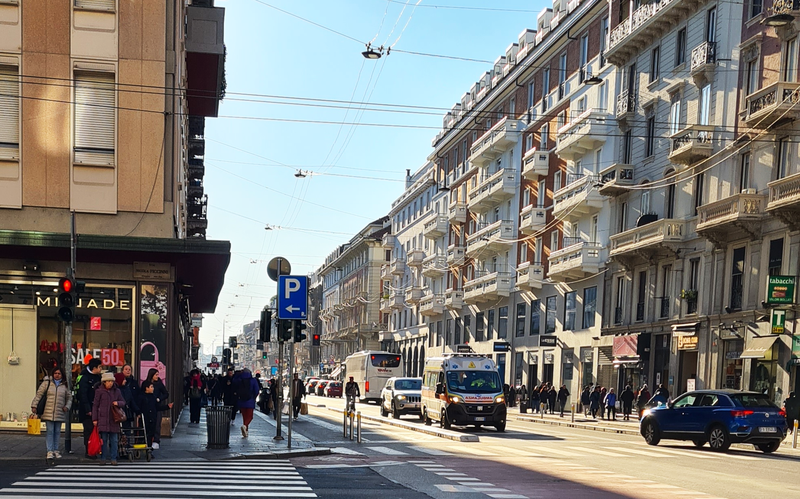
You should bring your own lab goggles and lab coat, as it was hard for thesis students to get personal equipment. The university in Milan is structured differently than what we are used to in Switzerland, but the people in the research groups are very helpful, and I eventually got my own lab coat. Another tip is that Milan is quite loud, and depending on where you live, the morning traffic can wake you up, so have some earplugs ready. Finally, you should really try a panettone, one of Milan’s many specialties, fresh from the bakery.

Is there anything else you would like to share?
The lab group often did things together in their free time. We frequently went climbing after work and occasionally had dinner in a restaurant. On some weekends, I visited other cities like Bologna, Bergamo, and Florence, as these cities are well connected by train and very much worth visiting.
  • 01_simon.png
  • 03_simon.png

Take your chance to study abroad!

Thinking about a semester abroad or an international thesis? Find all the necessary information for outgoing students here:
DE - Outgoing StudierendeEN - Outgoing students

Contact

Irina Hauri

Irina Hauri

Head of International Office and Continuing Education Management
Phone
+41 61 228 50 66
E-Mail
international.lifesciences@fhnw.ch
Sarah Lehmann

Sarah Lehmann

Assistant International Office
Phone
+41 61 228 50 66
E-Mail
international.lifesciences@fhnw.ch

School of
Life Sciences FHNW University of Applied Sciences and Arts Northwestern Switzerland

  • About the School
    • School
    • Degree Programmes
    • Continuing Education
    • Research
    • Events
  • Social Media
    • Facebook
    • Instagram
    • YouTube
    • LinkedIn
  • About FHNW
    • Organisation
    • Schools
    • Locations
    • FHNW Library
    • Media Relations
  • Support
    • IT Support
    • Inside FHNW
    • Webmail
Logo FHNW - 20 Years
Logo Swiss Universities
Logo European University Association
© University of Applied Sciences and Arts Northwestern Switzerland (FHNW)
  • Data Protection
  • Imprint
  • Accessibility
  • DE
  • EN