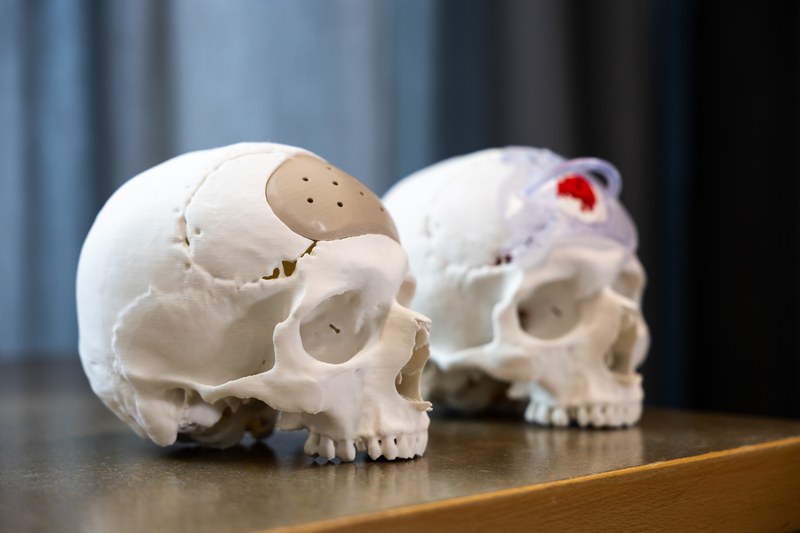
From 3D-printed cranial implants to smart orthoses for children, an interdisciplinary research team at the FHNW School of Life Sciences is developing medical devices tailored to the needs of individual patients. Their work goes far beyond advanced manufacturing technologies.
An implant that fits perfectly
Following a serious accident or surgery to remove a tumour, part of the skull may be missing. Closing the resulting gap requires an implant that precisely matches the patient's individual anatomy. But how can such a unique device be manufactured accurately and safely?
These are the kinds of questions addressed by the research team ‘Design and Additive Manufacturing of Medical Devices’ at the Institute for Medical Engineering and Medical Informatics at the FHNW School of Life Sciences.
The collaboration with the University Hospital Basel demonstrates how this works in practice. Together, the researchers have developed a manufacturing process that enables patient-specific cranial implants to be produced directly at the hospital. From medical imaging data and digital design to the finished implant, every step takes place within the clinical setting.
The particular challenge lies not in 3D printing itself. What matters is ensuring that every step of the process is reliable, verifiable and meets the stringent regulatory requirements for medical devices.
When bone grows into an implant
An implant must not only match the patient's anatomy but also interact as effectively as possible with the body. The team is therefore investigating innovative bone replacement structures made from metals, polymer and ceramics.
Unlike conventional solid implants, these structures feature a delicate, open-pore lattice. Inspired by the natural architecture of bone tissue, it provides space for bone cells and blood vessels to grow into the implant.
“At the same time, stiffness and strength can be precisely controlled,” explains Seiler. This makes it possible to develop implants that integrate more effectively into the body and remain stable over the long term.
The research goes a step further with so-called shape memory alloys. One example is nickel-titanium, a metal alloy that can return to its original shape under certain conditions after being deformed.
One potential application would be an implant that is inserted into the body in a folded state through a small surgical opening. Once inside, body temperature could cause it to unfold and exert targeted forces on the surrounding tissue.
“We are developing implants that do not simply replace an anatomical structure passively but can actively interact with their surroundings,” says Seiler.
In the future, such developments could help support bone healing or correct anatomical misalignments.
From body scans to personalised orthoses
Another research project highlights the importance of interdisciplinary collaboration. Together with clinical and industry partners, the team is working to simplify the manufacture of personalised orthoses for children.
Orthoses are medical devices that can, for example, stabilise a leg, reduce the load placed on it or support its movement. To function effectively and be comfortable to wear, they need to fit as precisely as possible.
Today, their manufacture often still involves numerous manual steps. The research team aims to automate and digitalise much of this process.
The idea is to digitally capture the shape of a leg within seconds. A three-dimensional model is then automatically generated from these data, providing the basis for designing a customised orthosis that can subsequently be manufactured using 3D printing.
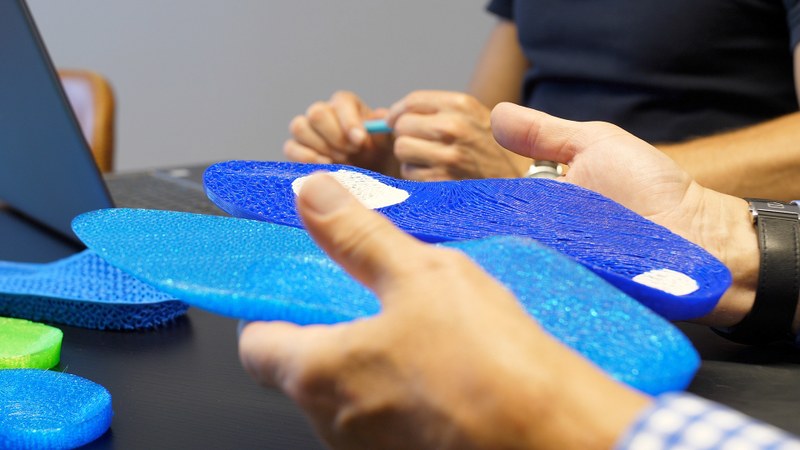
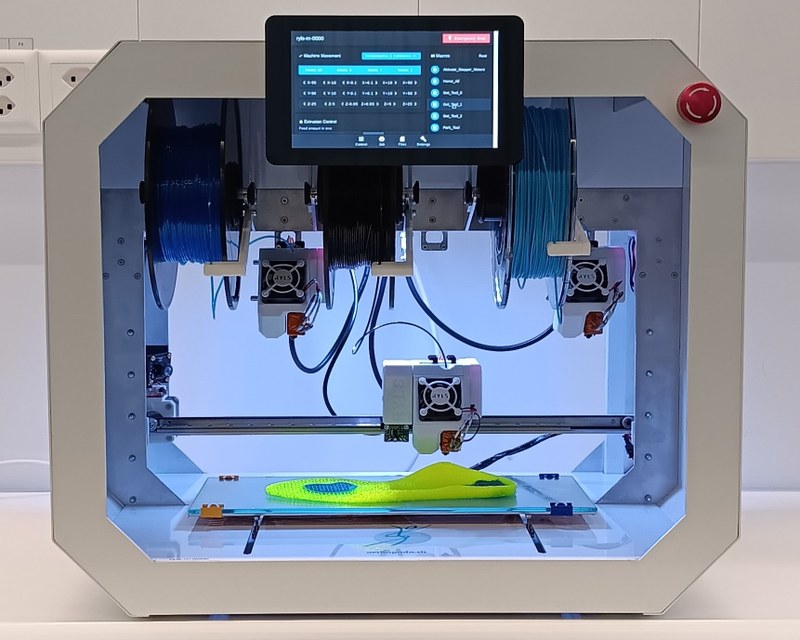
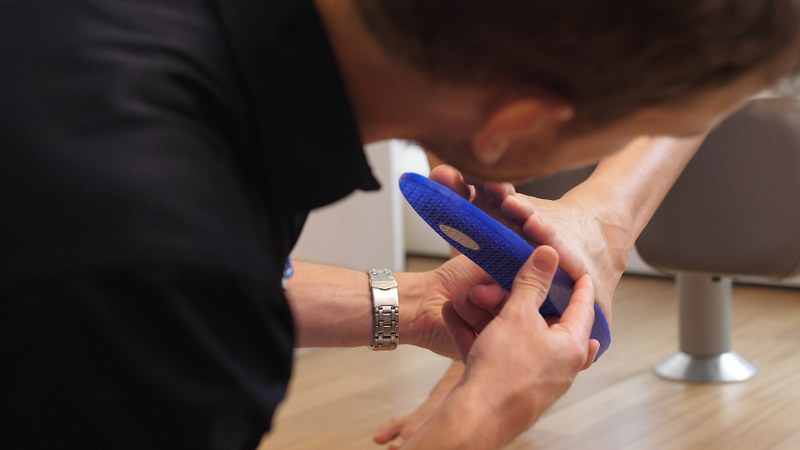
Movement data will also be taken into account. The resulting device will therefore match not only the child's body shape but also their functional needs. The aim is to develop smart orthoses whose design considers both the children's anatomy and their individual movement patterns.
The responsibilities are clearly defined. Clinical partners contribute their medical expertise and assess the functionality of the orthoses. An industry partner develops the sensor technology used to capture body shape and movement. Researchers at the FHNW School of Life Sciences develop the algorithms that automatically generate a suitable design from the collected data.
3D printing alone is not enough
Whether it is a cranial implant, a bone replacement structure or an orthosis, manufacturing a personalised medical device is a complex process. Each device is unique, yet it must meet the same high standards of safety and effectiveness as a mass-produced medical device.
Ensuring long-term mechanical durability is particularly challenging. Some implants must withstand everyday movements and forces for decades. The researchers are therefore investigating how new materials and intricate lattice structures behave under repeated loading.
Another important aspect is quality assurance during manufacturing. Even minor variations in printing parameters, materials or post-processing can alter the properties of an implant.
The team is therefore developing methods to monitor manufacturing quality and ensure consistent results.
“From a technological perspective, a great deal is already possible today. The real challenge often lies in developing innovative solutions that can be integrated into everyday clinical practice safely, reproducibly, cost-effectively and in compliance with regulatory requirements,” explains Seiler.
Innovation through collaboration
Most research projects begin with a specific challenge faced by a hospital or a medical technology company. A suitable implant may not be available, a manufacturing process may be too complex or the feasibility of a new technology may need to be assessed.
The research team supports its partners from the initial idea through development and testing to prototypes and potential clinical applications.
It brings together expertise in medical engineering, mechanical engineering, materials science, software development, additive manufacturing and medical device testing. Many team members also have extensive industry experience.
This broad expertise enables the team not only to develop individual technical solutions but also to consider the entire process chain. This includes regulatory approval, cost-effective manufacturing and subsequent application.
Student projects offer one possible starting point for collaboration. Initial ideas can be explored and technical risks identified at an early stage through semester projects, Bachelor's or Master's theses. Promising results can subsequently be developed further in larger research projects.
For students, this means contributing to real-world challenges in medical practice and gaining experience with technologies such as metal 3D printing, digital design methods and mechanical testing of medical devices.
What makes research particularly rewarding
For Daniel Seiler, it is above all those moments when a technological development finds its way into clinical practice that make his work particularly rewarding.
One experience stands out in his memory. As part of a clinical study, patient-specific titanium implants were manufactured using 3D printing and subsequently used to treat patients.
“You often spend years working on new materials, designs or manufacturing processes without directly witnessing their eventual application,” says Seiler. Seeing how his own research could make a tangible contribution to people's quality of life was therefore all the more rewarding.
This is also where he sees one of the greatest challenges in medical engineering. Many promising developments already work in the laboratory. However, turning them into approved medical devices requires additional testing, clinical data and substantial investment.
Together with his team, Seiler aims to further bridge this gap between research and clinical application.
A more personalised and digital future
Artificial intelligence, automated design methods and digital patient models are already transforming the development of medical devices. They help researchers analyse medical imaging data, identify anatomical structures and generate personalised designs more quickly.
Seiler expects this trend to accelerate considerably in the coming years.
In the long term, patient-specific implants, orthoses and prostheses could be manufactured within hours rather than days or weeks.
For Seiler, the greatest potential therefore lies no longer in 3D printing alone, but in the intelligent integration of every step in the process.
His long-term goal is clear: “Ultimately, we want to help ensure that personalised medicine is no longer the exception but becomes routine wherever it offers genuine benefits to patients.”
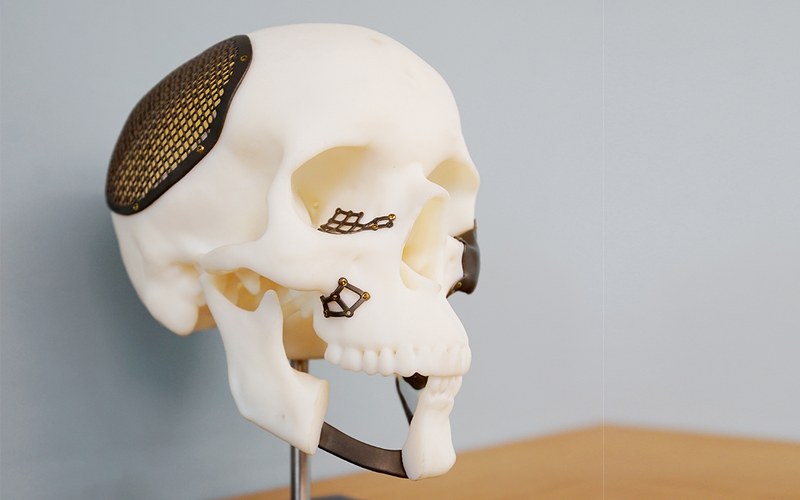
Design and additive manufacturing of medical devices
- Institute
- Institute for Medical Engineering and Medical Informatics
Contact
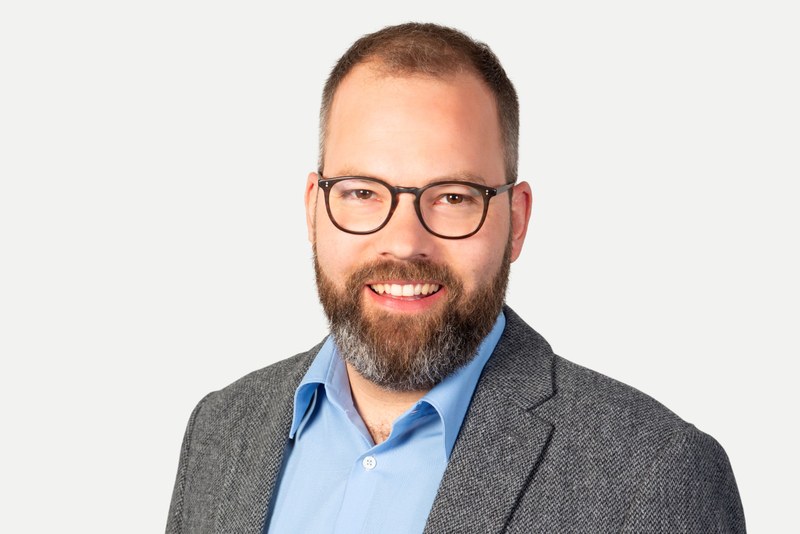
Daniel Seiler
- Phone
- +41 61 228 58 48
- daniel.seiler@fhnw.ch