Skip to main contentSkip to search barSkip to navigationSkip to footer
Logo of the University of Applied Sciences and Arts Northwestern Switzerland
  • DE
  • EN
  • Home

Ten Schools One Goal

The FHNW comprises 10 schools with different specializations. Select a school to see its specific courses, study programmes and information.

Applied Psychology

Architecture, Construction and Geomatics

Art and Design

Music

Computer Science

Life Sciences

School of Education

Social Work

Engineering and Environment

Business

  • Study offerings

    • All degree programmes
    • Master in Life Sciences
    • Master in Medical Informatics
    • Joint Degree Master in Biomedical Engineering
    • Info events
  • About degree programmes

    • Tuition fees and scholarships
    • Digital Life Sciences
  • International

    • Outgoing Students
    • Incoming Students
    • Double Degree
    • Partner universities
    • Student stories
    • Buddy programme
    • News and stories
  • Continuing education offerings

    • All continuing educations
    • CAS - Certificate of Advanced Studies
    • Modules and Seminars
    • Info events
  • Organisation

    • Consulting services
    • Legal information and terms & conditions
  • Research

    • Research fields
    • Projects
  • Collaboration

    • Process Technology Centre
    • Services
    • Tech Transfer Office
    • Student projects
  • International

    • Study abroad
    • International research projects
  • Updates and insights

    • News and stories
    • Research highlights
  • Events

    • All events
    • Info events
  • Media corner

  • About the School of Life Sciences

    • Strategy and values
    • Management board
    • Staff
    • Advisory board
    • People directory
    • Diversity and equal opportunities
    • Media corner
    • Infrastructure and campus
  • Institutes and centres

    • Institute for Chemistry and Bioanalytics
    • Institute for Ecopreneurship
    • Institute for Medical Engineering and Medical Informatics
    • Institute for Pharma Technology and Biotechnology
    • Centre for Teaching and Learning
    • Process Technology Centre
Logo of the University of Applied Sciences and Arts Northwestern Switzerland
  • About the School
    • School
    • Degree Programmes
    • Continuing Education
    • Research
    • Events
  • Social Media
    • Facebook
    • Instagram
    • YouTube
    • LinkedIn
  • About FHNW
    • Organisation
    • Schools
    • Locations
    • FHNW Library
    • Media Relations
  • Support
    • IT Support
    • Inside FHNW
    • Webmail
  • Data Protection
  • Imprint
  • Accessibility
  • Study offerings

    • All degree programmes
    • Master in Life Sciences
    • Master in Medical Informatics
    • Joint Degree Master in Biomedical Engineering
    • Info events
  • About degree programmes

    • Tuition fees and scholarships
    • Digital Life Sciences
  • International

    • Outgoing Students
    • Incoming Students
    • Double Degree
    • Partner universities
    • Student stories
    • Buddy programme
    • News and stories
  • Continuing education offerings

    • All continuing educations
    • CAS - Certificate of Advanced Studies
    • Modules and Seminars
    • Info events
  • Organisation

    • Consulting services
    • Legal information and terms & conditions
  • Research

    • Research fields
    • Projects
  • Collaboration

    • Process Technology Centre
    • Services
    • Tech Transfer Office
    • Student projects
  • International

    • Study abroad
    • International research projects
  • Updates and insights

    • News and stories
    • Research highlights
  • Events

    • All events
    • Info events
  • Media corner

  • About the School of Life Sciences

    • Strategy and values
    • Management board
    • Staff
    • Advisory board
    • People directory
    • Diversity and equal opportunities
    • Media corner
    • Infrastructure and campus
  • Institutes and centres

    • Institute for Chemistry and Bioanalytics
    • Institute for Ecopreneurship
    • Institute for Medical Engineering and Medical Informatics
    • Institute for Pharma Technology and Biotechnology
    • Centre for Teaching and Learning
    • Process Technology Centre

Type a search term and search continuing education,degree programmes, events, documents and other content.

Using bacteria against crude oil spills, FHNW School of Life Sciences

12.12.2016 – School of Life Sciences, Institute for Ecopreneurship


  • Life Sciences
  • News and events
  • News and Stories
  • All news and stories
All news and stories
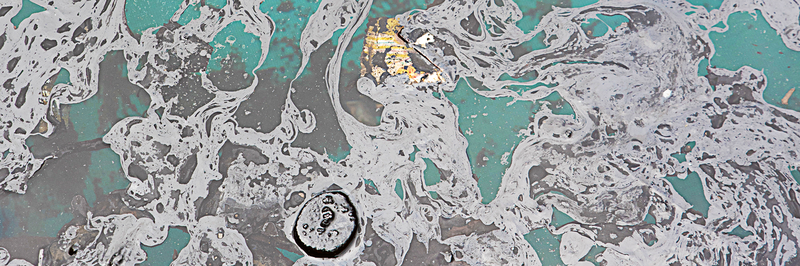
Header_Peirama_Bakterien_Oelteppiche.png

Porous silica particles provide bacteria with the nutrients they need to break down oil

  • Story

Crude oil spills are one of the greatest risks to the industrialised world. Oil spills in the sea are not only difficult to contain but also highly resistant to natural decomposition. Researchers from the FHNW School of Life Sciences have taken up the fight. As part of the EU Kill Spill project, they are working with more than 30 partners from science and industry, developing biotechnology techniques to clean up oil-polluted waters.

The first aim is to contain oil spills more effectively or spread them more thinly, thereby aiding breakdown. Secondly, the breakdown process itself is being improved. Finally, the group are developing new environmental decontamination methods.

Given that the project is based on the self-cleaning abilities of the sea, researchers are concentrating on biotechnology solutions. Ocean microorganisms, especially bacteria, can break down tar and long-chain hydrocarbons from crude oil. This is the focus of the teams led by Philippe Corvini and Patrick Shahgaldian at the Institute of Chemistry and Bioanalytics.

The team are developing porous silica particles (SiO2) that provide bacteria with the additional nutrients they need to break down the oil. Up to now microorganisms have taken too long to do this and were therefore unsuitable for targeted cleaning of contaminated waters; mechanical methods such as floating booms were used. However, since these cannot absorb small quantities of oil, a thin film always remained. Solving this problem is one of the aims of the Kill Spill project.

Even the floating oil itself stops the bacteria breaking down the crude. The hydrocarbons in it are hydrophobic, adhering to one another, repelling water and accumulating in the floating mass. To counteract this, a Kill Spill team from Northern Ireland is working on a method of dispersing the oil by making the molecules more accessible to bacteria. However the microorganisms cannot break down the oil fast enough as the process is chemically limited. Corvini compares the problem to eating: “ It's like people, who need meat and vegetables. Bacteria require the right proportions of carbon, nitrogen and phosphorus in order to reproduce.” Crude oil consists mainly of hydrocarbons; bacteria thrive when nitrogen and phosphorus are added.

The problem with these “bacteria food supplements” is that they are diluted by the sea. This is caused by diffusion, as in still water, but is augmented by waves and currents. Corvini and Shahgaldian have designed a method using porous silica nanoparticles to release the required elements only when they are absorbed by the bacteria. Corvini explains the function of these tiny spheres, which consist of the same elements as glass: “Highly water-repellent molecules are anchored to the surface of the silica particles, which are loaded with nitrogen and phosphorus. These hydrophobic molecules close the pores of the silica particles in water. Like oil, these structures are hydrophobic, hence they accumulate on oil slicks. The pores open, releasing nitrogen and phosphorus precisely where the bacteria break down the oil.”

Since the silica spheres are so small they can be sprayed as a powder on to the oil spill from a helicopter or a ship. Although nitrogen and phosphorus have been used in the past to stimulate bacterial oil breakdown they had to be dissolved in vegetable oil. The new process eliminates that additional pollution: the dry powder does without solvents or additional contamination.

The researchers have already produced a kilogram of the bacterial nutrients and the next step is to scale-up the process; Corvini needs a hundred kilograms for the planned trials. He says: “Initial results are very encouraging and we are now going to do further tests near Athens.” Corvini's team are evaluating large-scale production and are upbeat about the chances of a successful spin-off.

Methods

  • Chemical synthesis
  • Bacterial cultures
  • Breakdown tests
  • Liquid-liquid extraction
  • Gas chromatography

Infrastructure

  • GC-MS
  • SEM
  • Incubators
  • OxiTop

Support

  • EU FP7

Collaboration

  • Technical University of Crete
  • Environmental Protection Engineering (EPE)

Contact
Philippe Corvini

Prof. Dr. Philippe Corvini

Team leader and Lecturer, Environmental Biotechnology
Phone
+41 61 228 54 85
E-Mail
philippe.corvini@fhnw.ch
Patrick Shahgaldian

Prof. Dr. Patrick Shahgaldian

Team leader, Molecular nanotechnology
Phone
+41 61 228 54 87
E-Mail
patrick.shahgaldian@fhnw.ch

School of
Life Sciences FHNW University of Applied Sciences and Arts Northwestern Switzerland

  • About the School
    • School
    • Degree Programmes
    • Continuing Education
    • Research
    • Events
  • Social Media
    • Facebook
    • Instagram
    • YouTube
    • LinkedIn
  • About FHNW
    • Organisation
    • Schools
    • Locations
    • FHNW Library
    • Media Relations
  • Support
    • IT Support
    • Inside FHNW
    • Webmail
Logo FHNW - 20 Years
Logo Swiss Universities
Logo European University Association
© University of Applied Sciences and Arts Northwestern Switzerland (FHNW)
  • Data Protection
  • Imprint
  • Accessibility
  • DE
  • EN