Skip to main contentSkip to search barSkip to navigationSkip to footer
Logo of the University of Applied Sciences and Arts Northwestern Switzerland
  • DE
  • EN
  • Home

Ten Schools One Goal

The FHNW comprises 10 schools with different specializations. Select a school to see its specific courses, study programmes and information.

Applied Psychology

Architecture, Construction and Geomatics

Art and Design

Music

Computer Science

Life Sciences

School of Education

Social Work

Engineering and Environment

Business

  • Study offerings

    • All degree programmes
    • Master in Life Sciences
    • Master in Medical Informatics
    • Joint Degree Master in Biomedical Engineering
    • Info events
  • About degree programmes

    • Tuition fees and scholarships
    • Digital Life Sciences
  • International

    • Outgoing Students
    • Incoming Students
    • Double Degree
    • Partner universities
    • Student stories
    • Buddy programme
    • News and stories
  • Continuing education offerings

    • All continuing educations
    • CAS - Certificate of Advanced Studies
    • Modules and Seminars
    • Info events
  • Organisation

    • Consulting services
    • Legal information and terms & conditions
  • Research

    • Research fields
    • Projects
  • Collaboration

    • Process Technology Centre
    • Services
    • Tech Transfer Office
    • Student projects
  • International

    • Study abroad
    • International research projects
  • Updates and insights

    • News and stories
    • Research highlights
  • Events

    • All events
    • Info events
  • Media corner

  • About the School of Life Sciences

    • Strategy and values
    • Management board
    • Staff
    • Advisory board
    • People directory
    • Diversity and equal opportunities
    • Media corner
    • Infrastructure and campus
  • Institutes and centres

    • Institute for Chemistry and Bioanalytics
    • Institute for Ecopreneurship
    • Institute for Medical Engineering and Medical Informatics
    • Institute for Pharma Technology and Biotechnology
    • Centre for Teaching and Learning
    • Process Technology Centre
Logo of the University of Applied Sciences and Arts Northwestern Switzerland
  • About the School
    • School
    • Degree Programmes
    • Continuing Education
    • Research
    • Events
  • Social Media
    • Facebook
    • Instagram
    • YouTube
    • LinkedIn
  • About FHNW
    • Organisation
    • Schools
    • Locations
    • FHNW Library
    • Media Relations
  • Support
    • IT Support
    • Inside FHNW
    • Webmail
  • Data Protection
  • Imprint
  • Accessibility
  • Study offerings

    • All degree programmes
    • Master in Life Sciences
    • Master in Medical Informatics
    • Joint Degree Master in Biomedical Engineering
    • Info events
  • About degree programmes

    • Tuition fees and scholarships
    • Digital Life Sciences
  • International

    • Outgoing Students
    • Incoming Students
    • Double Degree
    • Partner universities
    • Student stories
    • Buddy programme
    • News and stories
  • Continuing education offerings

    • All continuing educations
    • CAS - Certificate of Advanced Studies
    • Modules and Seminars
    • Info events
  • Organisation

    • Consulting services
    • Legal information and terms & conditions
  • Research

    • Research fields
    • Projects
  • Collaboration

    • Process Technology Centre
    • Services
    • Tech Transfer Office
    • Student projects
  • International

    • Study abroad
    • International research projects
  • Updates and insights

    • News and stories
    • Research highlights
  • Events

    • All events
    • Info events
  • Media corner

  • About the School of Life Sciences

    • Strategy and values
    • Management board
    • Staff
    • Advisory board
    • People directory
    • Diversity and equal opportunities
    • Media corner
    • Infrastructure and campus
  • Institutes and centres

    • Institute for Chemistry and Bioanalytics
    • Institute for Ecopreneurship
    • Institute for Medical Engineering and Medical Informatics
    • Institute for Pharma Technology and Biotechnology
    • Centre for Teaching and Learning
    • Process Technology Centre

Type a search term and search continuing education,degree programmes, events, documents and other content.

Applied circular economy, FHNW School of Life Sciences

School of Life Sciences


  • Life Sciences
  • Research and services
  • Research in life sciences
  • Research fields
Research fields
Angewandte_Kreislaufwirtschaft.jpg

Bio- and hydrometallurgical processes for the recovery of metals and transition metals from industrial waste

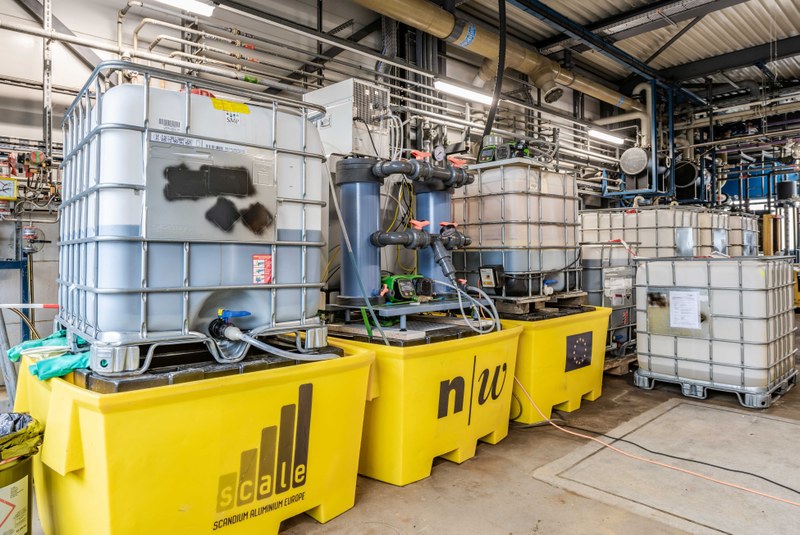
The Applied circular economy group develops (bio)hydrometallurgical processes for the recovery of raw materials (metals and transition metals) from industrial waste.

(Bio)hydrometallurgical processes are understood to be processes, that use acidic, basic or complex-forming aqueous solutions. Our focus is on the recovery of critical raw materials. Although these are of great economic importance, they are subject to an uncertain supply situation.

Our aim is not only to increase the technical efficiency of recovery processes, but also to pursue an ecologically efficient approach. This involves recovering as many raw materials as possible with minimal environmental impact and cost. Our current economy still follows a largely linear approach based on the production of more and more primary raw materials. We want to actively contribute, in collaboration with industry, to the transition towards a circular economy that recycles raw materials and is based on environmentally friendly processes.

Research focus areas

Biohydrometallurgy

In biohydrometallurgy, microorganisms are used to form acids, bases and complexing agents for the aqueous extraction of metals from solids. Furthermore, microorganisms can be used to remove metals from the liquid phase by precipitation reactions. We use these natural processes for the leaching of raw materials from waste, the treatment of metal-containing wastewater and the biological remediation of contaminated sites. The goal here is always to close material cycles as resource-efficiently as possible.

The basis for all processes is the understanding of so-called "metal speciation". Metal speciation refers to the specific form in which a chemical element exists. The chemical properties (e.g. solubility) as well as the biological effect (e.g. toxicity) of different metal species can be very different. Microbes naturally change the speciation, a fact that we exploit in our processes. Direct measurements by mass spectrometry (e.g. LC-MSn; GC-MS, LC-ICP-MS) and spectroscopy (e.g. XAFS) as well as thermodynamic modelling form the basis for understanding speciation.

Microorganisms actively change the surrounding medium by forming acids and complexing agents. We use this circumstance to recover so-called critical raw materials from industrial residues (e.g. gallium from red mud from aluminium production) by means of "bioleaching". By the same means, metals can also be washed out of contaminated sites and subsequently recovered. We also use microbes to remove elements from wastewater by precipitation and return them to the cycle. The formation of insoluble metal species due to microbial metabolism is called "biological precipitation".

Hydrometallurgy

Critical raw materials are elements that are of great economic importance, but whose supply is not guaranteed. Industrial waste often contains such valuable elements. The elements in question may even be more concentrated in wastes than in the ores from which they were originally extracted.

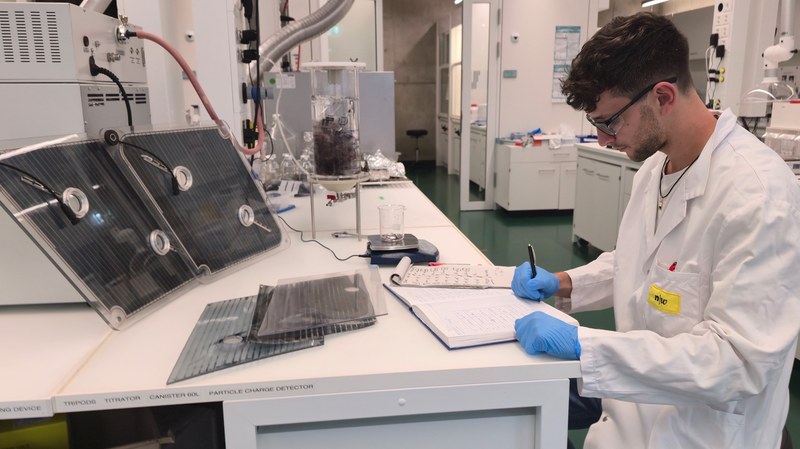
We use hydrometallurgical methods to dissolve these elements from the waste and then recover them. We are developing new hydrometallurgical processes for metal recovery based on advanced filtration processes. For example, we use nanofiltration to retain charged ions and to concentrate and separate them from impurities. Metal speciation again serves as the basis for understanding the processes. For nanofiltration, we use both commercially available membranes and our own membranes. These are produced layer-by-layer by us. With the help of nanofiltration, we have already recovered critical raw materials from various industrial wastes, such as waste from TiO2 production and waste from photovoltaics.

Stories

Loading

Projects

Loading

Publications

Contact

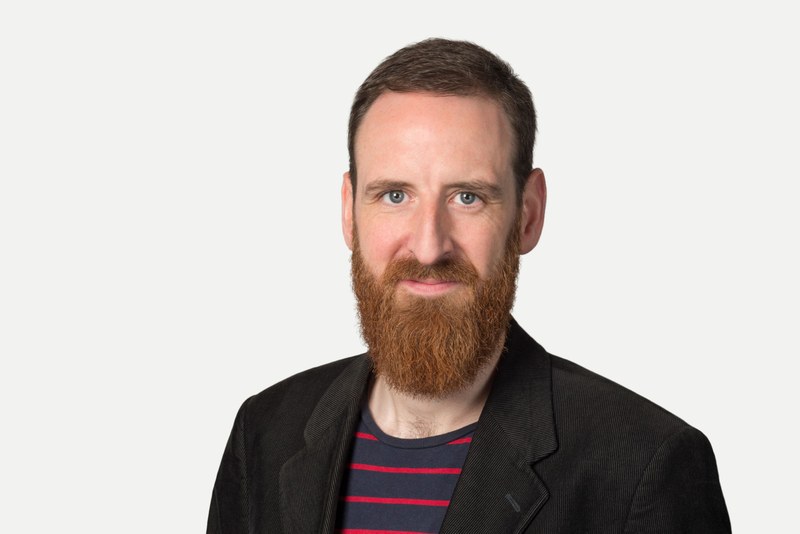
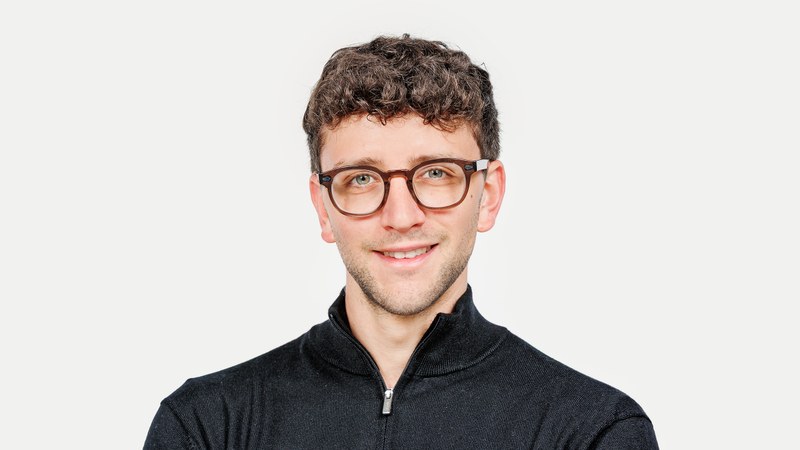
Markus Lenz

Dr. Markus Lenz

Team leader and lecturer, Applied Circular Economy
Phone
+41 61 228 56 86
E-Mail
markus.lenz@fhnw.ch

Team

Loading

School of
Life Sciences FHNW University of Applied Sciences and Arts Northwestern Switzerland

  • About the School
    • School
    • Degree Programmes
    • Continuing Education
    • Research
    • Events
  • Social Media
    • Facebook
    • Instagram
    • YouTube
    • LinkedIn
  • About FHNW
    • Organisation
    • Schools
    • Locations
    • FHNW Library
    • Media Relations
  • Support
    • IT Support
    • Inside FHNW
    • Webmail
Logo FHNW - 20 Years
Logo Swiss Universities
Logo European University Association
© University of Applied Sciences and Arts Northwestern Switzerland (FHNW)
  • Data Protection
  • Imprint
  • Accessibility
  • DE
  • EN