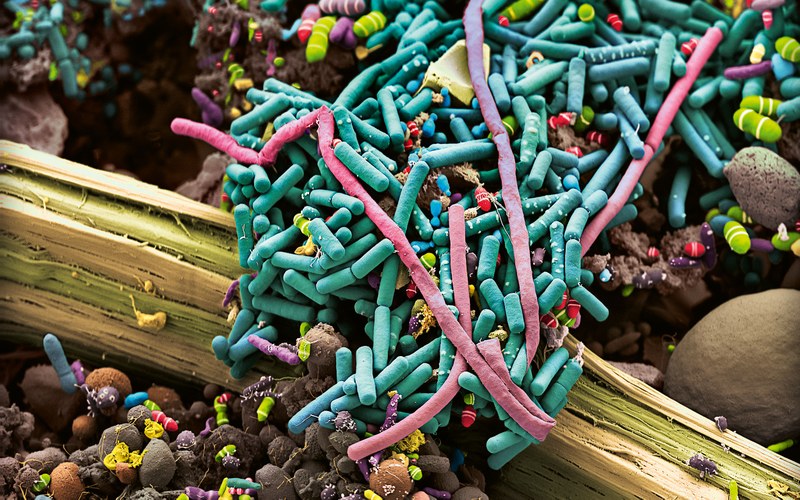
Use of microorganisms for the good of the environment
Environmental biotechnology uses microorganisms and their enzymes to exploit the potential of biological metabolic processes for the benefit of the environment. Environmental pollutants are removed from wastewater and contaminated sites, and natural raw material from waste is recycled efficiently. The research group Environmental Biotechnology tests and develops innovative methods to achieve these goals.
We are working on ways to reduce emissions of pollutants and eliminate existing pollutants. We also develop methods for recycling substances from industrial process water, wastewater and waste. In this way, we can make economical use of non-renewable resources, increased use of renewable raw materials, and close material cycles.
With the development of new bio-based processes as well as the adaptation and further development of conventional technologies, we contribute to the well-being of the environment and society.
Research focus areas
Bioremediation
Resource recovery
Fate of pollutants
Environment microbiology
Stories
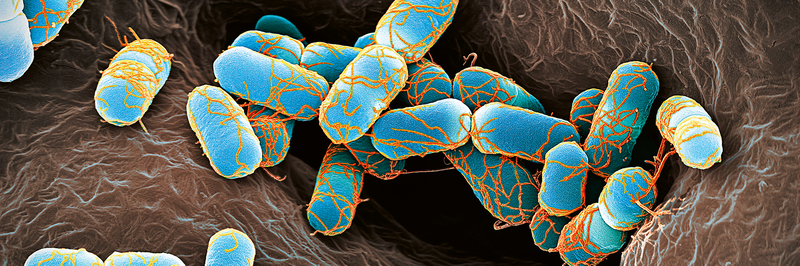
Bacterial super-resistance decoded
- Date
- 12.12.2017
- Institute
- Institute for Ecopreneurship
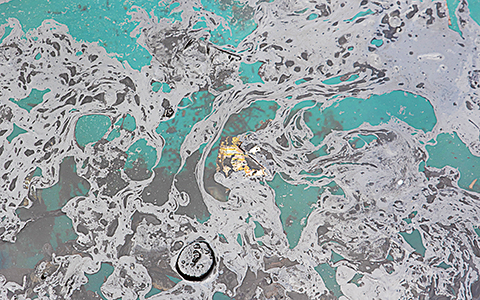
Using bacteria against crude oil spills
- Date
- 12.12.2016
- Institute
- Institute for Ecopreneurship
Projects
Agriloop
- Institute
- Institute for Chemistry and Bioanalytics
- Research field
- Environmental biotechnology

Electra
- Institute
- Institute for Chemistry and Bioanalytics
- Research field
- Environmental biotechnology

Ingreen
- Institute
- Institute for Chemistry and Bioanalytics
- Research field
- Environmental biotechnology, Molecular nanotechnology, Sustainable resource management, Cell biology and in vitro toxicology
Mar2Protect
- Institute
- Institute for Chemistry and Bioanalytics
- Research field
- Environmental biotechnology
NYMPHE
- Institute
- Institute for Chemistry and Bioanalytics
- Research field
- Environmental biotechnology

Prolific
- Institute
- Institute for Chemistry and Bioanalytics
- Research field
- Environmental biotechnology
Publications
Contact

Prof. Dr. Philippe Corvini
- Phone
- +41 61 228 54 85
- philippe.corvini@fhnw.ch