We decipher pharmacological and pharmacokinetic properties of drugs in complex, in vitro systems to extrapolate optimal dosage regimens
Our team focuses on assay development in complex in vitro systems such as intestinal organoids, human induced pluripotent stem cell (hiPSC)-derived cell models, and co-culture systems, in order to study the effect of pharmaceuticals in polypharmaceutic conditions like phytomedicine applications and drug-drug interactions.
We combine advanced cell culture systems, functional imaging, lab automation and multi-component bioanalytics in combination with physiological based pharmacokinetic (PBPK) modeling and simulation tools to establish standardize assays for applications in industry.
Our research group is part of the Institute for Pharma Technology and Biotechnology.
Expertise and facilities
- Pharmacological in vitro assays
- Advanced cell culture based on hiPSCs and co-culture models
- 2p microscopy
- Automated Live-cell fluorescence microscopy
- Automated liquid handling systems
- Fluorescence plate readers for 384- and 96-well plates
Media
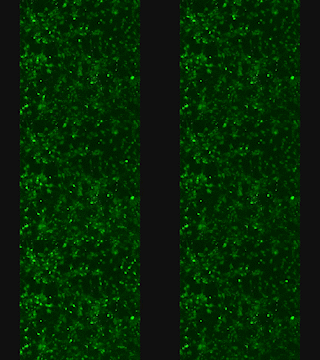
The green dots are stem cell-derived nerve cells with a calcium dye. The activity of the network shows that after two weeks in culture, the nerve cells are “thinking”, even partially synchronously. 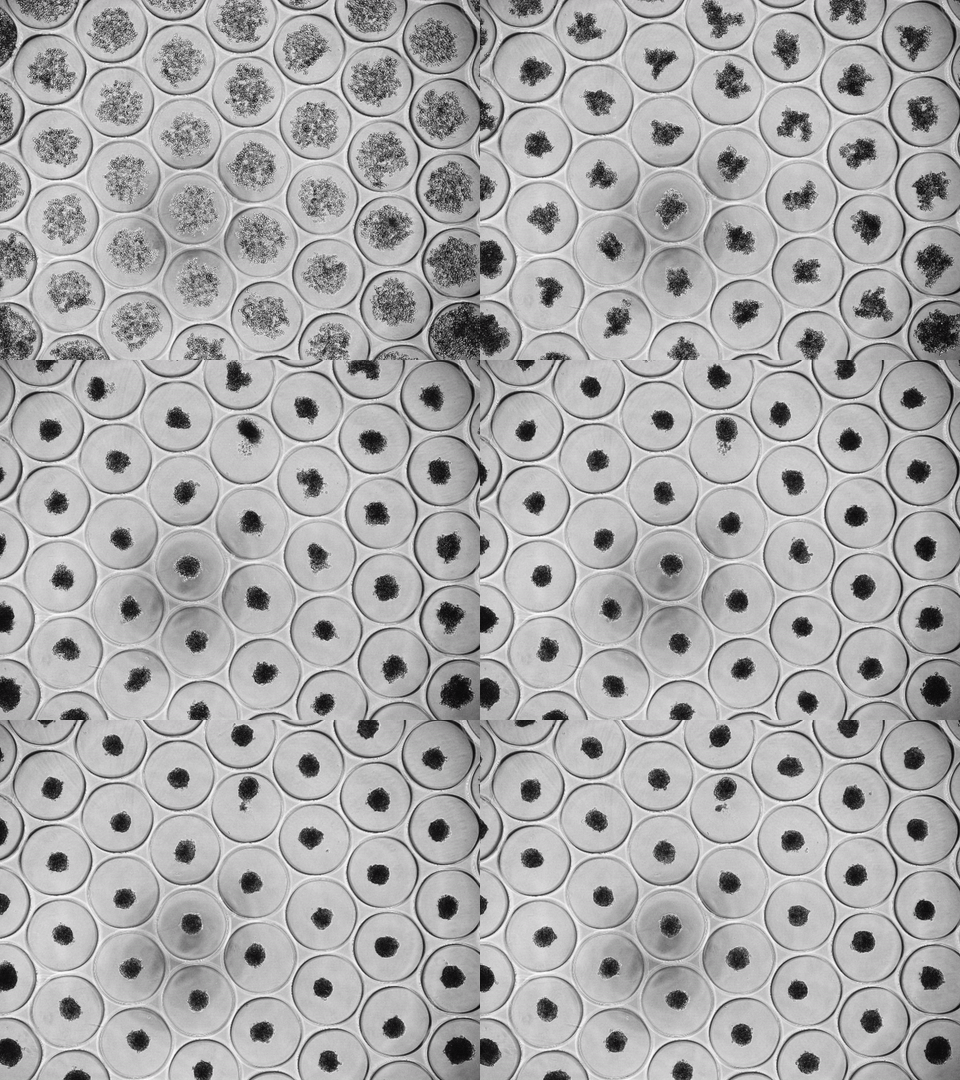
The grey beads are liver cells that assemble into 3D spheroids in microwells. The video is a time-lapse recording over 1 day.
Stories

Precision pharmaceuticals
- Date
- 30.4.2025
- Institute
- Institute for Pharma Technology and Biotechnology
Projects
- Establishing a human induced pluripotent stem cell (hiPSC)-based absorption, distribution, metabolism and excretion (ADME) assay platform based on 3D-scaffold intestinal organoids
- Studying peptidergic drug delivery shuttles for anti-proliferative small interfering ribonucleic acid (siRNA) cargos
- Deciphering the molecular targets of Bryophyllum pinnatum related to its tocolytic efficacy
- Establishing functional assays based on hiPSC-derived otic neurons for hearing loss research
- Studying transient receptor potential (TRP) channels and their phytomedical ligands
- Evaluating new approach methodologies (NAMs) based on commercially available human organoid assay tools to replace animal drug metabolism and pharmacokinetics (DMPK) studies