Skip to main contentSkip to search barSkip to navigationSkip to footer
Logo of the University of Applied Sciences and Arts Northwestern Switzerland
  • DE
  • EN
  • Home

Ten Schools One Goal

The FHNW comprises 10 schools with different specializations. Select a school to see its specific courses, study programmes and information.

Applied Psychology

Architecture, Construction and Geomatics

Art and Design

Business

Computer Science

Engineering and Environment

Life Sciences

Music

School of Education

Social Work

  • Study offerings

    • All degree programmes
    • Bachelor in Life Sciences
    • Master in Life Sciences
    • Master in Medical Informatics
    • Joint Degree Master in Biomedical Engineering
    • Info Events
  • About degree programmes

    • Tuition fees and scholarships
    • Digital Life Sciences
  • International

    • Outgoing Students
    • Incoming Students
    • Double Degree
    • Partner universities
    • Student stories
    • Buddy programme
    • News and stories
  • Continuing education offerings

    • All continuing educations
    • MAS - Master of Advanced Studies
    • DAS - Diploma of Advanced Studies
    • CAS - Certificate of Advanced Studies
    • SAS - Short Advanced Studies
    • Specialist seminars
    • Info Events
  • Organisation

    • Consulting services
  • Research

    • Research fields
    • Projects
    • Institutes and centres
  • Collaboration

    • Process Technology Centre
    • Facilities and services
    • Tech Transfer Office
    • Student projects
  • International

    • Study abroad
    • International research projects
  • Updates and insights

    • News and stories
    • Research highlights
  • Events

    • All events
    • Info Events
    • Research seminars
  • Media corner

  • About the School of Life Sciences

    • Strategy and values
    • Management board
    • Administration and service staff
    • Advisory board
    • People directory
    • Diversity and equal opportunities
    • Media corner
    • Infrastructure and campus
  • Institutes and centres

    • Institute for Chemistry and Bioanalytics
    • Institute for Ecopreneurship
    • Institute for Medical Engineering and Medical Informatics
    • Institute for Pharma Technology and Biotechnology
    • Centre for Teaching and Learning
    • Process Technology Centre
Logo of the University of Applied Sciences and Arts Northwestern Switzerland
  • About the School
    • School
    • Degree Programmes
    • Continuing Education
    • Research
    • Events
  • Social Media
    • Facebook
    • Instagram
    • YouTube
    • LinkedIn
  • About FHNW
    • Organisation
    • Schools
    • Locations
    • FHNW Library
    • Media Relations
  • Support
    • IT Support
    • Inside FHNW
    • Webmail
  • Data Protection
  • Imprint
  • Accessibility
  • Study offerings

    • All degree programmes
    • Bachelor in Life Sciences
    • Master in Life Sciences
    • Master in Medical Informatics
    • Joint Degree Master in Biomedical Engineering
    • Info Events
  • About degree programmes

    • Tuition fees and scholarships
    • Digital Life Sciences
  • International

    • Outgoing Students
    • Incoming Students
    • Double Degree
    • Partner universities
    • Student stories
    • Buddy programme
    • News and stories
  • Continuing education offerings

    • All continuing educations
    • MAS - Master of Advanced Studies
    • DAS - Diploma of Advanced Studies
    • CAS - Certificate of Advanced Studies
    • SAS - Short Advanced Studies
    • Specialist seminars
    • Info Events
  • Organisation

    • Consulting services
  • Research

    • Research fields
    • Projects
    • Institutes and centres
  • Collaboration

    • Process Technology Centre
    • Facilities and services
    • Tech Transfer Office
    • Student projects
  • International

    • Study abroad
    • International research projects
  • Updates and insights

    • News and stories
    • Research highlights
  • Events

    • All events
    • Info Events
    • Research seminars
  • Media corner

  • About the School of Life Sciences

    • Strategy and values
    • Management board
    • Administration and service staff
    • Advisory board
    • People directory
    • Diversity and equal opportunities
    • Media corner
    • Infrastructure and campus
  • Institutes and centres

    • Institute for Chemistry and Bioanalytics
    • Institute for Ecopreneurship
    • Institute for Medical Engineering and Medical Informatics
    • Institute for Pharma Technology and Biotechnology
    • Centre for Teaching and Learning
    • Process Technology Centre

Type a search term and search continuing education,degree programmes, events, documents and other content.

  • Life Sciences
  • Research and services
  • Research in life sciences
  • Projects
Projects

3D-print­ed nick­el-ti­ta­ni­um struc­tures that in­ter­act with bone tis­sue, FHNW School of Life Sciences

School of Life Sciences


  • Overview
  • The project
  • Publications
  • Project details
  • Contact
  • Further projects

Porous shape-memory scaffolds as mechanically active bone implants

Our aim is to develop smart medical implants that interact with the surrounding bone tissue. We are investigating porous shape-memory structures as future implantable biomaterial with improved bone-tissue to implant interaction and therefore improved clinical outcome. Porous structures of the shape-memory alloy (SMA) nickel-titanium (NiTi) are created by additive manufacturing and tested in-vitro and in-vivo.

The project

Using selective laser melting (SLM) we are fabricating SMA structures as scaffolds for tissue engineering applications and implants. The applied method allows the production of complex-shaped metallic structures based on a virtual CAD model. The interactions of the structures with progenitor cells as well as their response to three-dimensional structures are investigated within a novel bioreactor model system. This compression perfusion bioreactor serves as an in-vitro model for an orthotopic implantation site which allows for the testing of the NiTi scaffolds under physiological conditions.

The damping properties of NiTi are associated with the martensite-austenite phase transformation. The results indicate that selective laser melting of NiTi is suitable for the fabrication of medical implants with ultra-high mechanical damping capacity.

The behaviour of the porous structures opens unknown perspectives and adaptations of the biofunctionality. The novelty of this technology lies in the fact that implantable structures can be produced with predefined physical and mechanical properties that can be optimized for specific functions in the body. In particular, the porous SMA structures can be associated with a better performance in bone tissue.

SLM building platform (ø120 mm) with 3D-printed NiTi samples.
Left: Photo and SEM micrographs of SLM-NiTi 2D-disks. Right: CAD models of the unit cell (2 mm height), entire cylindrical 3D scaffold (4 mm height, 8 mm diameter) and SEM micrograph of the SLM produced 3D NiTi scaffold. Scale bar = 100 µm.
SLM building platform with 2D-disks and 3D-printed NiTi scaffolds
Bone cells on NiTi shape memory scaffolds.

Publications

  • From powder to complex-shaped NiTi structures by selective laser melting
  • Fabricating NiTi shape memory scaffolds by selective laser melting
  • Crystallographic phases of NiTi scaffolds fabricated by selective laser melting
  • Fatigue behaviour of selective-laser-melted nickel-titanium scaffolds
  • FEM analysis of porous titanium bone scaffold
  • Ni release from rapid prototyped 3D NiTi scaffolds
  • Smart NiTi constructs for 3D cell culture applications
  • Properties of NiTi-structures fabricated by selective laser melting

Project details

Type
Research project
Research field
Functional materials and surfaces, Design and additive manufacturing of medical devices
School
FHNW School of Life Sciences / Institute for Medical Engineering and Medical Informatics
Partners
University Hospital Basel, Department Biomedizin Basel, Biomaterials Science Center, Thommen Medical, Memry
Funding
Swiss National Science Foundation, SNF / KTI National Research Programme NRP-62 smart materials

Contact
Michael de Wild

Prof. Dr. Michael de Wild

Team leader, Functional Materials and Surfaces
Phone
+41 61 228 56 49
E-Mail
michael.dewild@fhnw.ch

Further projects
NanoPED

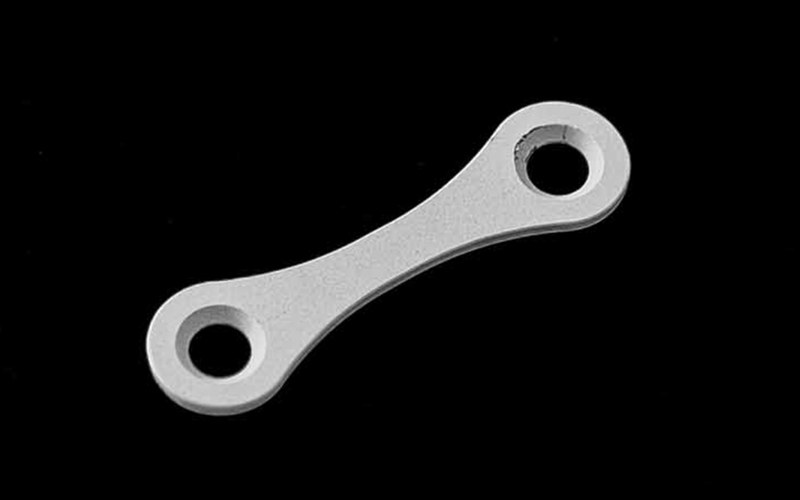
NanoPED

Nano-structured absorbable implants for paediatric neurosurgery
Institute
Institute for Medical Engineering and Medical Informatics
Research field
Functional materials and surfaces
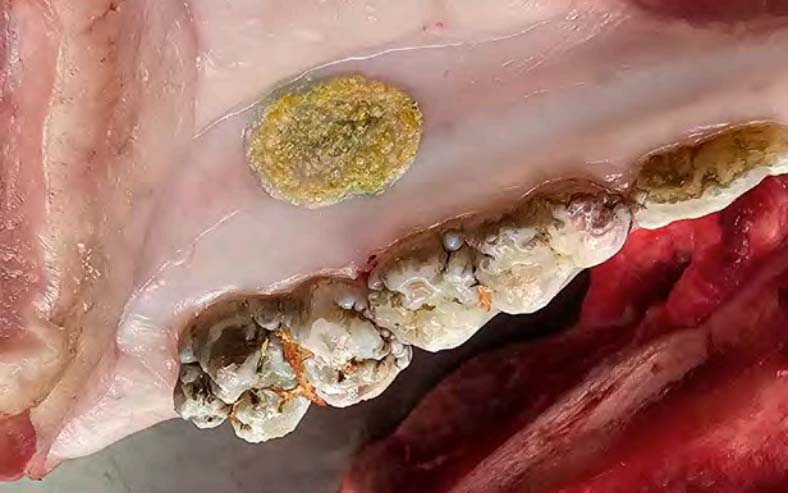
Palatal patch for laser tissue gum surgery

Palatal patch for laser tissue gum surgery

Suture-free approach for immediate wound stability, reduced scarring and pain, and improved clinical efficiency
Institute
Institute of Product and Production Engineering, Institute for Chemistry and Bioanalytics, Institute for Pharma Technology and Biotechnology, Institute for Medical Engineering and Medical Informatics
Research field
Functional materials and surfaces, nanoLab
Real-time control of micro selective laser melting

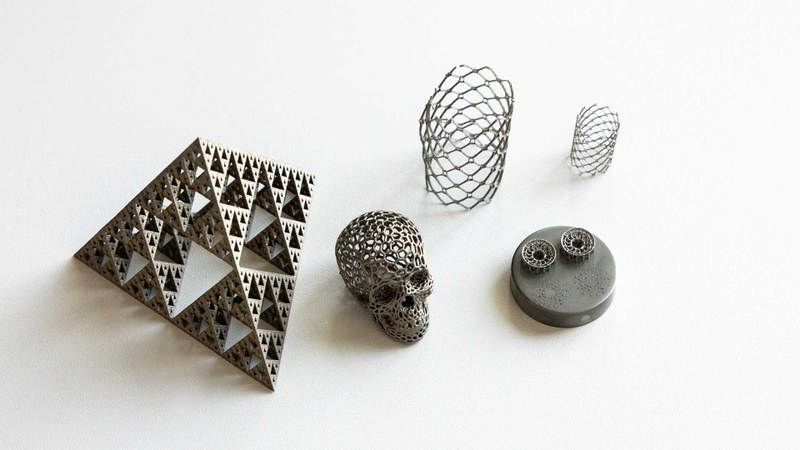
Real-time control of micro selective laser melting

Micro selective laser melting for miniature metallic devices
Institute
Institute for Medical Engineering and Medical Informatics
Research field
Functional materials and surfaces, Design and additive manufacturing of medical devices
1…

School of
Life Sciences FHNW University of Applied Sciences and Arts Northwestern Switzerland

  • About the School
    • School
    • Degree Programmes
    • Continuing Education
    • Research
    • Events
  • Social Media
    • Facebook
    • Instagram
    • YouTube
    • LinkedIn
  • About FHNW
    • Organisation
    • Schools
    • Locations
    • FHNW Library
    • Media Relations
  • Support
    • IT Support
    • Inside FHNW
    • Webmail
Logo FHNW - 20 Years
Logo Swiss Universities
Logo European University Association
© University of Applied Sciences and Arts Northwestern Switzerland (FHNW)
  • Data Protection
  • Imprint
  • Accessibility
  • EN
  • DE