Micro selective laser melting for miniature metallic devices
Micro selective laser melting (µSLM) is an additive manufacturing technology that can be used to build complex, miniature metal components with exceptional precision. High-powered, highly focused lasers selectively melt and fuse ultra-fine metallic powders, layer by layer, based on computer-aided design (CAD) files.
The exact control of the laser melting process within the powder bed plays a critical role. Maintaining a consistent laser power is essential to avoid unequal heat distribution across different geometric regions within the component. Inadequate control, for example local overheating, can result in undesirable outcomes such as geometric deformities, porosity, warping, distortion, agglomeration, and surface irregularities - all of which can compromise the creation of fine structures.
In this project, we are developing real-time controls for selective laser melting. We used a high-speed pyrometer to identify optimal target temperatures for the melt pool. In state-of-the-art µSLM systems, we then dynamically regulated laser power through a pyrometer-based real-time feedback loop, ensuring precise control of the laser power over various time scales.
Our research showcases that the implementation of real-time control mechanisms in µSLM manufacturing leads to finer cobalt-chromium (CoCr) structures, improved overhangs, smoother surfaces, and denser microstructures. This highlights that in-process control can enhance the quality and efficiency of additive manufacturing of miniaturised medical devices and components.
Gallery
Micro selective laser melting 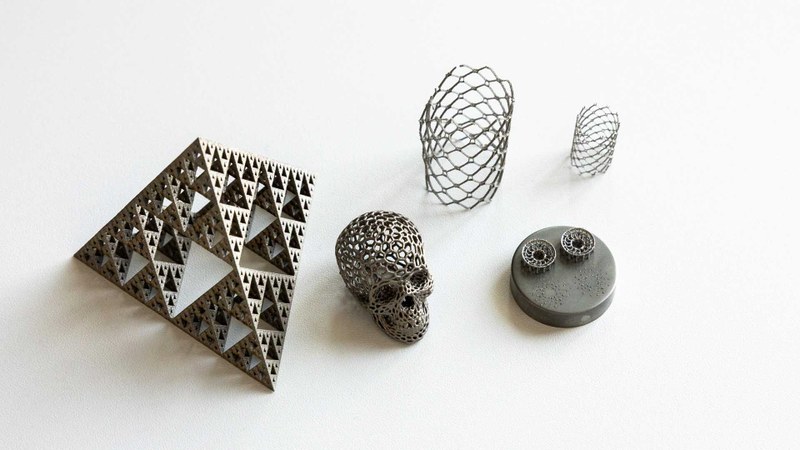
Miniaturized metallic structures produced by selective laser melting using real-time process control. Precise control of the manufacturing process enables the targeted creation of complex geometries and reproducible material properties on a microscale. 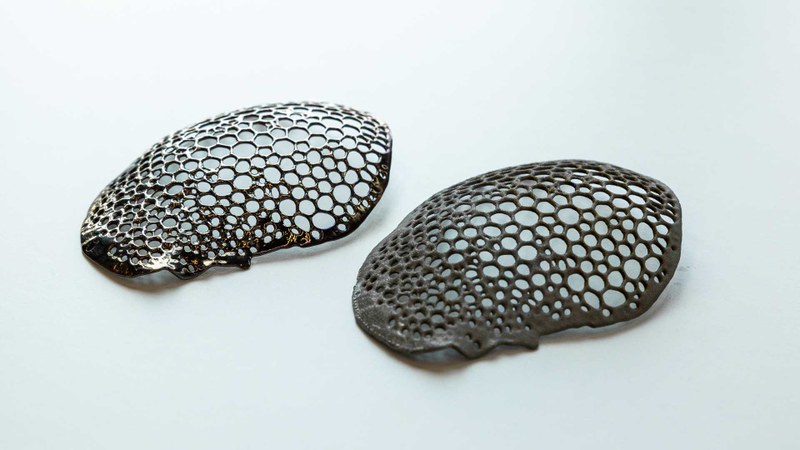
Titanium alloy cranial plates manufactured using selective laser melting (SLM). Left: Surface after automated electropolishing and smoothed surface morphology. Right: Sandblasted reference surface with induced microtopography. 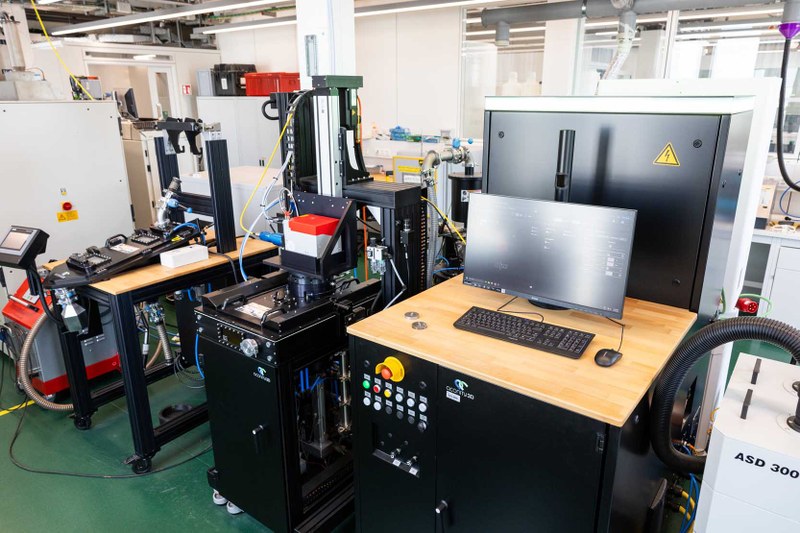
Aconity3d MINI: Compact laser powder bed fusion system for development projects, pilot production, and small series manufacturing. 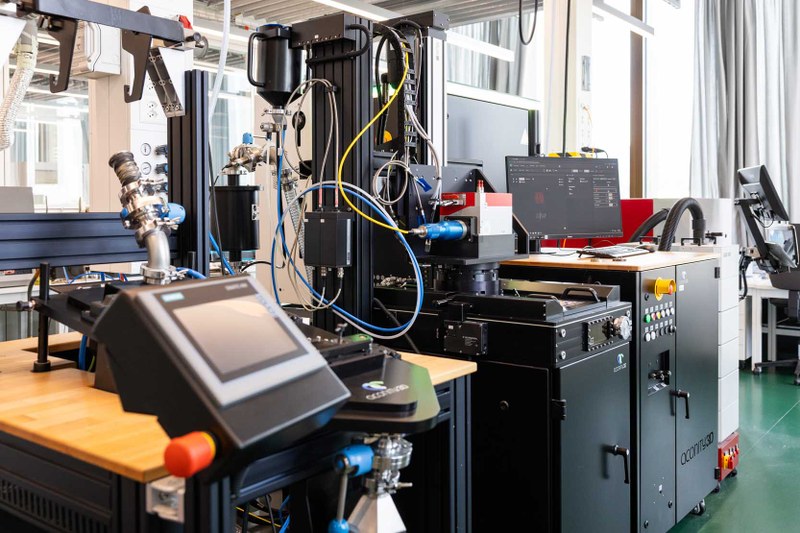
Aconity3d MINI: Compact laser powder bed fusion system for development projects, pilot production, and small series manufacturing. 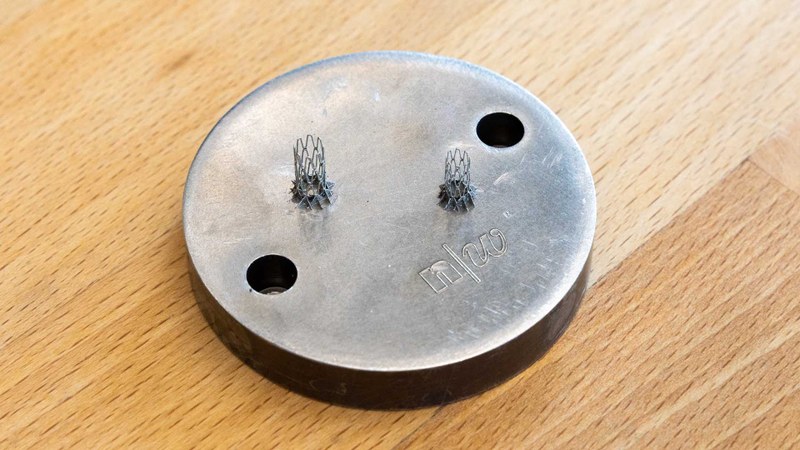
Cardiovascular stent prototypes manufactured using micro-selective laser melting (µSLM). The high resolution of this manufacturing process enables the creation of delicate lattice structures and geometrically complex designs for biomedical applications. (Platform diameter: ∼ø60 mm). 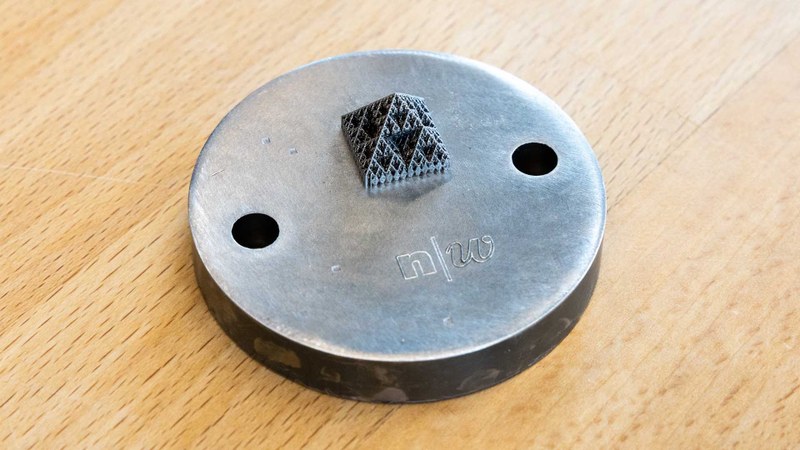
A fractal pyramid made of titanium with five iterative levels, fabricated using micro-selective laser melting (µSLM). The structure demonstrates the potential of high-resolution additive manufacturing processes for producing geometrically complex, hierarchically structured microstructures.
Project details
- Type
- Research project
- Research field
- Functional materials and surfaces, Design and additive manufacturing of medical devices
- School
- FHNW School of Life Sciences / Institute for Medical Engineering and Medical Informatics
- Partners
- Politecnico di Torino, Department of Mechanical and Aerospace Engineering
- Project lead
- Michael de Wild
- Team
- Janik Hänggi
Larissa Wasmer
Daniel Seiler
Romy Marek
Graziana Ragonese
Contact

Prof. Dr. Michael de Wild
- Phone
- +41 61 228 56 49
- michael.dewild@fhnw.ch

Daniel Seiler
- Phone
- +41 61 228 58 48
- daniel.seiler@fhnw.ch