Yannick von Arx works in diplomacy in Beijing. After an earlier career in banking, the Swiss national is now in the final phase of the Swiss-International MBA programme, combining Saturday classes from Beijing with a full-time international role. In this interview he talks about why he chose a remote MBA with global study trips, and what he is taking away from the programme.
Author - Alice Lydia Frey
Choosing the Swiss-International MBA
Yannick joined the programme about a year after moving into his current role in diplomacy. Once he had settled in, he wanted to develop further on the management and leadership side: “I felt I would like to upgrade myself personally, also in the area of management and leadership.”
For someone working full-time in China, the structure of the programme mattered a lot. Saturday classes start at 10 a.m. Swiss time, which is 4 p.m. in Beijing. That fits both his working week and the time difference to Europe. The international study trips were another big factor, and Yannick has so far attended trips in Japan, Germany, Poland and Switzerland.
Another point that made the programme stand out for him was that he could keep his job at full capacity. “I do not have to cut down on my 100% work pensum. A lot of other MBA programmes require you to attend classes every Friday and Saturday, and then you can only work 80%.”
Lecturers as Diverse as the Students
What surprised Yannick most positively was the diversity of his fellow students and the faculty. The cohort brings in a strong mix of professional experience, from industries as varied as pharmaceuticals, IT and banking. Each person looked at the same topic through a different professional lens, which gave the discussions a lot of depth.
The same international mix shaped the teaching side. “The lecturers and professors were also very diverse”, he says. “As a Swiss who has been working overseas in Asia for almost 15 years, I think that's a real plus.”
Modern Content, Practical Toolkits
The takeaways that have stayed with Yannick most are the methods and frameworks of modern leadership, plus more academic foundations like qualitative and quantitative research, which were new to him. The content itself felt up to date: “We studied the latest AI trends, the latest developments in digital transformation and the latest research on collaborative management. That was very beneficial. It was at the pulse of time and not outdated.”
He has also been able to try out a lot of what he learned in his own work, including with his team of Swiss and Chinese colleagues, applying both leadership tools and ideas from the cross-cultural management module.
A Digital-First Way of Working
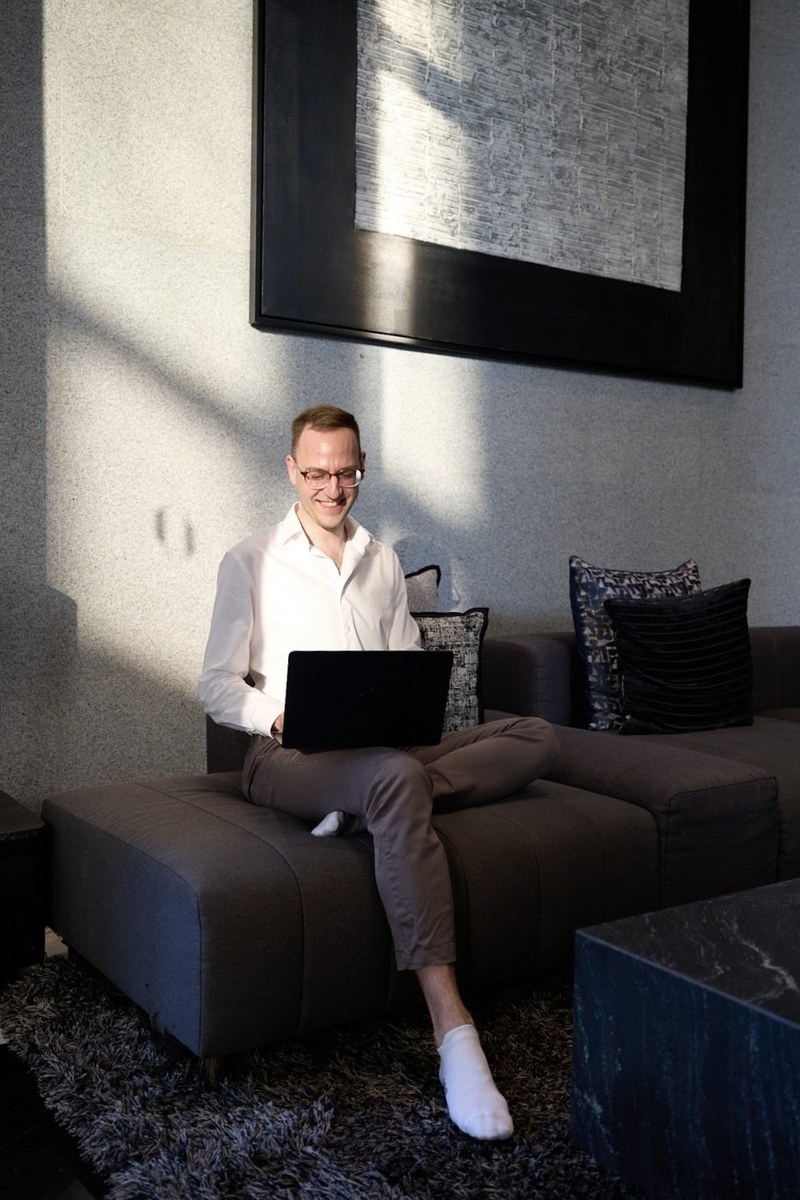
At the start, Yannick assumed the programme would be largely self-study. It turned out to be the opposite. About half of the work is done in groups, and the format pushes everyone to become a confident remote collaborator. “You need to be 100% digital native.” With classmates spread across time zones, every meeting has to be on time, well prepared and focused.
That has also sharpened his communication and time management skills. To balance everything, Yannick sets aside his Saturdays and two weekday evenings for the MBA, keeps Sundays free, and goes running to switch off and recharge.
Thesis: AI Adoption in Communications
Yannick is currently in the thesis phase of the programme. His research looks at how the communications, social media and public relations functions of large multinational companies adopt AI, and it ends in a practical playbook for corporate communications teams.
“Everyone is talking about AI, and there is a lot of research about technical AI implementation, but not that much about how a company, specifically a communications department, can practically adopt AI.” In most large companies, he sees AI use happening bottom-up, with employees experimenting on their own rather than following clear top-down guidelines. His playbook is meant to help close that gap.
Who the Programme is For
Asked whom he would recommend the programme to, Yannick is clear: “I highly recommend it for people who work internationally, for people who are based in Switzerland or abroad, or who work for a company where they have to change locations every six months. Any other MBA programme ties you to a location for at least one and a half to two years.”
His one-line summary of the MBA experience is just as practical: “The MBA has given me the latest management and leadership toolkits to apply in practice.” Together with the international study trips, company visits and a network of fellow students who are willing to open up their networks to others, he says it has given him a strong foundation for taking the next steps toward more senior leadership.
Swiss-International MBA
Contact
Prof. Dr. Andreas Hinz
- Phone
- +41 56 202 79 39
- andreas.hinz@fhnw.ch