Skip to main contentSkip to search barSkip to navigationSkip to footer
Logo of the University of Applied Sciences and Arts Northwestern Switzerland
  • DE
  • EN
  • Home
  • Degree programmes
  • Continuing education

Ten Schools One Goal

The FHNW comprises 10 schools with different specializations. Select a school to see its specific courses, study programmes and information.

Applied Psychology

Architecture, Construction and Geomatics

Art and Design

Business

Computer Science

Engineering and Environment

Life Sciences

Music

School of Education

Social Work

  • Research

    • Research fields
    • Projects
  • Updates and insights

    • News and stories
  • Events

  • Media corner

  • About the School of Engineering and Environment

    • People directory
    • Management Board
  • Institutes

    • Institute of Automation
    • Institute of Bioenergy and Resource Efficiency
    • Institute of Business Engineering
    • Institute of Electric Power Systems
    • Institute of Humanities and Social Sciences
    • Institute of Polymer Engineering
    • Institute of Mathematics and Natural Sciences
    • Institute of Polymer Nanotechnology
    • Institute of Optometry
    • Institute of Product and Production Engineering
    • Institute for Sensors and Electronics
    • Institute of Thermal and Fluid Engineering
    • Laboratories of the School of Engineering and Environment
Logo of the University of Applied Sciences and Arts Northwestern Switzerland
  • About the School
    • FHNW School of Engineering and Environment
    • Degree Programmes
    • Continuing Education
    • Collaboration in Research and Services
  • Social Media
    • LinkedIn
    • Instagram
    • Facebook
    • TikTok
    • YouTube
  • About FHNW
    • Organisation
    • Schools
    • Locations
    • FHNW Library
    • Media Relations
  • Support
    • IT Support
    • Inside FHNW
    • Webmail
  • Data Protection
  • Imprint
  • Accessibility
  • Research

    • Research fields
    • Projects
  • Updates and insights

    • News and stories
  • Events

  • Media corner

  • About the School of Engineering and Environment

    • People directory
    • Management Board
  • Institutes

    • Institute of Automation
    • Institute of Bioenergy and Resource Efficiency
    • Institute of Business Engineering
    • Institute of Electric Power Systems
    • Institute of Humanities and Social Sciences
    • Institute of Polymer Engineering
    • Institute of Mathematics and Natural Sciences
    • Institute of Polymer Nanotechnology
    • Institute of Optometry
    • Institute of Product and Production Engineering
    • Institute for Sensors and Electronics
    • Institute of Thermal and Fluid Engineering
    • Laboratories of the School of Engineering and Environment

Type a search term and search continuing education,degree programmes, events, documents and other content.

  • Engineering and Environment
  • Research and services
  • Research
  • Research fields
  • Mechanical engineering
Mechanical engineering

Thermal machines and combustion research, FHNW School of Engineering and Environment

School of Engineering and Environment


Efficient, Clean, and Innovative Propulsion Technologies for the Future

Our expertise focuses on the development of novel combustion methods, particularly for alternative and renewable fuels such as hydrogen, methanol, and ammonia. We analyze and optimize thermodynamic processes and implement process-improving measures, including in compressors.

Our Competencies

  • Development and Optimization of Combustion Processes
    Analysis and adaptation of combustion for alternative fuels.

  • Thermodynamic Process Analysis
    Examination of cycles, heat flows, and heat transfer.

  • Compressor Process Enhancement
    Identification and implementation of measures to increase efficiency and performance.

  • Sensor Development and Validation
    Support for pressure, temperature, and heat flux sensors for thermal machines.

  • Our Infrastructure

  • Optically Accessible Test Benches: Single-cylinder test stands, full engines, constant volume cells, pre-chambers, combustion chambers, and intake channels.

  • Advanced Measurement Technology: State-of-the-art tools for heat release, efficiency, and emission analysis.

  • International Expertise: Execution of industrial projects and research collaborations with universities and partners worldwide.

  • Your Added Value

  • Hands-on Expertise: We combine experimental methods with simulation-driven analysis.

  • Flexible Support: We assist in individual process steps or manage the entire development cycle.

  • Future-Oriented: Focus on carbon-free and carbon-reduced fuels as well as energy-efficient thermal machines.

  • Selected Projects

    No results found.

    Collaboration and Contact

    Leverage our expertise to promote the use of alternative fuels, optimize combustion processes, and develop innovative solutions for thermal machines. We look forward to hearing from you.
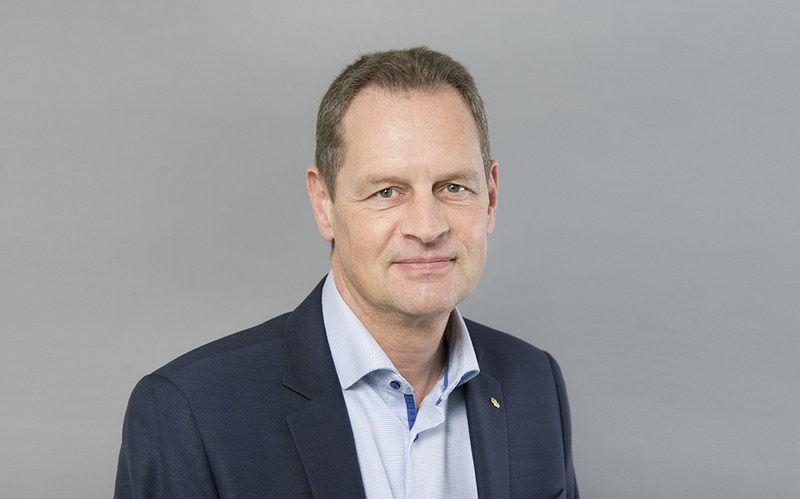
    Beat Ribi

    Prof. Dr. Beat Ribi

    Head of Research, Head of FHNW Institute of Thermal and Fluid Engineering
    Phone
    +41 56 202 74 34 (Direct)
    E-Mail
    beat.ribi@fhnw.ch

    Prof. Dr. Kai Herrmann

    Lecturer for Energy Technology
    Phone
    +41 56 202 77 67 (Direct)
    E-Mail
    kai.herrmann@fhnw.ch

    School of
    Engineering and Environment FHNW University of Applied Sciences and Arts Northwestern Switzerland

    • About the School
      • FHNW School of Engineering and Environment
      • Degree Programmes
      • Continuing Education
      • Collaboration in Research and Services
    • Social Media
      • LinkedIn
      • Instagram
      • Facebook
      • TikTok
      • YouTube
    • About FHNW
      • Organisation
      • Schools
      • Locations
      • FHNW Library
      • Media Relations
    • Support
      • IT Support
      • Inside FHNW
      • Webmail
    Logo FHNW - 20 Years
    Logo Swiss Universities
    Logo European University Association
    © University of Applied Sciences and Arts Northwestern Switzerland (FHNW)
    • Data Protection
    • Imprint
    • Accessibility
    • DE
    • EN