Skip to main contentSkip to search barSkip to navigationSkip to footer
Logo of the University of Applied Sciences and Arts Northwestern Switzerland
  • DE
  • EN
  • Home

Ten Schools One Goal

The FHNW comprises 10 schools with different specializations. Select a school to see its specific courses, study programmes and information.

Applied Psychology

Architecture, Construction and Geomatics

Art and Design

Music

Computer Science

Life Sciences

School of Education

Social Work

Engineering and Environment

Business

  • Study offerings

    • All degree programmes
    • Master in Life Sciences
    • Master in Medical Informatics
    • Joint Degree Master in Biomedical Engineering
    • Info events
  • About degree programmes

    • Tuition fees and scholarships
    • Digital Life Sciences
  • International

    • Outgoing Students
    • Incoming Students
    • Double Degree
    • Partner universities
    • Student stories
    • Buddy programme
    • News and stories
  • Continuing education offerings

    • All continuing educations
    • CAS - Certificate of Advanced Studies
    • Modules and Seminars
    • Info events
  • Organisation

    • Consulting services
    • Legal information and terms & conditions
  • Research

    • Research fields
    • Projects
  • Collaboration

    • Process Technology Centre
    • Services
    • Tech Transfer Office
    • Student projects
  • International

    • Study abroad
    • International research projects
  • Updates and insights

    • News and stories
    • Research highlights
  • Events

    • All events
    • Info events
  • Media corner

  • About the School of Life Sciences

    • Strategy and values
    • Management board
    • Staff
    • Advisory board
    • People directory
    • Diversity and equal opportunities
    • Media corner
    • Infrastructure and campus
  • Institutes and centres

    • Institute for Chemistry and Bioanalytics
    • Institute for Ecopreneurship
    • Institute for Medical Engineering and Medical Informatics
    • Institute for Pharma Technology and Biotechnology
    • Centre for Teaching and Learning
    • Process Technology Centre
Logo of the University of Applied Sciences and Arts Northwestern Switzerland
  • About the School
    • School
    • Degree Programmes
    • Continuing Education
    • Research
    • Events
  • Social Media
    • Facebook
    • Instagram
    • YouTube
    • LinkedIn
  • About FHNW
    • Organisation
    • Schools
    • Locations
    • FHNW Library
    • Media Relations
  • Support
    • IT Support
    • Inside FHNW
    • Webmail
  • Data Protection
  • Imprint
  • Accessibility
  • Study offerings

    • All degree programmes
    • Master in Life Sciences
    • Master in Medical Informatics
    • Joint Degree Master in Biomedical Engineering
    • Info events
  • About degree programmes

    • Tuition fees and scholarships
    • Digital Life Sciences
  • International

    • Outgoing Students
    • Incoming Students
    • Double Degree
    • Partner universities
    • Student stories
    • Buddy programme
    • News and stories
  • Continuing education offerings

    • All continuing educations
    • CAS - Certificate of Advanced Studies
    • Modules and Seminars
    • Info events
  • Organisation

    • Consulting services
    • Legal information and terms & conditions
  • Research

    • Research fields
    • Projects
  • Collaboration

    • Process Technology Centre
    • Services
    • Tech Transfer Office
    • Student projects
  • International

    • Study abroad
    • International research projects
  • Updates and insights

    • News and stories
    • Research highlights
  • Events

    • All events
    • Info events
  • Media corner

  • About the School of Life Sciences

    • Strategy and values
    • Management board
    • Staff
    • Advisory board
    • People directory
    • Diversity and equal opportunities
    • Media corner
    • Infrastructure and campus
  • Institutes and centres

    • Institute for Chemistry and Bioanalytics
    • Institute for Ecopreneurship
    • Institute for Medical Engineering and Medical Informatics
    • Institute for Pharma Technology and Biotechnology
    • Centre for Teaching and Learning
    • Process Technology Centre

Type a search term and search continuing education,degree programmes, events, documents and other content.

Master in Life Sciences - Biotechnology, FHNW School of Life Sciences

School of Life Sciences


  • Life Sciences
  • Degree programmes
  • Study offerings
  • All degree programmes
All degree programmes
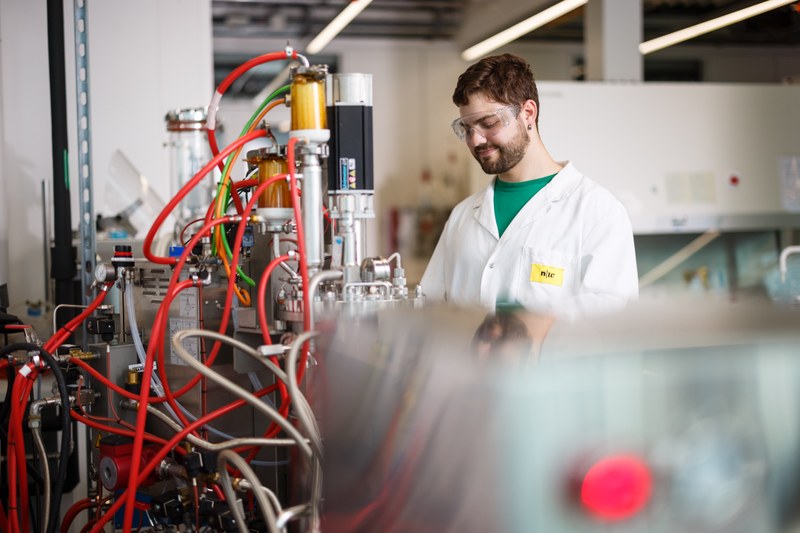
MSc_Biotechnology.jpg

Do you want to develop innovative biotechnological processes, enable new medicines or design sustainable production processes? The Master’s degree in Biotechnology will deepen your scientific knowledge, sharpen your methodological skills, and prepare you for specialist and managerial roles in research and industry.


Factsheet

Degree
Master of Science in Life Sciences
Study mode
Full-time and Part-time
Learning environment
Onsite and Online
ECTS points
90
Next start
14.9.2026
Duration
3 semesters (full-time) / 6 semesters (part-time)
Language
Englisch
Place
FHNW Campus Muttenz, Hofackerstrasse 30, 4132 Muttenz
Staying abroad
Possible
Application fee
CHF 200
Semester fee
CHF 750 / CHF 1 000 / CHF 5 000

At a glance

  • Research-based and application-oriented: Benefit from practical training in state-of-the-art laboratories and work on real research and development projects.
  • Individual specialisation: Enhance your expertise in fields such as molecular biotechnology, bioprocess engineering or bioinformatics and define your own focus areas.‍
  • Career with prospects: Excellent preparation for demanding positions in biotechnology, the pharmaceutical sector and public research institutions.‍
  • Flexible study modes: Choose full‑time or part‑time study to suit your situation.‍
  • International opportunities: Earn a double degree at a partner university or complete your Master’s thesis abroad.

Why study this?

What career opportunities are open to you?

Biotechnology is an innovative and fast‑growing field. As a graduate, you will bring together expertise in science, automation, digitisation, data analysis and project management. These skills open up opportunities in research, development, production and marketing of biopharmaceutical products. Demand for well‑trained specialists is high and continues to grow.

Typical areas of employment for graduates are:

  • Biopharmaceutical production: vaccines, therapeutic antibodies, viral vectors for gene therapies.
  • Quality management and regulatory affairs: ensuring product quality and compliance with legal standards.
  • Process development and optimisation: design of efficient and automated manufacturing processes.
  • Data analysis and digitisation in the Life Sciences: evaluation of biological data and digital solutions in research and production.
  • Technology transfer and product management: linking science and business to bring new biotechnology products to market.

Biotechnology products and technologies also open up new ways to treat complex diseases.


Structure and programme contents

The programme offers rigorous scientific training directly linked to the challenges of biological therapies.

You will gain advanced knowledge in the following areas:

  • Biopharmaceutical products: Science and technology of innovative medicines such as cell and gene therapies.
  • Continuous bioprocesses: Efficient, automated production of biotechnological active ingredients.
  • Process analytics and automation: Real‑time monitoring and control of bioprocesses with advanced technologies.
  • Formulation and analytics of biologics: Stable formulations and analytical methods for quality assurance.
  • Regulatory requirements: Approval principles and quality standards for biological medicines.
  • Electives from related fields: Specialisation options in Analytical Chemistry, Bioanalytics, Applied Cell Biology or Pharma Technology.

In addition to the subject-specific content, interdisciplinary modules allow you to tailor your course of study individually. This will help you strengthen your skills in:

  • Project management and academic work: Planning, implementation and communication of scientific projects in the biopharmaceutical environment.
  • Innovation and interdisciplinary collaboration: Development of new solutions at the interface between science, technology and application.

Details of the degree programme

Programme structure

The master’s degree programme consists of three key components: core skills, specialised training and the thesis. In the first part of your degree programme, you will complete modules totalling 50 ECTS. These include your chosen core skills modules (at least 12 ECTS) and specialised training, allowing for individual specialisation. This is followed in the final semester by the thesis, completed over eight months and worth 40 ECTS.

The following is an example of a programme structure for a full-time course (three semesters); part-time students generally take the modules in four semesters.

Full-time course

The master’s degree can be started in the spring or autumn semester and is designed as a full-time programme over three semesters. In the first two semesters, the focus is on lectures and expanding specialist skills.

From the third semester onwards, you will devote yourself to your eight-month MSc thesis, which concludes your studies.

The following is an example of the full-time course starting in the autumn semester:

Part-time study

The master’s degree programme can also be done part-time starting in the spring or autumn semester on a work-study basis. This generally takes six semesters.

Experience has shown that a workload of 50 to 60% is easily compatible with part-time studies.

As a part-time student, you attend tuition over several semesters and usually start your thesis after the fourth semester.

The following is an example of the part-time course starting in the autumn semester:

A total of 50 ECTS credits (i.e. 17 modules each worth 3 ECTS credits) must be earned. Other modules can be selected: Module overview (English)

You can also plan your studies in advance with our MSc Life Sciences planning tool.

Module Groups for the Biotechnology specialisation

Biotechnology

choose 5 of 6

  • Gene and Cell Therapeutics
  • Process Analytical Technology
  • Continuous Biomanufacturing
  • Process Automation
  • Chromatography and Mass Spectrometry for Bioanalytics
  • Formulation of Biologics and Routes of Drug Delivery
Electives

choose 3 of 7

  • Cellular Imaging
  • Laboratory Automation in the Pharmaceutical Industry
  • Advanced Cell Culture Systems
  • Advanced Mass Spectrometry
  • Genomics
  • Proteomics and Protein Analysis
  • Pharmaceutical Production Facilities
Cluster-specific

choose 3 of 5

  • Design of Biopharmaceutical Production Facilities
  • Regulatory Affairs
  • Bioanalytics in a Regulated Environment
  • Physiology and Immunotherapies
  • Tissue Engineering for Drug Discovery
Core skills

choose 4 of 8

  • Handling and Visualizing Data
  • Business Administration for Life Sciences
  • Design and Analysis of Experiments
  • Management and Leadership for Life Sciences
  • Modelling and Exploration of Multivariate Data
  • Innovation and Project Management
  • Data and Ethics
  • Politics and Society
Thesis

The eight-month thesis is the core module of the MSc programme and comprises 40 ECTS. You will work on a challenging, application-oriented project with a direct link to current issues in research or practice. You may work in a company, university, a research institute in Switzerland or abroad, or at an institute of the FHNW School of Life Sciences.

International

Our master's programme opens up global horizons: whether aiming for a double degree, planning your master's thesis overseas or coming to us from abroad, we will support you every step of the way!

Double Degree: Obtain two degrees from two different universities: Information

Outgoing Students: Doing your Master's thesis abroad: Information

Incoming Students: Studying with us as an international student: Information


Requirements and admission

Direct admission requires:

  • a Bachelor’s degree in a related field from a university of applied sciences or university with a good grade (Switzerland: A, B or ≥ 5; Germany/Austria: at least “good”),
  • sufficient English proficiency.

If you do not fully meet the requirements, you may be invited to a personal interview.

Proof of sufficient English skills must be provided with one of the following certificates:

Type of certificate

Required level

CE (Cambridge English)

B2/FCE

IELTS (English Language Testing System)

5.5

TOEFL (Test of English as a Foreign Language)

IBT 72

Spoken or Written Academic English (module in the bachelor’s degree programme at the School of Life Sciences)

4.5

If you are unable to provide evidence of the required command of English, you are obliged to improve it during the course of your master’s degree programme. You can either attend the advanced English course offered by the FHNW School of Life Sciences or other suitable language courses. At the end of the programme, proof must be provided that the required level of English has been achieved (see table above).


Organisational matters

The international Master of Science in Life Sciences is conducted in collaboration with other Swiss Universities of Applied Sciences: Berner Fachhochschule BFH, Haute Ecole Spécialisée de la Suisse Occidentale HES-SO and Zürcher Hochschule für angewandte Wissenschaften ZHAW.

Course start

The Master's programme starts in the autumn semester (calendar week 38). It is also possible to start the programme in the spring semester (calendar week 8).

Tuition fees

The following semester and registration fees are charged in accordance with FHNW regulations. Further details can be found in the FHNW fee schedule, valid from academic year 2025/26.

Tuition fees per semester:

CHF 750

  • Swiss nationals
  • Students legally resident in Switzerland at the start of their studies
  • Students who provide proof that their parents are domiciled in Switzerland at the start of their studies
  • Refugees of legal age and stateless persons, legally resident in Switzerland

CHF 1 000

  • Students legally resident in the EU/EFTA at the start of their studies

CHF 5 000

  • Students whose legal residence at the start of their studies is neither in Switzerland nor in an EU/EFTA country

In addition, a fee of CHF 100 per semester is charged for materials and licences.

Full fees are due unless deregistration is received within one week of the semester start.

Downloads/Links

Module overview, Master of Sciences in Life Sciences (PDF)

International Student Guide (PDF)

Gebührenverordnung FHNW (PDF, German)

planyourstudies (Link)

Study regulations (German)


Advising and information events

Contact

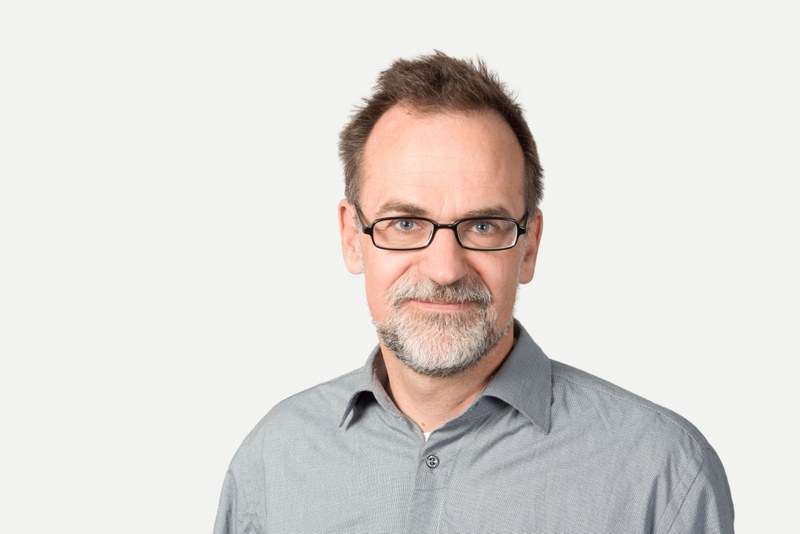
Georg Lipps

Prof. Dr. Georg Lipps

Dean MSc in Life Sciences, Team leader Proteins and Enzymes
Phone
+41 61 228 54 52
E-Mail
georg.lipps@fhnw.ch
Vera Statovci

Vera Statovci

Team Assistant
Phone
+41 61 228 55 96
E-Mail
vera.statovci@fhnw.ch

Information events

Loading...


Registration

Register here for your chosen start date.

Master in Life Sciences - Biotechnology
Autumn semester 2026

Date
14.9.2026
Duration
3 semesters (full‑time)/6 semesters (part‑time)
Place
FHNW Campus Muttenz, Hofackerstrasse 30, 4132 Muttenz
Final application date
30.4.2026
Register

Master in Life Sciences - Biotechnology
Spring semester 2027

Date
22.2.2027
Duration
3 semesters (full‑time)/6 semesters (part‑time)
Place
FHNW Campus Muttenz, Hofackerstrasse 30, 4132 Muttenz
Final application date
30.11.2026
Register

School of
Life Sciences FHNW University of Applied Sciences and Arts Northwestern Switzerland

  • About the School
    • School
    • Degree Programmes
    • Continuing Education
    • Research
    • Events
  • Social Media
    • Facebook
    • Instagram
    • YouTube
    • LinkedIn
  • About FHNW
    • Organisation
    • Schools
    • Locations
    • FHNW Library
    • Media Relations
  • Support
    • IT Support
    • Inside FHNW
    • Webmail
Logo FHNW - 20 Years
Logo Swiss Universities
Logo European University Association
© University of Applied Sciences and Arts Northwestern Switzerland (FHNW)
  • Data Protection
  • Imprint
  • Accessibility
  • DE
  • EN