Particle engineering and technology at the drug substance / drug product interface
Key data
- Organized by
- FHNW School of Life Sciences
- Event language
- English
- Expenses
- Free of charge
- Address
- Hofackerstrasse 30
4132 Muttenz
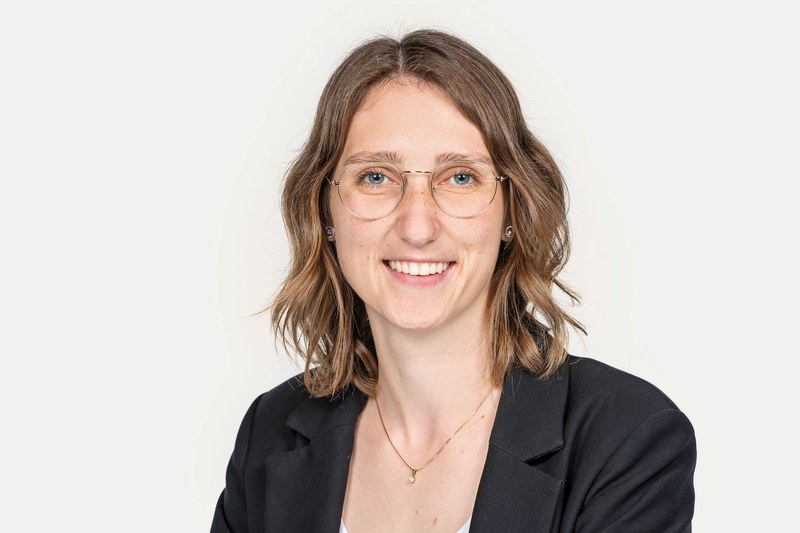
Prof. Dr. Thomas Vetter joined the Institute for Pharma Technology and Biotechnology in January 2026 as lecturer and professor of pharmaceutical process engineering.
In his inaugural lecture on Wednesday, May 27, 2026, he will discuss how advanced particle engineering and process technologies enable the design and control of pharmaceutical materials and manufacturing processes.
Get to know Prof. Dr. Vetter and gain insights into future perspectives for research and education in pharmaceutical process engineering at the FHNW School of Life Sciences.
The lecture will be followed by an apéro. This event is free of charge but registration is required. Please complete the form below.
Abstract
Particle engineering and technology at the drug substance / drug product interface
Around two thirds of new medicines and 90% of existing medicines contain synthetically made molecules, most of which are manufactured into formulations containing solids. The particles’ properties play a critical role in definining manufacturability, stability, bioavailability and ultimately therapeutic performance. Modern pharmaceutical development therefore increasingly depends on the ability to precisely engineer particles and solid-state properties across the entire value chain from drug substance to drug product.
In this inaugural lecture, Prof. Dr. Thomas Vetter will discuss how advanced particle engineering and process technologies enable the design and control of pharmaceutical materials and manufacturing processes. Drawing on examples from academic and industrial research, the presentation will demonstrate how a mechanistic understanding of particle formation and transformation can support robust, efficient, and sustainable pharmaceutical manufacturing. Particular emphasis will be placed on the integration of continuous processing, digitalization, and model-based process development at the drug substance/drug product interface. The lecture will further outline future perspectives for research and education in pharmaceutical process engineering at the FHNW School of Life Sciences.