Skip to main contentSkip to search barSkip to navigationSkip to footer
Logo of the University of Applied Sciences and Arts Northwestern Switzerland
  • DE
  • EN
  • Home

Ten Schools One Goal

The FHNW comprises 10 schools with different specializations. Select a school to see its specific courses, study programmes and information.

Applied Psychology

Architecture, Construction and Geomatics

Art and Design

Business

Computer Science

Engineering and Environment

Life Sciences

Music

School of Education

Social Work

  • Study offerings

    • All degree programmes
    • Master in Life Sciences
    • Master in Medical Informatics
    • Joint Degree Master in Biomedical Engineering
    • Info Events
  • About degree programmes

    • Tuition fees and scholarships
    • Digital Life Sciences
  • International

    • Outgoing Students
    • Incoming Students
    • Double Degree
    • Partner universities
    • Student stories
    • Buddy programme
    • News and stories
  • Continuing education offerings

    • All continuing educations
    • CAS - Certificate of Advanced Studies
    • Modules and Seminars
    • Info Events
  • Organisation

    • Consulting services
    • Legal information and terms & conditions
  • Research

    • Research fields
    • Projects
    • Institutes and centres
  • Collaboration

    • Process Technology Centre
    • Services
    • Tech Transfer Office
    • Student projects
  • International

    • Study abroad
    • International research projects
  • Updates and insights

    • News and stories
    • Research highlights
  • Events

    • All events
    • Info Events
  • Media corner

  • About the School of Life Sciences

    • Strategy and values
    • Management board
    • Administration and service staff
    • Advisory board
    • People directory
    • Diversity and equal opportunities
    • Media corner
    • Infrastructure and campus
  • Institutes and centres

    • Institute for Chemistry and Bioanalytics
    • Institute for Ecopreneurship
    • Institute for Medical Engineering and Medical Informatics
    • Institute for Pharma Technology and Biotechnology
    • Centre for Teaching and Learning
    • Process Technology Centre
Logo of the University of Applied Sciences and Arts Northwestern Switzerland
  • About the School
    • School
    • Degree Programmes
    • Continuing Education
    • Research
    • Events
  • Social Media
    • Facebook
    • Instagram
    • YouTube
    • LinkedIn
  • About FHNW
    • Organisation
    • Schools
    • Locations
    • FHNW Library
    • Media Relations
  • Support
    • IT Support
    • Inside FHNW
    • Webmail
  • Data Protection
  • Imprint
  • Accessibility
  • Study offerings

    • All degree programmes
    • Master in Life Sciences
    • Master in Medical Informatics
    • Joint Degree Master in Biomedical Engineering
    • Info Events
  • About degree programmes

    • Tuition fees and scholarships
    • Digital Life Sciences
  • International

    • Outgoing Students
    • Incoming Students
    • Double Degree
    • Partner universities
    • Student stories
    • Buddy programme
    • News and stories
  • Continuing education offerings

    • All continuing educations
    • CAS - Certificate of Advanced Studies
    • Modules and Seminars
    • Info Events
  • Organisation

    • Consulting services
    • Legal information and terms & conditions
  • Research

    • Research fields
    • Projects
    • Institutes and centres
  • Collaboration

    • Process Technology Centre
    • Services
    • Tech Transfer Office
    • Student projects
  • International

    • Study abroad
    • International research projects
  • Updates and insights

    • News and stories
    • Research highlights
  • Events

    • All events
    • Info Events
  • Media corner

  • About the School of Life Sciences

    • Strategy and values
    • Management board
    • Administration and service staff
    • Advisory board
    • People directory
    • Diversity and equal opportunities
    • Media corner
    • Infrastructure and campus
  • Institutes and centres

    • Institute for Chemistry and Bioanalytics
    • Institute for Ecopreneurship
    • Institute for Medical Engineering and Medical Informatics
    • Institute for Pharma Technology and Biotechnology
    • Centre for Teaching and Learning
    • Process Technology Centre

Type a search term and search continuing education,degree programmes, events, documents and other content.

Between lecture theatre and fieldwork on a water project in Madagascar, FHNW School of Life Sciences

5.5.2026 – School of Life Sciences


  • Life Sciences
  • News and events
  • News and Stories
  • All news and stories
All news and stories
header_teaser_carola.jpg

Carola Bänziger, research assistant at the Institute for Ecopreneurship at the FHNW School of Life Sciences (HLS), is currently working in Madagascar. On the ground, it is clear how international cooperation takes shape in practice, and how important personal encounters are for sustainable partnerships.

  • Story

Why are you in Madagascar, and what are you doing there?

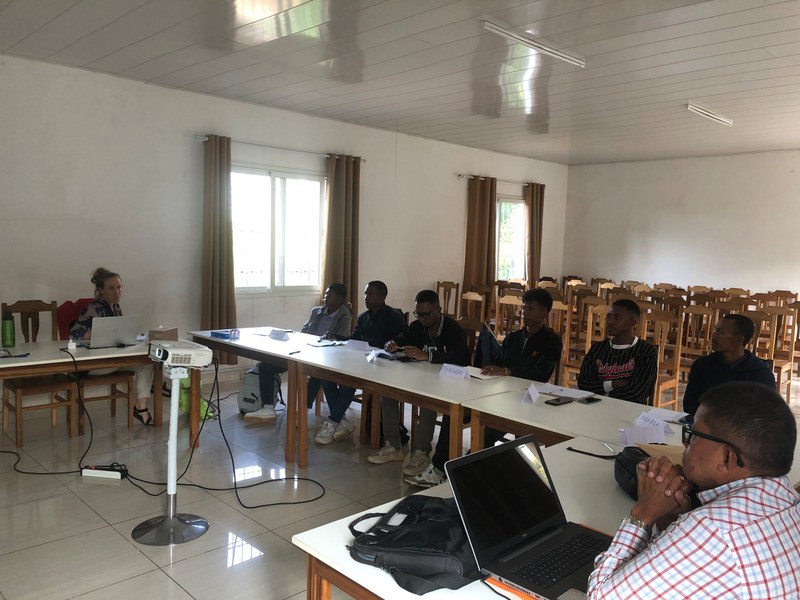
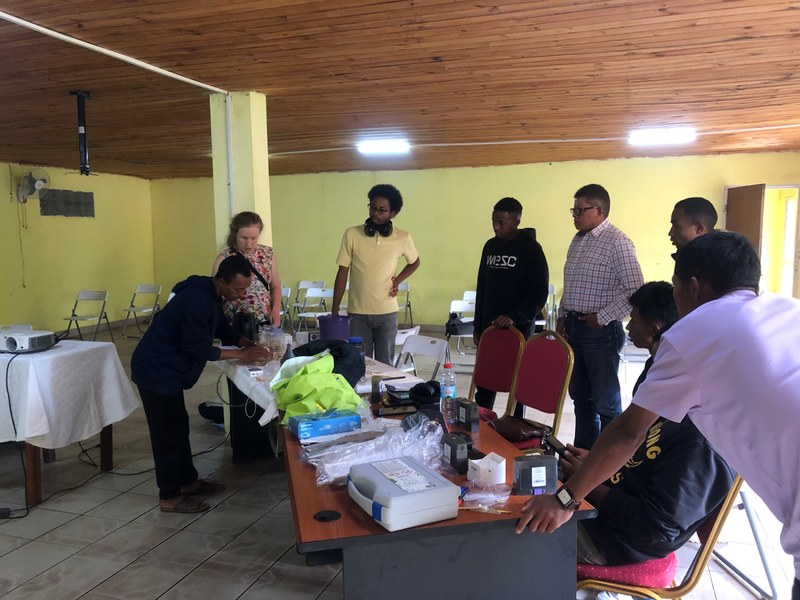
I am in Madagascar for three weeks as part of a collaboration with the University of Antananarivo. With a professor from the university, I am training MSc and PhD students in water supply monitoring and evaluation.

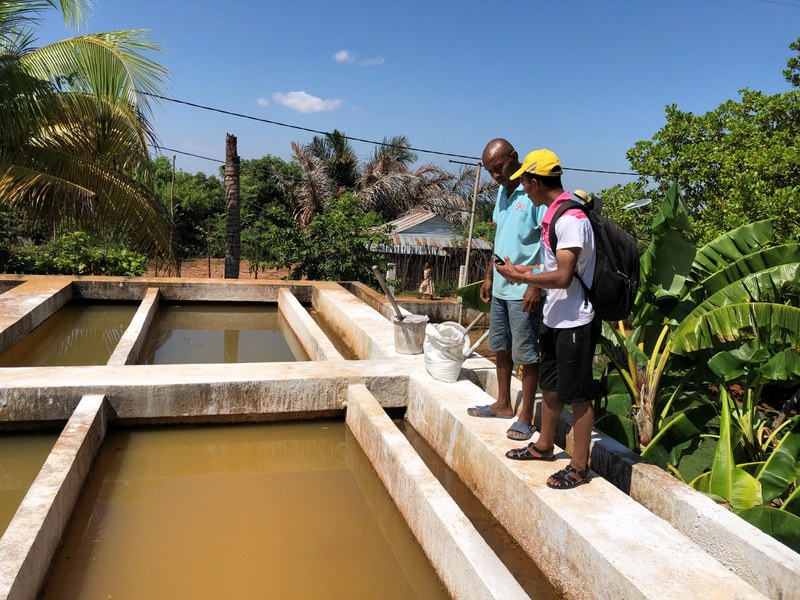
This isn’t just theory: we’re conducting interviews with water supply staff, those responsible for public water points and households. We’re also analysing water quality at various levels to gain as comprehensive a picture of the situation as possible.

This is my first visit to Madagascar. The partnership with the University of Antananarivo was established entirely remotely – which made it all the more important to meet in person after numerous online meetings and to deepen our collaboration.

What does a typical day look like for you?

There’s hardly a truly typical day here. Initially, the focus was primarily on the training at the University of Antananarivo. That meant getting up early to navigate the daily traffic jams by taxi, followed by long days of theoretical and practical input.

After the first few days of training we started applying the newly learnt methods in the university itself. The next step was fieldwork: data collection under real-world conditions, often involving long car journeys and intensive practical implementation.

During this phase it becomes clear what works well and what needs to be adapted. The alternation between planning, application and optimisation is a central component of the work on the ground.

What are the challenges? What are the lesser-known aspects of Madagascar?

A major challenge is getting around - distances that look manageable on the map can take a very long time to cover. We once spent 14 hours travelling 460 kilometres because of road conditions, countless potholes and obstacles on narrow lanes such as ox carts, lorries and herds of animals.

Power and water cuts are also part of everyday life. This requires forward planning – for example, by using rechargeable batteries for equipment such as incubators.

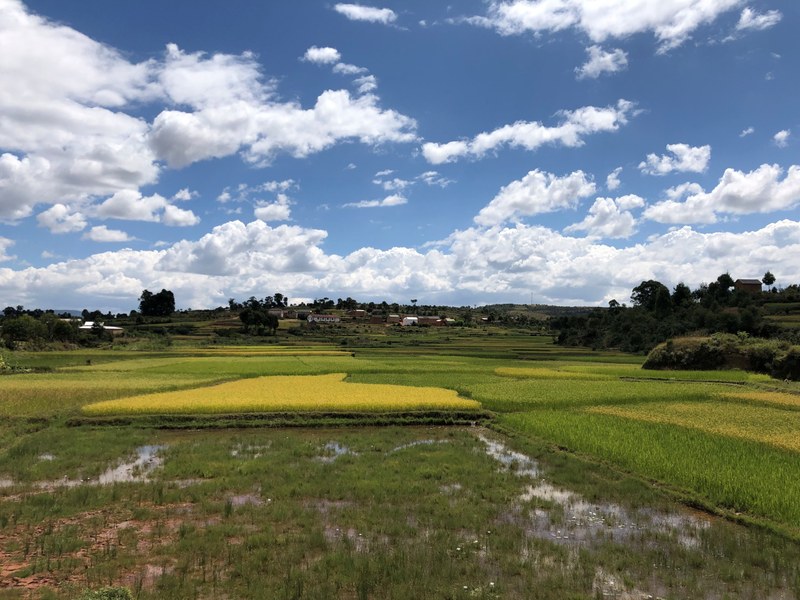
What many may not know: the population of Madagascar is very young, with a median age of 20. The people are exceptionally warm and open. The landscape is very diverse, characterised by terraced rice fields and a wide variety of fruits. Rice plays a central role in daily life – many people eat it three times a day.

What are the benefits of the stay – for you personally, for the HLS and for the partner university?

For me personally, the stay is a valuable experience: I am getting to know new people and their lived realities, expanding my network and deepening my specialist knowledge.

For the collaboration between the HLS and the Université d’Antananarivo, the exchange creates an important foundation for existing and future projects. Jointly supervised BSc and MSc theses can be developed, generating data and application-oriented results. These in turn can be incorporated into scientific publications, contribute to the development of new training materials and be disseminated via the networks of the FHNW and international partners.

Furthermore, the insights gained also have a direct benefit on the ground: improved data on drinking water quality and the effectiveness of chlorination measures help utility companies, local authorities and NGO partners to improve water supply sustainably.
  • Foto_2.jpg
  • Foto_1.jpg
  • Foto_3.jpg

Take your chance to study abroad!

Thinking about a semester abroad or an international thesis? Find all the necessary information for outgoing students here:
DE - Outgoing StudierendeEN - Outgoing students

Contact

Irina Hauri

Irina Hauri

Head of International Office and Continuing Education Management
Phone
+41 61 228 50 66
E-Mail
international.lifesciences@fhnw.ch
Sarah Lehmann

Sarah Lehmann

Assistant International Office
Phone
+41 61 228 50 66
E-Mail
international.lifesciences@fhnw.ch

School of
Life Sciences FHNW University of Applied Sciences and Arts Northwestern Switzerland

  • About the School
    • School
    • Degree Programmes
    • Continuing Education
    • Research
    • Events
  • Social Media
    • Facebook
    • Instagram
    • YouTube
    • LinkedIn
  • About FHNW
    • Organisation
    • Schools
    • Locations
    • FHNW Library
    • Media Relations
  • Support
    • IT Support
    • Inside FHNW
    • Webmail
Logo FHNW - 20 Years
Logo Swiss Universities
Logo European University Association
© University of Applied Sciences and Arts Northwestern Switzerland (FHNW)
  • Data Protection
  • Imprint
  • Accessibility
  • EN
  • DE