Skip to main contentSkip to search barSkip to navigationSkip to footer
Logo of the University of Applied Sciences and Arts Northwestern Switzerland
  • DE
  • EN
  • Home

Ten Schools One Goal

The FHNW comprises 10 schools with different specializations. Select a school to see its specific courses, study programmes and information.

Applied Psychology

Architecture, Construction and Geomatics

Art and Design

Business

Computer Science

Engineering and Environment

Life Sciences

Music

School of Education

Social Work

  • Study offerings

    • All degree programmes
    • Master in Life Sciences
    • Master in Medical Informatics
    • Joint Degree Master in Biomedical Engineering
    • Info Events
  • About degree programmes

    • Tuition fees and scholarships
    • Digital Life Sciences
  • International

    • Outgoing Students
    • Incoming Students
    • Double Degree
    • Partner universities
    • Student stories
    • Buddy programme
    • News and stories
  • Continuing education offerings

    • All continuing educations
    • CAS - Certificate of Advanced Studies
    • Modules and Seminars
    • Info Events
  • Organisation

    • Consulting services
    • Legal information and terms & conditions
  • Research

    • Research fields
    • Projects
    • Institutes and centres
  • Collaboration

    • Process Technology Centre
    • Services
    • Tech Transfer Office
    • Student projects
  • International

    • Study abroad
    • International research projects
  • Updates and insights

    • News and stories
    • Research highlights
  • Events

    • All events
    • Info Events
  • Media corner

  • About the School of Life Sciences

    • Strategy and values
    • Management board
    • Administration and service staff
    • Advisory board
    • People directory
    • Diversity and equal opportunities
    • Media corner
    • Infrastructure and campus
  • Institutes and centres

    • Institute for Chemistry and Bioanalytics
    • Institute for Ecopreneurship
    • Institute for Medical Engineering and Medical Informatics
    • Institute for Pharma Technology and Biotechnology
    • Centre for Teaching and Learning
    • Process Technology Centre
Logo of the University of Applied Sciences and Arts Northwestern Switzerland
  • About the School
    • School
    • Degree Programmes
    • Continuing Education
    • Research
    • Events
  • Social Media
    • Facebook
    • Instagram
    • YouTube
    • LinkedIn
  • About FHNW
    • Organisation
    • Schools
    • Locations
    • FHNW Library
    • Media Relations
  • Support
    • IT Support
    • Inside FHNW
    • Webmail
  • Data Protection
  • Imprint
  • Accessibility
  • Study offerings

    • All degree programmes
    • Master in Life Sciences
    • Master in Medical Informatics
    • Joint Degree Master in Biomedical Engineering
    • Info Events
  • About degree programmes

    • Tuition fees and scholarships
    • Digital Life Sciences
  • International

    • Outgoing Students
    • Incoming Students
    • Double Degree
    • Partner universities
    • Student stories
    • Buddy programme
    • News and stories
  • Continuing education offerings

    • All continuing educations
    • CAS - Certificate of Advanced Studies
    • Modules and Seminars
    • Info Events
  • Organisation

    • Consulting services
    • Legal information and terms & conditions
  • Research

    • Research fields
    • Projects
    • Institutes and centres
  • Collaboration

    • Process Technology Centre
    • Services
    • Tech Transfer Office
    • Student projects
  • International

    • Study abroad
    • International research projects
  • Updates and insights

    • News and stories
    • Research highlights
  • Events

    • All events
    • Info Events
  • Media corner

  • About the School of Life Sciences

    • Strategy and values
    • Management board
    • Administration and service staff
    • Advisory board
    • People directory
    • Diversity and equal opportunities
    • Media corner
    • Infrastructure and campus
  • Institutes and centres

    • Institute for Chemistry and Bioanalytics
    • Institute for Ecopreneurship
    • Institute for Medical Engineering and Medical Informatics
    • Institute for Pharma Technology and Biotechnology
    • Centre for Teaching and Learning
    • Process Technology Centre

Type a search term and search continuing education,degree programmes, events, documents and other content.

Robotics and international collaboration at first-hand, FHNW School of Life Sciences

5.5.2026 – School of Life Sciences


  • Life Sciences
  • News and events
  • News and Stories
  • All news and stories
All news and stories
header_teaser_BIP.png

Intensive learning, industry insights, and intercultural exchange in an international context.

  • Story

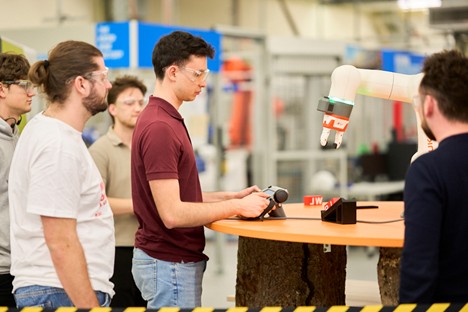
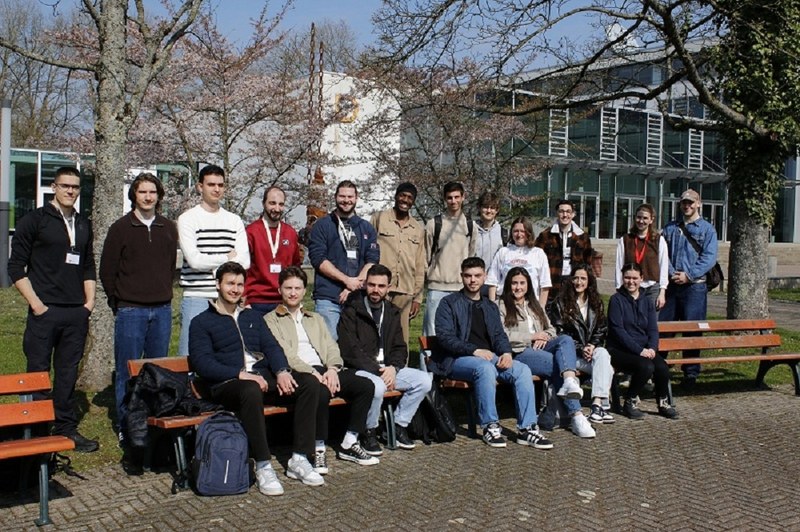
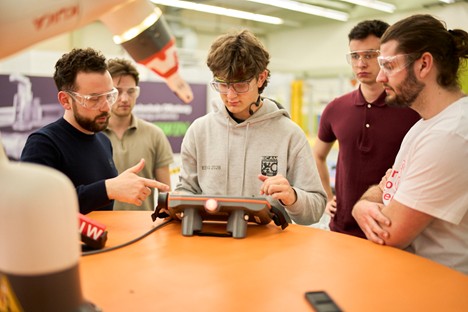
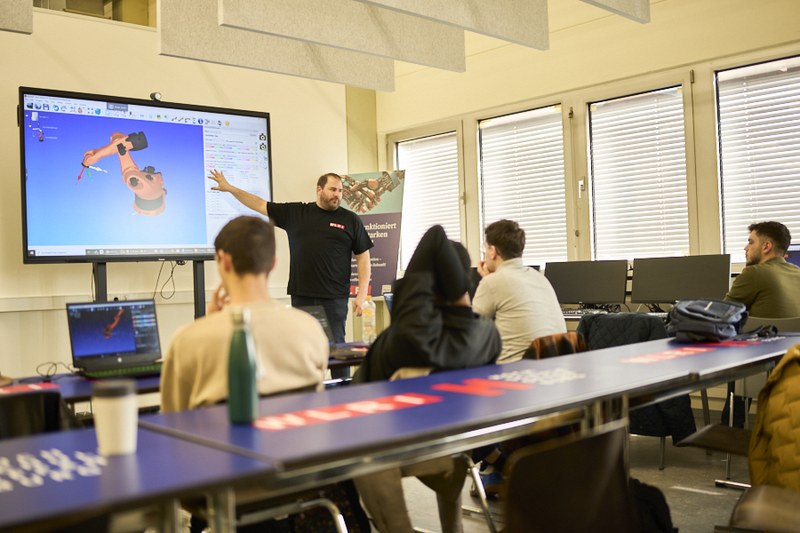
Sebastian Schwarz and Gian Wächter, two students at the FHNW School of Life Sciences, had the opportunity to work intensively with robotics whilst gaining international experience. With 14 other participants, they took part in a Blended Intensive Programme (BIP) at the ChallengeEU partner university in Offenburg. This consisted of a preparatory virtual component (online in the evenings) and a week on-site in Offenburg.

What made you decide to take part in the ‘Industrial Robotics in Practice’ BIP?

Gian: After being nominated by my course director, I looked into the programme in more detail – and didn’t want to miss this opportunity.

Sebastian: For me, the duration was the main factor, as I was able to fit the programme in during my thesis. I also found the combination of theoretical preparation and plenty of practical work very appealing. Robotics is a megatrend and there were overlaps with FHNW projects, which was particularly exciting.

What did you enjoy most?

Gian: The interaction and exchange with students from different countries and cultures. It was particularly impressive how quickly you can work towards a common goal with people you’ve never met before.

Sebastian: Definitely working in a small group of open-minded and interested students from all over Europe. Developing creative solutions together was great fun.

How was the interaction with the other students? Were there any cultural differences?

Gian: There were 16 of us: four from Switzerland, six from France and six from North Macedonia. We got on very well and did a lot together outside the programme too, such as going out for dinner or having games nights. One noticeable difference was punctuality – in Switzerland it’s quite strict, whilst other nations took a more relaxed view.

Sebastian: I also found the exchange to be a very positive experience. Despite having five different native languages, there were no communication problems at all. Everyone was open and curious. The cultural differences were noticeable, particularly the more relaxed style of the North Macedonian students, which helped slow down our often hectic daily routine a little.

What did you learn for your future?

Gian: I was able to significantly deepen my knowledge of industrial robots and, above all, apply it in practice. It was particularly valuable that we were confronted with real-world problems that you don’t encounter in theory or simulation.

Sebastian: I’ve gained a much better understanding of industry applications for robotics. A company visit to Hansgrohe, offering an insight into automated production lines, was particularly impressive. I also learnt a lot about the challenges and opportunities in this research field.

What surprised you the most?

Gian: How open everyone was to meeting new people and spending time together. The robotics lab’s facilities were also impressive – seeing them in person was quite different from the online preparation.

Sebastian: I was surprised by how big and well-equipped the robotics centre in Offenburg is. There are over 25 robots in the industrial hall, including humanoid models. Currently, 19 PhD students are working there in collaboration with industry.

Would you recommend taking part in BIPs?

Gian: Absolutely! It’s a unique experience and I’d take part again in a heartbeat. One tip: choose the accommodation suggested by the organisers – it makes it easier to get to know the others.

Sebastian: I can also wholeheartedly recommend it. It offers a short but intensive insight into the field and connects you with like-minded students from all over Europe.

Are there any particular experiences that have stayed with you?

Gian: One highlight was the demonstration of a new humanoid robot.

Sebastian: Our first interaction with a humanoid robot was definitely unforgettable – both fascinating and a bit eerie.

The BIP in Offenburg impressively demonstrates how valuable the combination of practical teaching and international cooperation is. Experiences like these not only expand your subject knowledge but also have a lasting impact on your personal and professional horizons.
  • BIP_1.jpg
  • BIP_2.jpg
  • BIP_3.jpg
  • BIP_4.jpg

Take your chance to study abroad!

Thinking about a semester abroad or an international thesis? Find all the necessary information for outgoing students here:
DE - Outgoing StudierendeEN - Outgoing students

Contact

Irina Hauri

Head of International Office and Continuing Education Management
Phone
+41 61 228 50 66
E-Mail
international.lifesciences@fhnw.ch

Sarah Lehmann

Assistant International Office
Phone
+41 61 228 50 66
E-Mail
international.lifesciences@fhnw.ch

School of
Life Sciences FHNW University of Applied Sciences and Arts Northwestern Switzerland

  • About the School
    • School
    • Degree Programmes
    • Continuing Education
    • Research
    • Events
  • Social Media
    • Facebook
    • Instagram
    • YouTube
    • LinkedIn
  • About FHNW
    • Organisation
    • Schools
    • Locations
    • FHNW Library
    • Media Relations
  • Support
    • IT Support
    • Inside FHNW
    • Webmail
Logo FHNW - 20 Years
Logo Swiss Universities
Logo European University Association
© University of Applied Sciences and Arts Northwestern Switzerland (FHNW)
  • Data Protection
  • Imprint
  • Accessibility
  • EN
  • DE