
Every day, our immune system responds to what is happening in our bodies. It fights pathogens, responds to vaccinations, changes if we have an autoimmune disease and can even reveal traces of cancer. In this way, it acts as a kind of biological memory. But how can we read the information hidden within it and use it for diagnoses or new treatments?
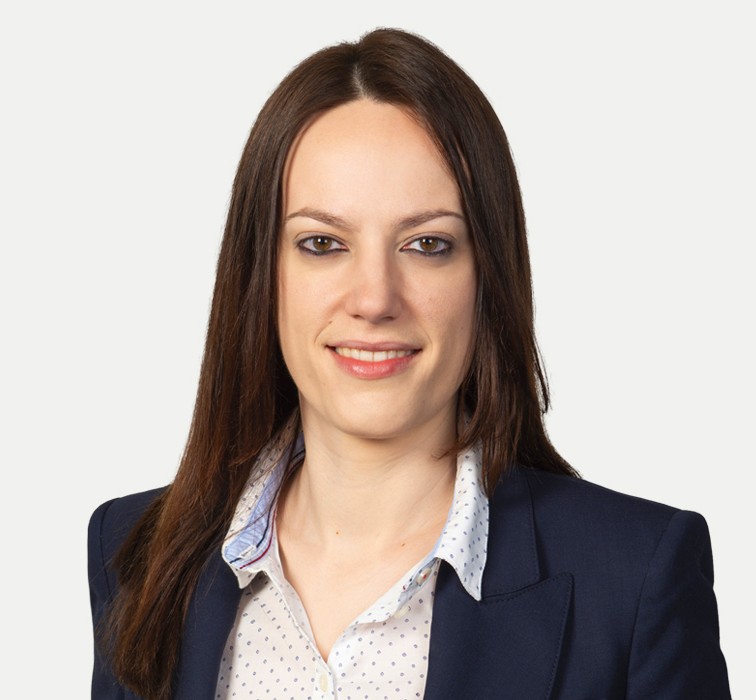
This is precisely what the Artificial Intelligence for Health Laboratory (aiHealthLab) is working on. aiHealthLab is part of the Institute for Medical Engineering and Medical Informatics at the FHNW School of Life Sciences, and is led by Prof. Dr Enkelejda Miho. The research team combines immunology and medicine with bioinformatics, data analysis and artificial intelligence.
“We translate the immunome into medically useful applications,” says Miho. The immunome is the vast range of B-cell and T-cell receptors in our immune system, whose diversity can be analysed using blood or bone marrow samples for example. Researchers look for characteristic patterns that may provide clues about diseases and how they progress.
Many colours make a picture
A single lab result can reveal a great deal, but for complex diseases it is often not enough; aiHealthLab works with its clinical partners to combine multiple data source layers. On to the clinical results layer is added another with genome or metabolism information and on top of that, data about the body’s immune response. Only when these are connected can relationships become visible that would otherwise remain hidden in individual datasets. And the aim here is not to use AI as much as possible; what matters is bringing different types of information together in a way that generates medically relevant knowledge.
Miho therefore speaks of “integrated intelligence”. She does not simply mean a powerful AI model. “It means bringing together different layers of intelligence: the biological intelligence of the adaptive immune system, the clinical intelligence of doctors, the statistical and network-based intelligence of immunoinformatics and finally, machine learning.”
AI is therefore just one tool within a sophisticated system. The starting point is not which algorithm to use but rather which medical problem needs to be solved.
This radically innovative approach is borne out by the results: it has achieved a remarkable peak predictive accuracy of 96%.
When many small clues make the difference
This is particularly promising for hard to diagnose conditions. Autoimmune diseases such as rheumatoid arthritis and systemic lupus erythematosus can cause similar symptoms that are initially non-specific. It can take a long time to reach a definitive diagnosis.
Combining different data types can help. Instead of examining individual abnormal results, AI analyses numerous small clues simultaneously and looks for characteristic patterns.
This research led to Personalis: a web-based clinical decision support platform that doesn’t just produce a diagnosis, it shows which factors contributed to it.
This is crucial. In medicine in particular, it is not enough for an algorithm to produce a technically correct result. Doctors need to understand how that result was reached and assess it in its clinical context.
“”
The immunome as a diagnostic fingerprint
Research into AL amyloidosis demonstrates just how much the immune system can reveal. In this rare disease, abnormal plasma cells produce proteins known as light chains, which accumulate in the body and can damage organs.
With its clinical partners, aiHealthLab is investigating whether the cell clone responsible can be identified by its characteristic antibody sequence. Using the SMaRT M-Seq method, this was achieved for all 84 AL amyloidosis patients in a cohort. These included cases in which conventional tests had been unable to detect the corresponding M-protein.
For Miho, results like these are particularly striking: “”
In the longer term, the vision goes further. Instead of carrying out a separate test for every possible disease, the immunome could provide clues about several different conditions at the same time. Infections, autoimmune diseases and certain cancers leave different traces in the immune system. If these can be read reliably, a blood sample could one day provide considerably more information than it does today.
For now, this universal blood test remains a vision. However, its individual building blocks are already being investigated worldwide and have been the subject of numerous research publications.
Digital twins for real medical questions
So-called digital twins also have a role to play. At first glance, the term suggests a complete virtual replica of a person, in which diseases and treatments can be simulated. However, research has not yet reached that point.
Nevertheless, aiHealthLab already uses artificially generated patient data. It can help when little real-world information is available for a disease or when certain patient groups are significantly underrepresented in a dataset. Models learn how particular characteristics are statistically related in existing data and use these relationships to generate new synthetic datasets.
These virtual patients do not replace real people or clinical trials. They can, however, help create more balanced datasets and develop more robust AI models.
The longer-term ambition goes further: to generate a digital twin that combines clinical information, conventional and digital biomarkers and information about a person’s immune system over an extended period. Such a digital representation could one day help researchers better understand disease progression and responses to treatment, or simulate and investigate different scenarios.
For now, such a comprehensive digital twin remains a prospect for the future. “Today, the twin is both a research tool and a vision of what we are working towards,” says Miho. Among the things still missing are standardised longitudinal data and health data that can be reliably linked across different systems.
When AI searches for a needle in a haystack
aiHealthLab does not use artificial intelligence solely for diagnostics. A second area of research examines how promising new therapeutic candidates can be identified from vast quantities of data.
Dengue fever is one example. Following an infection or immunisation, the immune system produces an enormous variety of antibodies. Some of these could be particularly interesting for developing new treatments, but finding them among millions of sequences is like searching for the proverbial needle in a haystack.
What is more, the most interesting antibody is not necessarily the most common. Rare sequences can have particularly valuable properties and may be overlooked if candidates are selected simply on the basis of frequency.
This is where network analysis and machine learning come in. They help identify distinctive patterns and prioritise promising antibodies. In the dengue project, the team were able to find rare candidates in this way.
However, AI does not simply take over from there.
The selected antibodies must be produced and tested in the lab. Do they actually bind to the virus? Can they neutralise it? Are there any side-effects? And can similar antibodies also be found in humans?
Data analysis, AI and laboratory work therefore form a continuous cycle. Lab results are fed back into the models, helping researchers test and refine their predictions.
Miho sums up this division of labour: “AI classifies billions of sequences according to properties such as ‘binding/non-binding’, ‘toxic/non-toxic’ and ‘developable/non-developable’. The laboratory filters dozens of AI-selected candidates and chooses a few molecules that have proved themselves in practice. What begins with billions of sequences could one day make a tangible difference to an individual patient.”
The real work begins before the algorithm
Impressive as the possibilities are, the greatest challenge often lies not in the AI model itself. Health data comes from a range of hospitals, labs and measurement systems. It is collected, stored and analysed in different ways. Some patient groups are strongly represented in datasets, while others barely figure at all. Information may be missing or not directly comparable.
A substantial part of the research therefore involves selecting, preparing and standardising data, then connecting it in meaningful ways. Only then is it possible to investigate which combination is genuinely useful for a particular medical question.
This is more than a technical detail. An algorithm may produce excellent results in one hospital but perform considerably worse in another if the data is collected or processed differently.
“Without standardisation, AI remains potentially brilliant at the local level but cannot be transferred into clinical practice,” says Miho.
That is why data quality, data protection, comparability, explainability and regulatory requirements are part of aiHealthLab’s research considerations from the outset. In fact, Miho’s group has shown that, even when identical data is pre-processed using different tools, only 20% of it agrees when initially fed into the machine-learning model. After all, a successful AI model does not automatically become a medical product. If software is to support clinical decisions, it must function reliably, be understandable and meet regulatory requirements.
A team spanning laboratory, clinic and code
This research cannot easily be assigned to a single discipline. At aiHealthLab, specialists in life sciences, medical informatics and applied AI work together. Team members include Jan Kruta, who works on machine learning for autoimmune diagnostics and clinical immunoinformatics for rare diseases, and Nicolas Bopp, who helps develop the Personalis software. Aurora Eliana Merulla is working on developing a digital “Immune Twin”, while other researchers focus on antibody research and bioinformatics.
The work calls for expertise in sequencing and laboratory methods, as well as statistics, immunoinformatics, machine learning, software development, quality management and medical device regulation. The team also collaborates with specialists in rheumatology, haematology, infectious diseases and pathology.
For Miho, this combination is fundamental. Researchers, she says, must be able to translate between biology and clinical practice, statistical accuracy and medical benefit, and between software development and regulatory requirements.
Generative AI is also changing this work. Large language models can, for example, help with programming, organising scientific literature or presenting results in an accessible way. However, they cannot and should not make medical decisions. Precisely because analyses can now be generated more quickly, careful verification of results is becoming more important. Miho stresses that critical, independent thinking has become an indispensable skill for researchers and everyone else, particularly now that large language models can persuade the public which path to take by providing immediate and easy access to seemingly plausible results.
Research as a bridge to practical application
This combination of expertise makes aiHealthLab an attractive partner for both hospitals and companies. Collaborations may focus on AI-assisted diagnostics and medical software, the search for new antibodies, or ways of making health data usable for research and digital clinical trials.
Partners do not need to have enormous, perfectly structured datasets from the outset. According to Miho, collaboration is most useful when it begins early, once the medical question is clear but data collection, analytical methods and software architecture can still be shaped.
The research team supports projects from the initial medical question, via data integration and the comparison of different models, through to validation. Depending on the project, the outcome may be medical software, a validated analytical method or a selection of promising drug candidates.
The key strength lies in connecting biological research, clinical application and digital development. It is at precisely these interfaces that data either becomes genuinely useful in medicine, or fails to do so.
The immune system as a key to tomorrow’s medicine
In the coming years, Miho expects this research to move closer to everyday clinical practice. Immune profiles could be combined with clinical data and multi-omics information to support doctors with clearly defined diagnostic questions. Digital twins could help represent disease progression and clinical trials more accurately. Generative models could produce synthetic patient data or help identify new molecules.
But the most important development is unlikely to be AI taking on ever more tasks.
Instead, the goal is to bring biological, clinical and digital information together in ways that enable reliable, explainable decisions. This is the essence of what aiHealthLab means by integrated intelligence.
And that is the most exciting prospect of all: not teaching machines to understand medicine. Rather, new digital tools that help us see more precisely what the human body has been telling us about itself all along.
aiHealthLab
- Institute
- Institute for Medical Engineering and Medical Informatics
Contact
Prof. Dr. Enkelejda Miho
- Phone
- +41 61 228 58 47
- enkelejda.miho@fhnw.ch