Located on three floors in the Proess Technology Centre, the chemical pilot plant offers firms a test environment ranging from dosing to state-of-the-art separation processes.
In the chemical pilot plant, reactors are available to solve a variety of problems: a scale-down reactor for precise reaction modelling in a stirred tank or as a filter reactor for solid-phase reactions; an explosion reactor for testing the thermal process safety of explosive reactions; and a loop reactor for heterogeneous catalysis on 3D printed structures.
Industrial filtration, drying and distillation processes can be integrated into the pilot plant. These separation processes can be run continuously and are equipped with their own solvent regeneration and wastewater neutralisation systems. The most important thermal separation simulation techniques are also available.
An in-line analytical system monitors process parameters in each area and provides the basis for energy balances, environmental impact studies and further optimisation simulations.
The latest process technologies prepare FHNW students for industry 4.0. Students learn the most important elements of process development safety: reaction calorimetry, thermal decomposition, explosion pressure measurement, pressure relief and associated process modelling.
The Miniplant 4.0 association implements novel reactors and processes developed at the FHNW School of Life Sciences, in cooperation with local companies, thus strengthening the school's role in translational research.
A look inside the facility
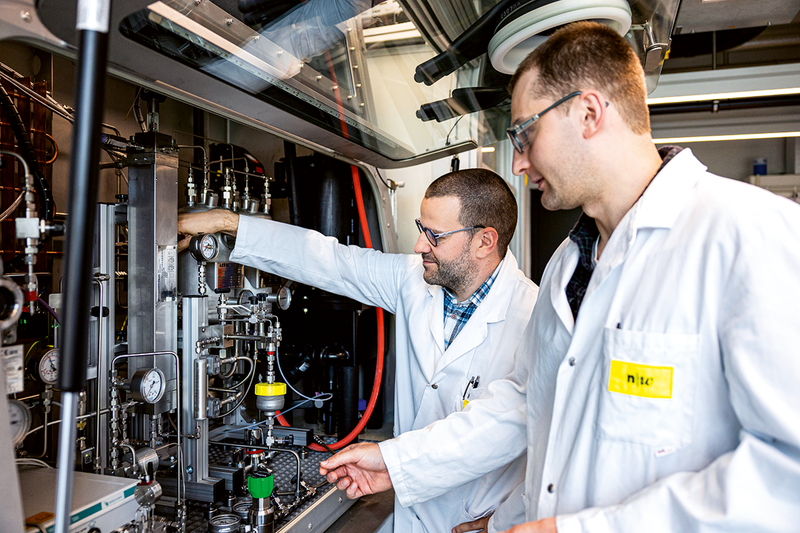
Master students This Zahnd and Benedikt Brönnimann gain direct experience in modelling and managing hazardous processes in collaboration with industry partners. 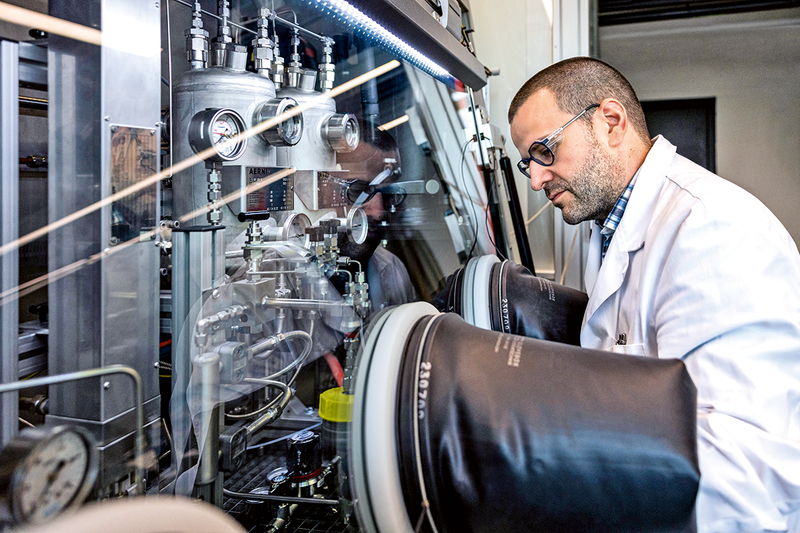
This Zahnd performs the flow reaction in a safety glove box. 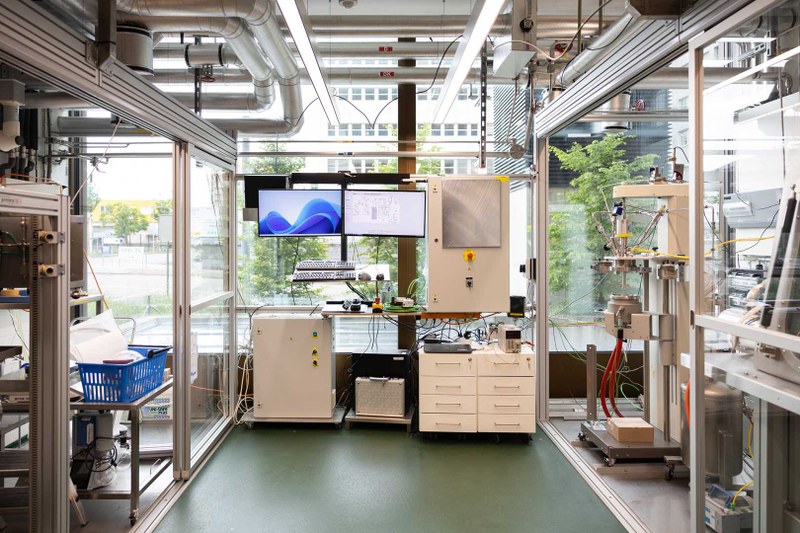
SIMATIC process control system (PCS) neo for the integration and testing of sub-systems via module type package (MTP). 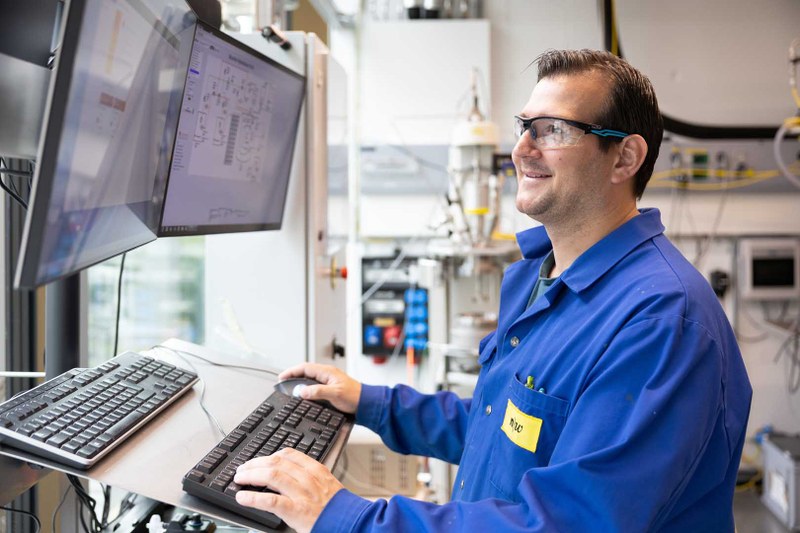
Michael Teger operating the SIMATIC PCS neo. 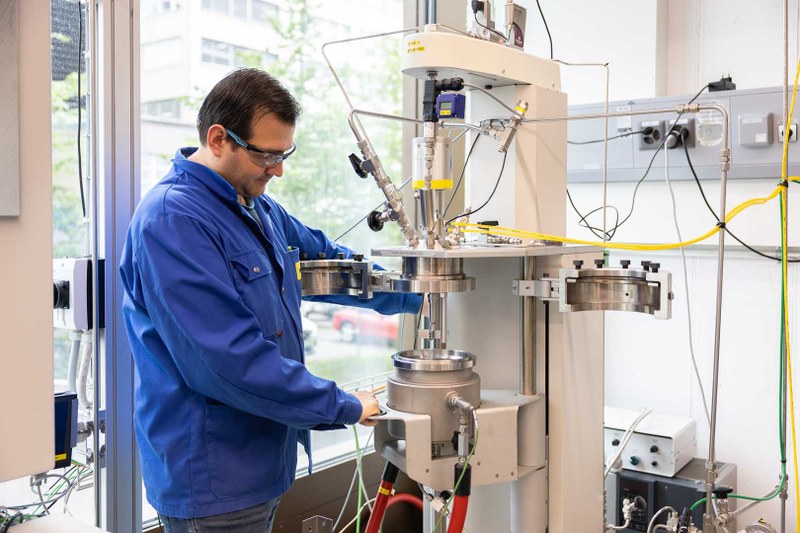
Michael Teger operating the test reactor controlled by the SIMATIC PCS neo. 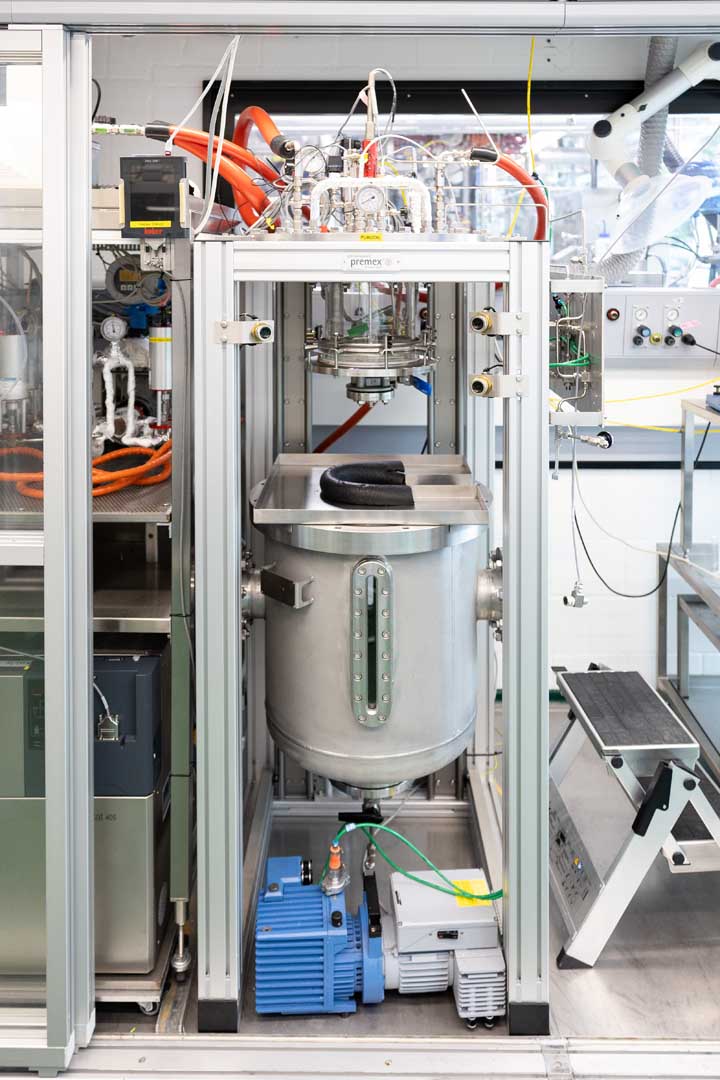
Scale-down reactor. 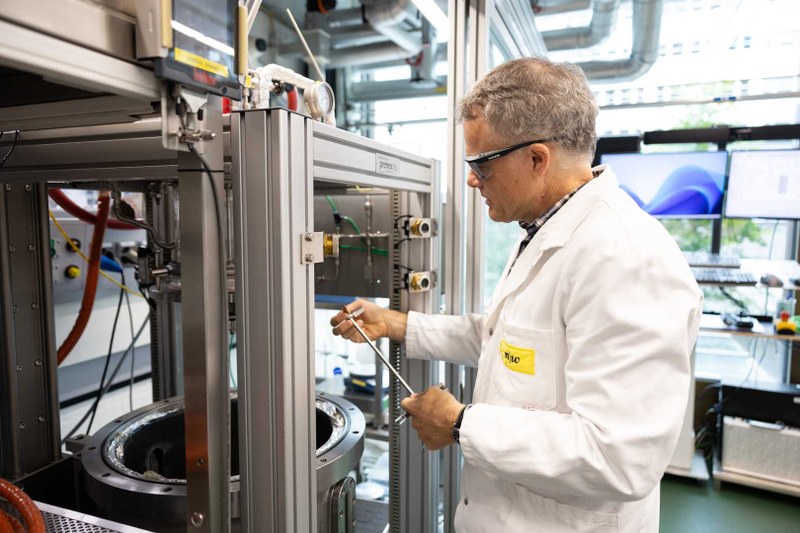
Andreas Zogg assembles the propellor on the scale-down reactor. 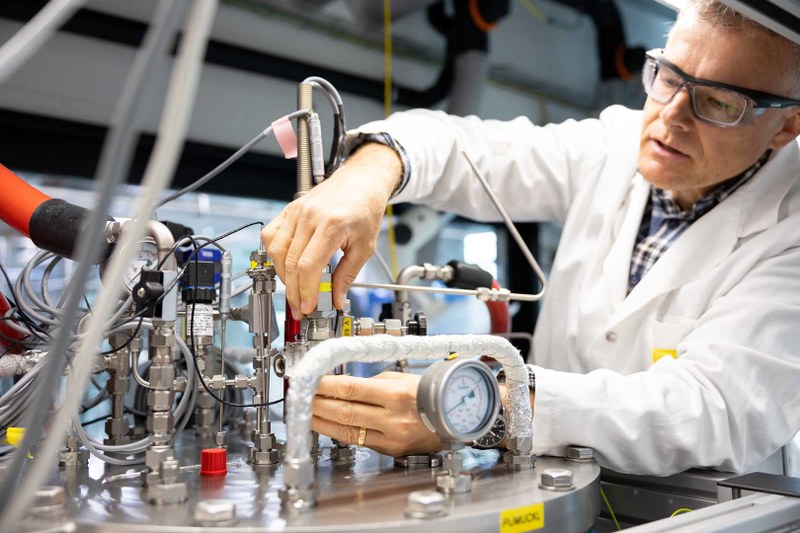
Andreas Zogg mounts the safety valve on the scale-down reactor. 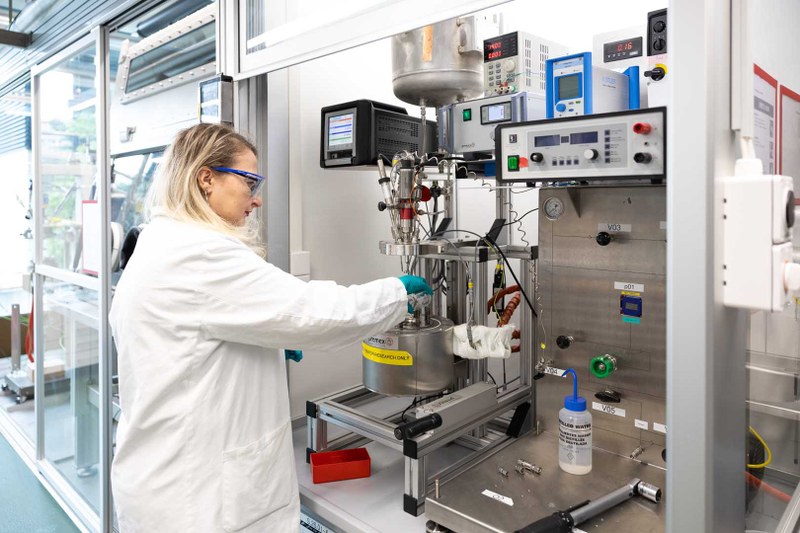
Corina Constantin loads a substance into the explosion reactor. 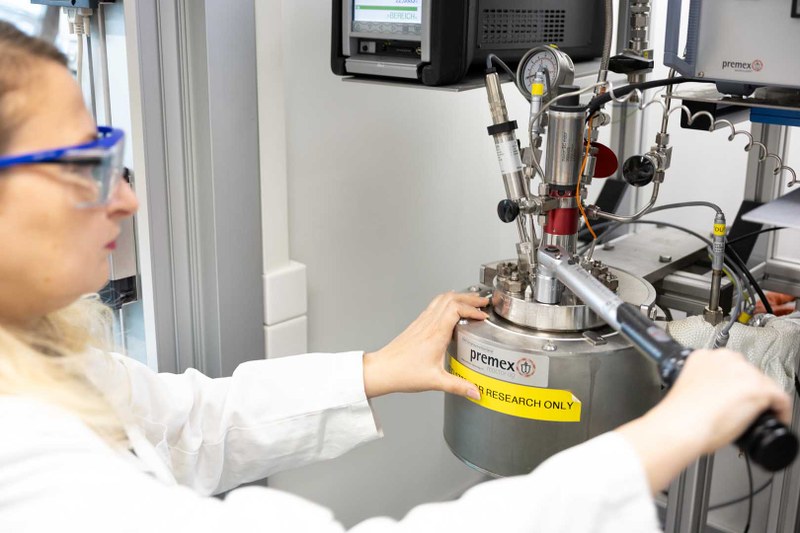
Corina Constantin seals the explosion reactor.
Infrastructure
- SIMATIC process control system (PCS) neo for the integration and testing of sub-systems via module type package (MTP).
- Scale-down reactor 1-5 L, -1 to 10 bar, 0-150 °C (Glass /Hastelloy C22). Can also be used as a reaction calorimeter for testing safety measures such as emergency cooling systems, or for solid-phase syntheses (peptides, oligonucleotides).
- Explosion reactor 10-150 mL, -1 to 300 bar, 20-200 °C (Hastelloy C22). Can also be used as a high-phi-factor calorimeter to study decompositions (stirred measurements with pressure monitoring).
- Hydro autoclave 2 L, -1 to 40 bar, -20 to 200 °C (Hastelloy C22).
- Safety glove box for experiments requiring high safety standards. Can be optionally purged with nitrogen. A safety scrubber, oxygen and LEL measurement are also integrated.
- Reaction calorimeter 250 ml, 20-150°C (heat-flow principle, glass).
- Differential scanning calorimeter (DSC) –80 to 600 °C.
- Thermogravimetric analysis (TGA).
Contact

Prof. Dr. Andreas Zogg
- Phone
- +41 61 228 58 25
- andreas.zogg@fhnw.ch
FHNW School of Life Sciences
FHNW University of Applied Sciences and Arts Northwestern Switzerland
School of Life Sciences
Hofackerstrasse 30
CH - 4132 Muttenz