
Processes and concepts for water and wastewater treatment and the recovery of valuable substances
We investigate innovative technologies and processes for reducing emissions and removing harmful substances from water, wastewater and waste. This also includes recovery and reuse of materials. Collaboration with industry and utilities allows transferring our lab-tested processes into practice in pilot-scale or technical scale.
Research focus areas
Advanced water and wastewater treatment
The intensive use of water resources and an increasing scarcity in many parts of the world require new treatment concepts. The requirements regarding drinking water purification and wastewater treatment are increasing due to different pressures. In Switzerland organic micro-pollutants are to be removed from municipal wastewater in many cases and drinking water has to be clean and safe at all times.
A range of processes is suitable to reduce chemical and microbial pollutants, e.g. oxidative, adsorptive and membrane based processes, which are all investigated in our team.
Membrane processes
In industrial treatment processes membranes are already established separation technologies. The application is getting more common in municipal drinking and wastewater treatment.
The use of membranes in water and wastewater treatment enables the reliable retention of particles and microorganisms. By dense membrane processes such as nanofiltration and reverse osmosis it is even possible to retain dissolved components such as salts and trace organics. Very high water qualities can be achieved that way and strict discharge criteria can be accomplished. It gets possible to close water cycles and to reduce freshwater consumption. In these areas we test different membrane processes, develop cleaning concepts and even modify membrane surfaces to achieve tailored separation characteristics.
Resource recovery and recycling
The recovery of valuable resources becomes increasingly important in a circular economy. In this area, we investigate both new technologies and the legal and economic framework conditions required for their implementation.
One key area is the recovery of phosphorus from sewage sludge for later use, e.g. as fertiliser in agriculture. In Switzerland this is legally required. Also in industry, the recovery of precious metals, rare earth metals and other recyclable materials from waste and wastewater streams can be both ecologically and economically advantageous with the aid of efficient processes. Construction waste, such as old asphalt for example, accumulates in large quantities. With our technical know- how and the assessment of environmental impacts and pollutant risks, we contribute to safe recycling.
Adapted and near-natural treatment concepts
Developing and emerging countries are addressing water supply and sanitation challenges with nature-inspired solutions. Simple and robust membrane processes such as gravity driven membrane for water supply and related water kiosk concepts are key activities in this field. We support actual implementation in developing countries. We also work on managed aquifer recharge.
Facilities
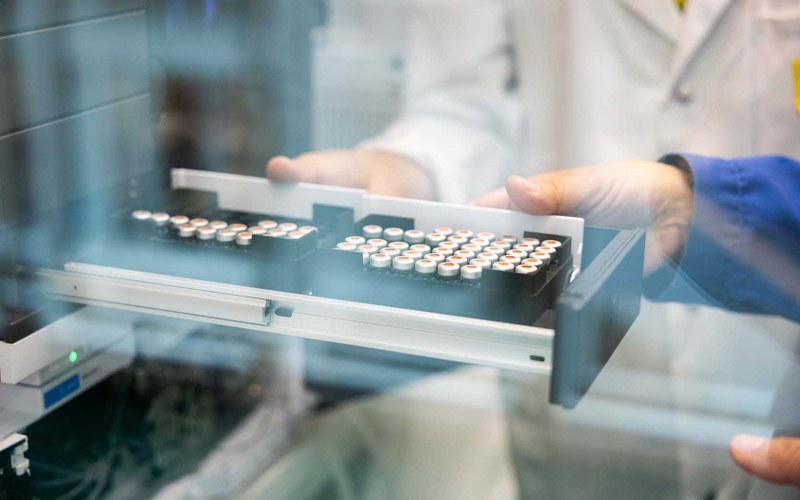
Trace analysis facility
- Institute
- Institute for Ecopreneurship

Environmental technology plant
- Institute
- Institute for Ecopreneurship
Projects

Aktifilt
- Institute
- Institute for Ecopreneurship
- Research field
- Environmental and water technologies

AquaNES
- Institute
- Institute for Ecopreneurship
- Research field
- Environmental and water technologies

Demoware
- Institute
- Institute for Ecopreneurship
- Research field
- Environmental and water technologies

INSPIREWater
- Institute
- Institute for Ecopreneurship
- Research field
- Environmental and water technologies

Layer-by-layer membrane modification for resource recovery
- Institute
- Institute for Ecopreneurship
- Research field
- Environmental and water technologies
Publications
Contact

Prof. Dr. Michael Thomann
- Phone
- +41 61 228 53 34
- michael.thomann@fhnw.ch
Team


News and stories

Clean water for the world: research beyond frontiers
- Date
- 5.5.2026

Minimising combined sewer overflow
- Date
- 30.4.2025
- Institute
- Institute for Ecopreneurship

500°C and potassium methods
- Date
- 12.12.2019
- Institute
- Institute for Ecopreneurship