Skip to main contentSkip to search barSkip to navigationSkip to footer
Logo of the University of Applied Sciences and Arts Northwestern Switzerland
  • DE
  • EN
  • Home

Ten Schools One Goal

The FHNW comprises 10 schools with different specializations. Select a school to see its specific courses, study programmes and information.

Applied Psychology

Architecture, Construction and Geomatics

Art and Design

Music

Computer Science

Life Sciences

School of Education

Social Work

Engineering and Environment

Business

  • Study offerings

    • All degree programmes
    • Master in Life Sciences
    • Master in Medical Informatics
    • Joint Degree Master in Biomedical Engineering
    • Info events
  • About degree programmes

    • Tuition fees and scholarships
    • Digital Life Sciences
  • International

    • Outgoing Students
    • Incoming Students
    • Double Degree
    • Partner universities
    • Student stories
    • Buddy programme
    • News and stories
  • Continuing education offerings

    • All continuing educations
    • CAS - Certificate of Advanced Studies
    • Modules and Seminars
    • Info events
  • Organisation

    • Consulting services
    • Legal information and terms & conditions
  • Research

    • Research fields
    • Projects
  • Collaboration

    • Process Technology Centre
    • Services
    • Tech Transfer Office
    • Student projects
  • International

    • Study abroad
    • International research projects
  • Updates and insights

    • News and stories
    • Research highlights
  • Events

    • All events
    • Info events
  • Media corner

  • About the School of Life Sciences

    • Strategy and values
    • Management board
    • Staff
    • Advisory board
    • People directory
    • Diversity and equal opportunities
    • Media corner
    • Infrastructure and campus
  • Institutes and centres

    • Institute for Chemistry and Bioanalytics
    • Institute for Ecopreneurship
    • Institute for Medical Engineering and Medical Informatics
    • Institute for Pharma Technology and Biotechnology
    • Centre for Teaching and Learning
    • Process Technology Centre
Logo of the University of Applied Sciences and Arts Northwestern Switzerland
  • About the School
    • School
    • Degree Programmes
    • Continuing Education
    • Research
    • Events
  • Social Media
    • Facebook
    • Instagram
    • YouTube
    • LinkedIn
  • About FHNW
    • Organisation
    • Schools
    • Locations
    • FHNW Library
    • Media Relations
  • Support
    • IT Support
    • Inside FHNW
    • Webmail
  • Data Protection
  • Imprint
  • Accessibility
  • Study offerings

    • All degree programmes
    • Master in Life Sciences
    • Master in Medical Informatics
    • Joint Degree Master in Biomedical Engineering
    • Info events
  • About degree programmes

    • Tuition fees and scholarships
    • Digital Life Sciences
  • International

    • Outgoing Students
    • Incoming Students
    • Double Degree
    • Partner universities
    • Student stories
    • Buddy programme
    • News and stories
  • Continuing education offerings

    • All continuing educations
    • CAS - Certificate of Advanced Studies
    • Modules and Seminars
    • Info events
  • Organisation

    • Consulting services
    • Legal information and terms & conditions
  • Research

    • Research fields
    • Projects
  • Collaboration

    • Process Technology Centre
    • Services
    • Tech Transfer Office
    • Student projects
  • International

    • Study abroad
    • International research projects
  • Updates and insights

    • News and stories
    • Research highlights
  • Events

    • All events
    • Info events
  • Media corner

  • About the School of Life Sciences

    • Strategy and values
    • Management board
    • Staff
    • Advisory board
    • People directory
    • Diversity and equal opportunities
    • Media corner
    • Infrastructure and campus
  • Institutes and centres

    • Institute for Chemistry and Bioanalytics
    • Institute for Ecopreneurship
    • Institute for Medical Engineering and Medical Informatics
    • Institute for Pharma Technology and Biotechnology
    • Centre for Teaching and Learning
    • Process Technology Centre

Type a search term and search continuing education,degree programmes, events, documents and other content.

  • Life Sciences
  • Research and services
  • Research in life sciences
  • Projects
Projects

Automated preparation of whole blood samples, FHNW School of Life Sciences

School of Life Sciences


New tool developed for LC-MS analysis using a commercial autosampler
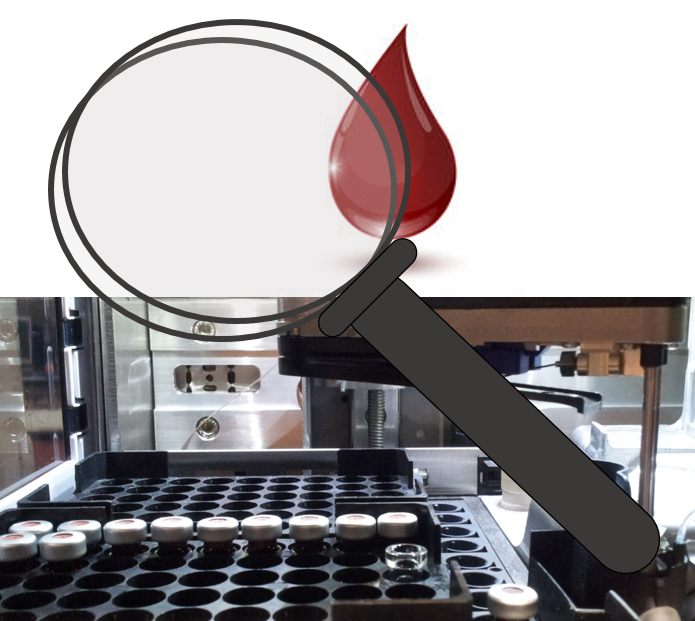
teaser_automatisierte-probenaufarbeitung-von-vollblut.png

Automated sample preparation reduces cost per sample and minimizes sample handling errors. The use of robots is well established for therapeutic drug monitoring or diagnostics based on blood samples. Usually expensive and highly specialized pipetting robots are used. However, most of these systems are not designed with a direct interface for LC-MS applications and common pipetting systems are not optimized for smaller scale sample series.

Here we present a new tool for liquid handling of whole blood samples and direct sample injection. The tool features an optical sensor that monitors all liquid handling steps. It detects presence or absence of sample, standards and reagents. The sensor is essential to ensure process safety for automated liquid handling steps.

Introduction

The PAL RTC (instrument view below) can perform additional sample prep steps, e.g. standard and reagent addition, centrifugation and liquid / liquid extraction (LLE). The LCMS-P 80 Tool features a special needle that allows direct sampling from primary tubes. With special adapters it can transport primary tubes to and from modules on the system, e.g. for vortexing.

Different adapters allow the use of different primary tube formats. The optical sensor positioned on the sample loop of the tool (orange triangles in the sketch above) monitors the aspiration of sample, air gap or bubbles. Different sampling situations (injection with air gaps, clogging, bubbles) generate distinct sensor signal patterns, triggering defined system actions.

Materials and methods

PAL RTC autosampler with a 1 mL syringe, LCMS-P80 injection tool, vortex mixer, centrifuge. Agilent LC 1200, Agilent MS 6460 TripleQ-MS. Tested laboratory blood was supplied by blood donation in primary tubes (Vacuette™, Vacutainer™, etc.). All chemicals were purchased from Sigma-Aldrich. Hematocrit levels were prepared by mixing defined ratios of plasma and erythrocytes.

Results

A series of tests was performed to assess if the LCMS-P80 injection tool on the PAL RTC can discriminate between a correct transfer of liquid (blood/reagent) and a number of error conditions, listed below:

  • Full vial, clean needle
  • Empty vial, clean needle, no sample
  • Blocked needle (clogging)
  • Full vial, sample foaming

Error handling routines can be defined. In this set of experiments the routine was the following:
Error > clean tool > re-try same vial. If error persists > clean tool > next sample. If error persists > abort

Comparison of different cleaning procedures

Whole blood consists of water, salt, proteins, lipids and intact erythrocytes, which tend to coagulate on surfaces or in contact with organic solvents. Effective cleaning procedures to avoid precipitation in the system as well as the deposition of biofilms are vital. The Scanning Electron Microscope pictures below show the middle section of 3 sample loops of LCMS-P80 tools after 500 injections of whole blood samples and cleaned with 3 different procedures between each sample.

Simple procedure:
1 x 100 μL water with 0.1% formic acid.
Visible deposition of materials.

Standard procedure:
2 x 100 μL water with 0.1% formic acid/ 2 x 100 μL methanol with
0.1% formic acid/ 2 x 100 μLwater with 0.1% formic acid.
No visible deposition of materials.

Advanced procedure:
100 μL Decon™ Contrad™ 70 followed by standard procedure.
Slight deposition of materials.

Examples for therapeutic drug monitoring (TDM)

The LCMS-P 80 tool was used to prepare samples of several typical drugs for TDM as well as compounds relevant in diagnostics. Spiked and blank (in red) whole blood samples were analyzed.

Carbamazepine
Carbamazepine is a representative of an anti-epileptic drug; blood monitoring is vital for setting a correct dosage.
Method: Eluent A: Water 0.1% Formic acid / Eluent B: Methanol 0.1% Formic acid // Flow: 0.45 ml/min // Runtime: 6 min
Column: Waters Coretecs C18 2.1x100 mm 2.7 μm
MS Parameter: Mode: positive MRM: 237>194
Blood Volume: 10 μL / Injection volume: 2 μL

Diclophenac
Diclophenac is a nonsteroidal anti-inflammatory drug and a representative compound for drug monitoring, based on its molecular properties.
Method: Eluent A: Water 2 mM NaF / Eluent B: Acetonitril 2 mM NaF // Flow: 0.5 ml/min // Runtime: 7 min
Column: Zorbax SB-C8 4.6x50 mm 1.8 μm
MS Parameter: Mode: positive MRM: 296>249
Blood Volume: 10 μL / Injection volume: 2 μL

25 hydroxy vitamin D3
25 hydroxy vitamin D3 is the important marker for the storage of vitamin D.
Method: Eluent A: Water 0.1% Formic acid / Eluent B: Methanol 0.1% Formic acid // Flow: 0.45 ml/min // Runtime: 6 min
Column: Waters Coretecs C18 2.1x100 mm 2.7 μm
MS Parameter: Mode: positive MRM: 401>383
Blood Volume: 10 μL / Injection volume: 20 μL

Conclusions
  • The new LCMS-P 80 tool is capable of pipetting whole blood with normal hematocrit levels (30-50%) directly from primary tubes with good accuracy and precision, applying one average correction factor. For high hematocrit levels a different correction factor should be applied.
  • Wash procedures were established to minimize carryover of analytes. A procedure to minimize the deposition of blood on system surfaces was shown to be successful.
  • The system consisting of a PAL RTC autosampler, connected to an Agilent LC-MS system can perform sample prep and LC-MS analysis for whole blood samples from primary tubes. The performance of the system was tested with several typical compounds in therapeutically relevant concentrations.
  • The sensor of the LCMS-P80 tool reliably detects error conditions and greatly increases process safety.
References

[1] Linder et al. Bioanalysis (2015) 1(16) 2013-2039
[2] Kearney et al. BMJ. (2006) 332(7553):1302-8
[3] Shah et al. Nutrition Journal (2011) 10:4


Project details

Type
Research project
Research areas
Instrumental analytics
University
FHNW School of Life Sciences / Institute for Chemistry and Bioanalytics
Partner
CTC Analytics AG
Collaboration
Christian Berchtold, Günter Böhm, Renée Falsia, Thomas Preiswerk, Götz Schlotterbeck

Contact

Stefan Gaugler

Prof. Dr. Stefan Gaugler

Team Leader, Instrumental Analytics
Phone
+41 61 228 50 98
E-Mail
stefan.gaugler@fhnw.ch

School of
Life Sciences FHNW University of Applied Sciences and Arts Northwestern Switzerland

  • About the School
    • School
    • Degree Programmes
    • Continuing Education
    • Research
    • Events
  • Social Media
    • Facebook
    • Instagram
    • YouTube
    • LinkedIn
  • About FHNW
    • Organisation
    • Schools
    • Locations
    • FHNW Library
    • Media Relations
  • Support
    • IT Support
    • Inside FHNW
    • Webmail
Logo FHNW - 20 Years
Logo Swiss Universities
Logo European University Association
© University of Applied Sciences and Arts Northwestern Switzerland (FHNW)
  • Data Protection
  • Imprint
  • Accessibility
  • DE
  • EN