Handwashing system that recycles water for emergencies
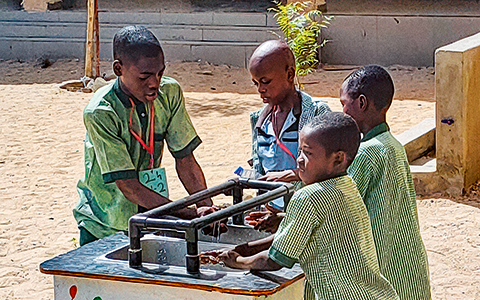
In many refugee camps, hospitals and schools in developing countries, drinking water is not available next to toilets or close to cooking and eating places. The taps are broken or do not exist, water tanks are empty, or drinking water is scarce and people do not want to "waste" it for handwashing. But dirty hands means spreading sickness, including cholera and typhus, in places like hospitals and refugee camps during humanitarian emergencies.
We developed autonomous and easy-to-use systems to recycle water for handwashing based onngravity-driven membrane (GDM) filtration. This novel technology for disinfecting water overcomes many limitations of existing systems. The core element is a membrane with a pore size of 20-40 nm. When biofilm is allowed to form on the membrane, water flux stabilizes at 4-10 litres per hour per square meter of membrane and filters do not clog. GDM systems can be operated for 8-10 years, even with very turbid water and do not require backwashing, cleaning or electricity. Filters remove all classes of pathogenic microorganisms including viruses, bacteria and protozoa. Due to their ease of operation and independence of external inputs such as replacement parts, chemicals or electricity, they can be installed in remote areas and be managed by local communities.
The system is filled once. Users operate a small manual foot pump to bring the treated water back to the tap. Refilling is only required once a month, minimizing system maintenance time. Our Gravit`eau handwashing systems provide a source of water for handwashing only and save drinking water for drinking, which is especially important during emergencies in water-scarce areas.
Field tests of the systems were conducted in child-friendly spaces in a refugee camp in the North of Nigeria by Terre des homes and in health centers in communities in the Occupied Palestinian Territories by Cesvi (2018-2019). This was based on the previous success of tests conducted for decentralised water treatment in schools and communities in Uganda (2014-2019). Five GDM water kiosks were constructed and operated in Busia and Namayingo Districts in Uganda, on a shore of Lake Victoria. The Institute for Ecopreneurship, Eawag (Sandec) and Africa Water Solutions evaluated the technical performance, acceptance and sustainability of the systems.
Each water kiosk supplies up to 6000 L of water per day. Water is abstracted from the lake and is delivered to schools located up to 2 km away from the lake by solar pumping. Water is treated by GDM system at the school and is provided for school children for free and is sold to community for a subscription fee of 1 CHF per month or at a price of 0.015 cent/jerry can. Income generated through sales of water is used for operation and maintenance activities to assure sustainability of the system on the long term.
Video
Stories
A systemic approach to safe water
Project details
- Type
- Research project
- Research field
- Water, sanitation, and hygiene
- School
- FHNW School of Life Sciences / Institute for Ecopreneurship
- Funding
- 2018-2019: Terre des hommes, Swiss Solidarity, Unicef, Cesvi, Gravit`eau Association. 2014-2019: Symphasis Foundation, Clean Water Foundation, Swiss Bluetec Bridge, Eawag
- Duration
- 2018-2019 and 2014-2019