Production of scandium compounds and scandium-aluminium alloys from European metallurgical by-products
Scandium is a rare earth metal that is used in small quantities and can drastically change the properties of materials. The element is an important additive in high-strength aluminium alloys, such as those used in aerospace and 3D printing, as well as in applications for solid oxide fuel cells (SOFC). However, scandium is rare and can only be extracted at high cost. It is currently produced in Asia and Russia. Europe does not have its own scandium production, but many scandium consumers are located there, as are industries whose waste products contain scandium.
The SCALE project will extract raw materials from waste and use them to establish a stable and secure supply of scandium within the EU. It will thus meet the needs of the European aerospace industry and other high-tech sectors and help to reduce dependence on imports of raw materials.
Apart from industrial symbiosis, the SCALE project also contributes to sustainable management by recycling products containing scandium. Compared to thermoelectric power plants, SOFCs containing scandium have a higher efficiency (60% vs. 30%, i.e. an SOFC can generate 8 kWh of electrical energy from 1 kg of natural gas instead of 4 kWh) and produce lower CO2 emissions.
Aluminium-scandium alloys enable lighter parts in aircraft construction, which reduces fuel consumption, significantly reduces the ecological footprint of each flight and lowers its costs. Every kilogramme less aircraft weight results in savings of between 3,000 and 3,800 litres of fuel over the entire service life of the aircraft. The introduction of 3D printing in the production of commercial aircraft could save even more weight. Similarly significant weight reduction benefits are expected from the introduction of aluminium-scandium alloys in the construction of electric vehicles.
The improved availability of scandium will facilitate research into new materials and accelerate technological development towards new, lightweight superalloys. This will create new market opportunities and promote the competitiveness and excellence of European knowledge-based manufacturing and high-tech industries.
Objectives
The main objective of SCALE is the efficient use of resources available in the EU that contain high concentrations of scandium. These include bauxite residues from aluminium production (100 to 150 ppm) and acid waste from the production of TiO2 pigments (50 to 100 ppm). The aim is to establish a stable and secure supply of scandium for the European aerospace industry and high-tech sectors. This will be achieved through the development of a range of innovative technologies for extraction, separation, refinement and alloying, which will be validated for their technical and economic feasibility under appropriate laboratory and test conditions.
The FHNW is involved in the extraction and refinement of scandium from TiO2 by-products using acid-resistant nanofiltration (from the laboratory to the pilot plant). In addition, the FHNW is leading the work package for the sustainability assessment of all new technologies currently under development. Assessment in the areas of environment, health and safety (LCA, LCC, TEA).
Stories
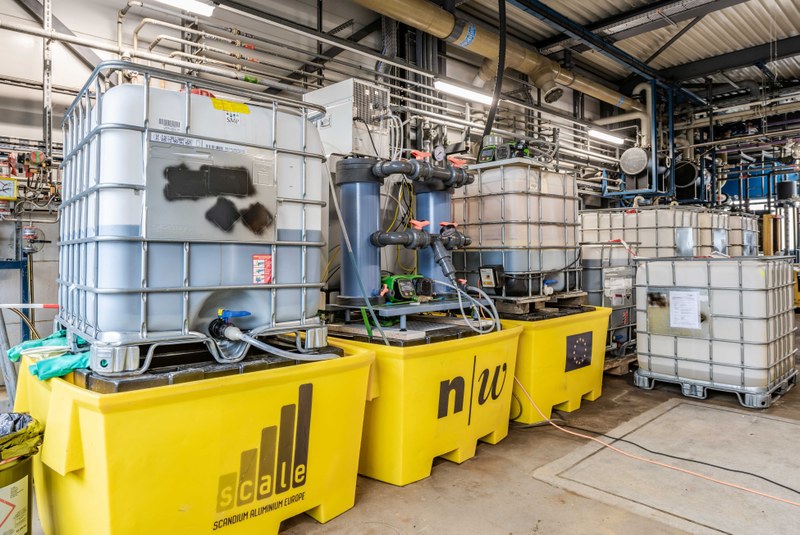
Treasures in production waste
Project details
- Type
- Research project
- Research field
- Applied circular economy
- School
- FHNW School of Life Sciences / Institute for Ecopreneurship
- Funding
- EU Horizon 2020 Nr. 730105; SBFI Nr. 16.0155
- Duration
- 2016-2020
Contact
Dr. Markus Lenz
- Phone
- +41 61 228 56 86
- markus.lenz@fhnw.ch