Skip to main contentSkip to search barSkip to navigationSkip to footer
Logo of the University of Applied Sciences and Arts Northwestern Switzerland
  • DE
  • EN
  • Home

Ten Schools One Goal

The FHNW comprises 10 schools with different specializations. Select a school to see its specific courses, study programmes and information.

FHNW School of Applied Psychology

Applied Psychology

FHNW School of Architecture, Construction and Geomatics

Architecture, Construction and Geomatics

Basel Academy of Art and Design

Art and Design

FHNW School of Business

Business

FHNW School of Computer Science

Computer Science

FHNW School of Engineering and Environment

Engineering and Environment

FHNW School of Life Sciences

Life Sciences

Basel Academy of Music

Music

FHNW School of Education

School of Education

FHNW School of Social Work

Social Work

  • Study offerings

    • All degree programmes
    • Master in Life Sciences
    • Master in Medical Informatics
    • Joint Degree Master in Biomedical Engineering
    • Info Events
  • About degree programmes

    • Tuition fees and scholarships
    • Digital Life Sciences
  • International

    • Outgoing Students
    • Incoming Students
    • Double Degree
    • Partner universities
    • Student stories
    • Buddy programme
    • News and stories
  • Continuing education offerings

    • All continuing educations
    • MAS - Master of Advanced Studies
    • DAS - Diploma of Advanced Studies
    • CAS - Certificate of Advanced Studies
    • SAS - Short Advanced Studies
    • Specialist seminars
    • Info Events
  • Organisation

    • Consulting services
  • Research

    • Research fields
    • Projects
    • Institutes and centres
  • Collaboration

    • Process Technology Centre
    • Facilities and services
    • Tech Transfer Office
    • Student projects
  • International

    • Study abroad
    • International research projects
  • Updates and insights

    • News and stories
    • Research highlights
  • Events

    • All events
    • Info Events
    • Research seminars
  • Media corner

  • About the School of Life Sciences

    • Strategy and values
    • Management board
    • Administration and service staff
    • Advisory board
    • People directory
    • Diversity and equal opportunities
    • Media corner
    • Infrastructure and campus
  • Institutes and centres

    • Institute for Chemistry and Bioanalytics
    • Institute for Ecopreneurship
    • Institute for Medical Engineering and Medical Informatics
    • Institute for Pharma Technology and Biotechnology
    • Centre for Teaching and Learning
    • Process Technology Centre
Logo of the University of Applied Sciences and Arts Northwestern Switzerland
  • About the School
    • School
    • Degree Programmes
    • Continuing Education
    • Research
    • Events
  • Social Media
    • Facebook
    • Instagram
    • YouTube
    • LinkedIn
  • About FHNW
    • Organisation
    • Schools
    • Locations
    • FHNW Library
    • Media Relations
  • Support
    • IT Support
    • Inside FHNW
    • Webmail
  • Data Protection
  • Imprint
  • Accessibility
  • Study offerings

    • All degree programmes
    • Master in Life Sciences
    • Master in Medical Informatics
    • Joint Degree Master in Biomedical Engineering
    • Info Events
  • About degree programmes

    • Tuition fees and scholarships
    • Digital Life Sciences
  • International

    • Outgoing Students
    • Incoming Students
    • Double Degree
    • Partner universities
    • Student stories
    • Buddy programme
    • News and stories
  • Continuing education offerings

    • All continuing educations
    • MAS - Master of Advanced Studies
    • DAS - Diploma of Advanced Studies
    • CAS - Certificate of Advanced Studies
    • SAS - Short Advanced Studies
    • Specialist seminars
    • Info Events
  • Organisation

    • Consulting services
  • Research

    • Research fields
    • Projects
    • Institutes and centres
  • Collaboration

    • Process Technology Centre
    • Facilities and services
    • Tech Transfer Office
    • Student projects
  • International

    • Study abroad
    • International research projects
  • Updates and insights

    • News and stories
    • Research highlights
  • Events

    • All events
    • Info Events
    • Research seminars
  • Media corner

  • About the School of Life Sciences

    • Strategy and values
    • Management board
    • Administration and service staff
    • Advisory board
    • People directory
    • Diversity and equal opportunities
    • Media corner
    • Infrastructure and campus
  • Institutes and centres

    • Institute for Chemistry and Bioanalytics
    • Institute for Ecopreneurship
    • Institute for Medical Engineering and Medical Informatics
    • Institute for Pharma Technology and Biotechnology
    • Centre for Teaching and Learning
    • Process Technology Centre

Type a search term and search continuing education,degree programmes, events, documents and other content.

  • Life Sciences
  • Research and services
  • Research in life sciences
  • Projects
Projects

ZIRYT, FHNW School of Life Sciences

School of Life Sciences


  • Overview
  • Gallery
  • Project details
  • Contact

Nanostructured dental implants made of zirconia

Titanium implants have traditionally been used for tooth replacement. As patients increasingly demand more aesthetically pleasing and metal-free solutions, researchers are looking for suitable alternatives.

In the Nano-Argovia project ZIRYT, an interdisciplinary team is investigating how a nanostructured surface can be used to produce zirconium dioxide dental implants that offer an aesthetically pleasing and metal-free alternative to titanium implants.

Currently, the surface of the implant section anchored in the jaw is sandblasted and etched with acids in a complex process to create a suitable surface microstructure that supports the ingrowth of bone cells.

ZIRYT aims to produce a nanostructured surface using only targeted heat treatment. This is possible because, under the influence of heat, zirconium dioxide forms crystals on the surface that create the nanostructure.

ZIRYT also aims to determine how the nanostructuring of the zirconium dioxide surface affects the integration of bone tissue in vitro. Researchers are investigating how different starting materials and heat treatment processes influence the crystal structure and surface topography. Using state-of-the-art analytical methods and different cell culture models, the researchers are evaluating the interaction between implant material and tissue. This will help them determine the ideal surface structure and requirements for manufacturing.

The project will help facilitate the production of next-generation zirconium dioxide dental implants for the benefit of patients.

Gallery
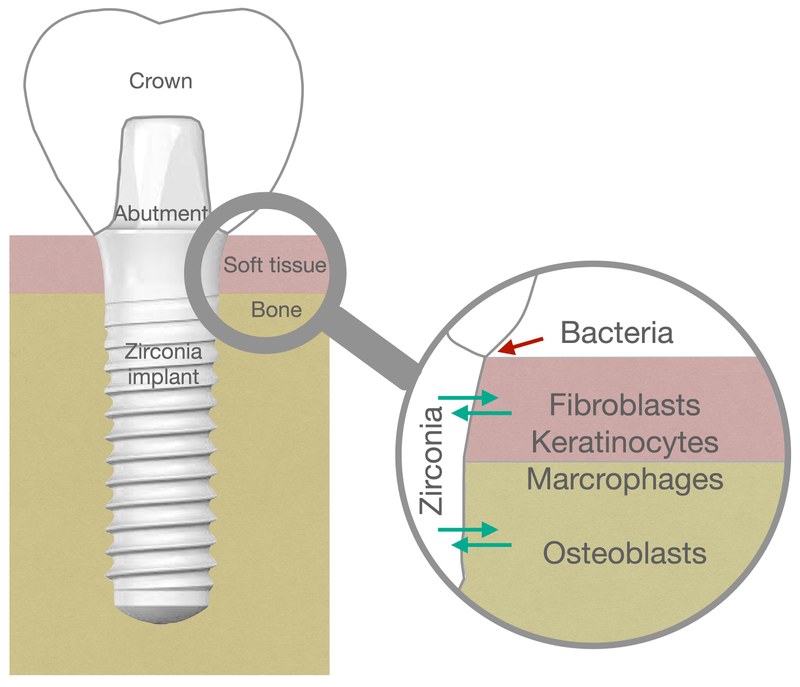
  • The surface of zirconia dental implants is in direct contact with the bone and soft tissue, hence the material-cell interaction is crucial for long-term integration.
    The surface of zirconia dental implants is in direct contact with the bone and soft tissue. Material-cell interaction is crucial for long-term integration.
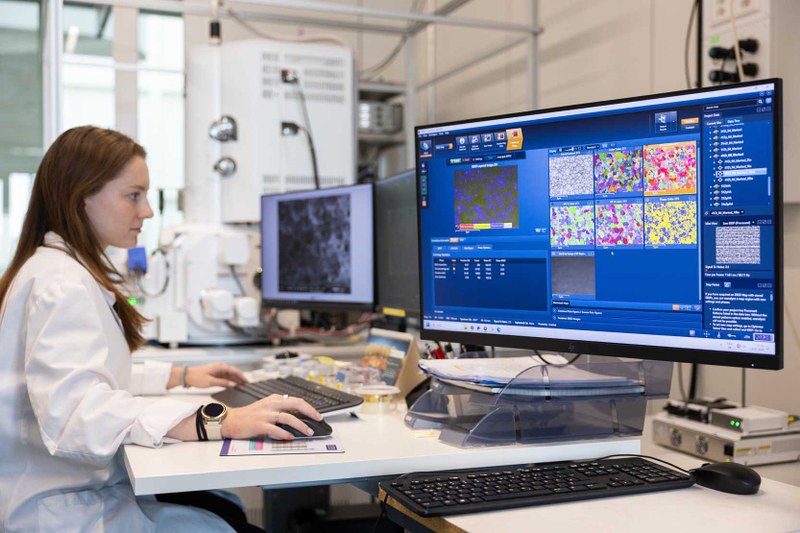
  • Master student Larissa Wasmer Performs EBSD analyses on a high-end Jeol system to determine grain sizes, crystallographic orientations, and phase distributions.
    Master student Larissa Wasmer Performs EBSD analyses on a high-end Jeol system to determine grain sizes, crystallographic orientations, and phase distributions. The high spatial resolution enables the characterization of microstructural and crystallographic features down to the submicrometer range.
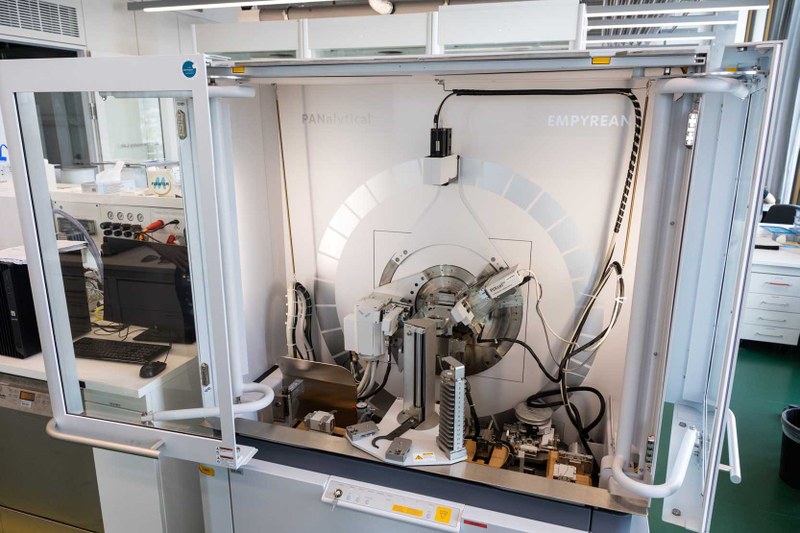
  • Malvern PANalytical Empyrean multipurpose X-ray platform for crystallographic analysis of powders, thin films, nanomaterials and solid objects.
    Malvern PANalytical Empyrean multipurpose X-ray platform for crystallographic analysis of powders, thin films, nanomaterials and solid objects.

Project details

Type
Research project
Research areas
Functional materials and surfaces
University
FHNW School of Life Sciences / Institute for Medical Engineering and Medical Informatics
Partner
University Center for Dental Medicine Basel (UZB)
Department of Biomedicine, University of Basel
Institut Straumann AG
Funding
Swiss Nanoscience Institute (SNI)
Running time
2024-2025
Management
Dr. Nadja Rohr, University Center for Dental Medicine Basel UZB
Team
Prof. Géraldine Guex, UZB
Prof. Michael de Wild, FHNW
Dr. Raphael Wagner, Institut Straumann AG

Contact

Michael de Wild

Prof. Dr. Michael de Wild

Team leader, Functional Materials and Surfaces
Phone
+41 61 228 56 49
E-Mail
michael.dewild@fhnw.ch

School of
Life Sciences FHNW University of Applied Sciences and Arts Northwestern Switzerland

  • About the School
    • School
    • Degree Programmes
    • Continuing Education
    • Research
    • Events
  • Social Media
    • Facebook
    • Instagram
    • YouTube
    • LinkedIn
  • About FHNW
    • Organisation
    • Schools
    • Locations
    • FHNW Library
    • Media Relations
  • Support
    • IT Support
    • Inside FHNW
    • Webmail
Logo FHNW - 20 Years
Logo Swiss Universities
Logo European University Association
© University of Applied Sciences and Arts Northwestern Switzerland (FHNW)
  • Data Protection
  • Imprint
  • Accessibility
  • EN
  • DE