Skip to main contentSkip to search barSkip to navigationSkip to footer
Logo of the University of Applied Sciences and Arts Northwestern Switzerland
  • DE
  • EN
  • Home
  • Degree programmes
  • Continuing education

Ten Schools One Goal

The FHNW comprises 10 schools with different specializations. Select a school to see its specific courses, study programmes and information.

Applied Psychology

Architecture, Construction and Geomatics

Art and Design

Business

Computer Science

Engineering and Environment

Life Sciences

Music

School of Education

Social Work

  • Research

    • Research fields
    • Projects
  • International

    • Outgoing Students
    • Incoming Students
  • Updates and insights

    • News and stories
  • Events

  • Media corner

  • About the School of Engineering and Environment

    • People directory
    • Management Board
  • Institutes

    • Institute of Automation
    • Institute of Bioenergy and Resource Efficiency
    • Institute of Business Engineering
    • Institute of Electric Power Systems
    • Institute of Technology and Society
    • Institute of Polymer Engineering
    • Institute of Applied Mathematics and Physics
    • Institute of Polymer Nanotechnology
    • Institute of Optometry
    • Institute of Product and Production Engineering
    • Institute for Sensors and Electronics
    • Institute of Thermal and Fluid Engineering
    • Laboratories of the School of Engineering and Environment
Logo of the University of Applied Sciences and Arts Northwestern Switzerland
  • About the School
    • FHNW School of Engineering and Environment
    • Degree Programmes
    • Continuing Education
    • Collaboration in Research and Services
  • Social Media
    • LinkedIn
    • Instagram
    • Facebook
    • TikTok
    • YouTube
  • About FHNW
    • Organisation
    • Schools
    • Locations
    • FHNW Library
    • Media Relations
  • Support
    • IT Support
    • Inside FHNW
    • Webmail
  • Data Protection
  • Imprint
  • Accessibility
  • Research

    • Research fields
    • Projects
  • International

    • Outgoing Students
    • Incoming Students
  • Updates and insights

    • News and stories
  • Events

  • Media corner

  • About the School of Engineering and Environment

    • People directory
    • Management Board
  • Institutes

    • Institute of Automation
    • Institute of Bioenergy and Resource Efficiency
    • Institute of Business Engineering
    • Institute of Electric Power Systems
    • Institute of Technology and Society
    • Institute of Polymer Engineering
    • Institute of Applied Mathematics and Physics
    • Institute of Polymer Nanotechnology
    • Institute of Optometry
    • Institute of Product and Production Engineering
    • Institute for Sensors and Electronics
    • Institute of Thermal and Fluid Engineering
    • Laboratories of the School of Engineering and Environment

Type a search term and search continuing education,degree programmes, events, documents and other content.

  • Engineering and Environment
  • Research and services
  • Research
  • Research fields
  • Mechanical engineering
Mechanical engineering

Prod­uct de­vel­op­ment, FHNW School of Engineering and Environment

School of Engineering and Environment


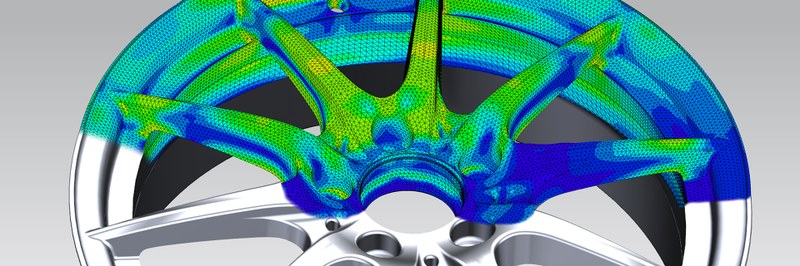
Support throughout the entire product development cycle, including the process steps of design, simulation, and manufacturing.
topbild_mas_for.jpeg

We support our customers throughout the entire product development cycle – from the initial concept idea to validated industrial solutions. Our integrated approach combines design, simulation, and manufacturing into a seamless development process with measurable added value.

The Institute for Product and Production Engineering FHNW considers the product development cycle as a holistic process and offers companies both end-to-end development services and targeted support for specific development phases.

Product development cycle using the example of the X-ray telescope STIX, which was co-developed by the IPPE

Our Services in the Product Development Cycle

1. Design and Product Engineering

We develop innovative product concepts and detailed designs in an iterative, application-oriented manner.

  • Concept development and system architecture

  • CAD design and interface definition

  • Design for Manufacturing and Assembly (DfMA)

2. Simulation and Virtual Validation

Simulation is a key tool for early concept evaluation and for reducing development risks and costs.

  • Structural, thermal, and fluid simulations

  • Multiphysics simulations (e.g. thermo-electro-mechanical, thermo-chemical)

  • Topology optimisation for weight and performance enhancement

  • Virtual design iterations to improve product performance

3. Prototyping and Testing

We manufacture prototypes, engineering models, or structural-thermal models and test them against the defined requirements.

  • Rapid prototyping and small-batch manufacturing

  • Measurement and testing for quality assurance

  • Experimental validation of simulation results

Optimisation as an Integral Part of Development

Optimisation is performed continuously across all development phases.

  • Simulation-driven design improvements

  • Topology optimisation for material and weight reduction

  • Performance enhancement of existing series products

Multiphysics Expertise for Complex Systems

Thanks to modern computing capabilities, we analyse coupled physical effects such as structural mechanics, thermal behaviour, fluid dynamics, electromagnetism, and chemical processes. Multiphysics approaches are essential for high-tech applications such as turbines, batteries, fuel cells, and aerospace systems.

Our expertise is based on demanding development projects, for example in aerospace (STIX, CaSSIS), industry, energy, and medical technology. We understand the requirements for highly reliable systems and industrial implementation.

Ihr Mehrwert

  • Reduced development risks through simulation and validation

  • Cost-optimised products through design and topology optimisation

  • Technological leadership through interdisciplinary research expertise

Product development is the core of a successful company. We help you efficiently translate technological innovation into market-ready products and strengthen your long-term competitiveness.

Selected Projects

GreDom insert

GreDom insert

The invention by FHNW School of Engineering enables an automation of satellite panel production.
Institute
School of Engineering and Environment
Free-space optical communication with a high-altitude balloon

Free-space optical communication with a high-altitude balloon

The FHNW Institute for Sensors and Electronics currently develops an optical receiver and a 2-axis gimbal for a high-altitude balloon (HAB) platform to demonstrate free-space optical communication (FSOC).
Institute
School of Engineering and Environment, Institute for Sensors and Electronics
Research field
Aerospace, Electrical engineering, Mechanical engineering
With Coatings Towards Better Batteries

With Coatings Towards Better Batteries

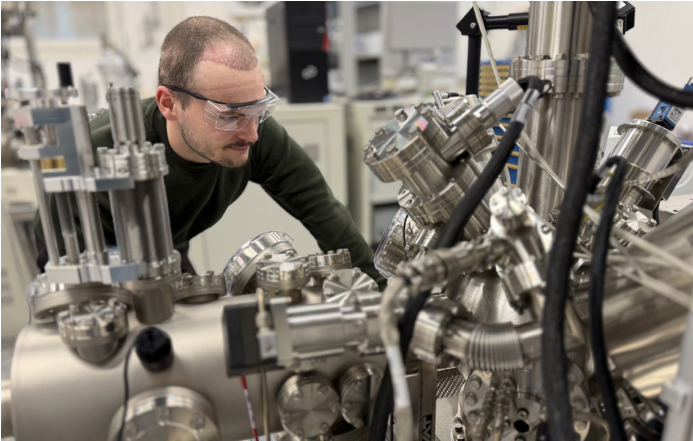
Anode-free solid-state lithium batteries promise higher energy density, lower costs and improved safety – but they still face challenges such as uneven lithium distribution and early capacity loss. In the Nano-Argovia project BatCoat, the research team shows that ultrathin silver and protective coatings on the current collector can overcome these issues and significantly extend battery lifetime.
Institute
Institute of Product and Production Engineering
Research field
Mechanical engineering, Energy and environment

Functionalization of artificial skin using femtosecond laser and optical coher-ence tomography

Functionalization of artificial skin

Artificial skin can be life-saving for people with severe burns, extensive wounds, or congenital skin disorders – especially when insufficient healthy skin is available for autografting. In this research project, the team is advancing large-scale functionalized artificial skin using highly precise technologies such as femtosecond lasers and optical coherence tomography. The goal is to improve the production, characterization, and biocompatibility of biomedical tissue while scaling the developed technologies towards future commercial applications.
Institute
Institute of Product and Production Engineering
Research field
Mechanical engineering

Contact and collaboration

We are pleased to put our continuously advancing expertise at your service. If you have any questions or are interested in our offerings, please feel free to contact us.

Kaspar Löffel

Prof. Dr. Kaspar Löffel

Lecturer for Mechanical Engineering
Phone
+41 56 202 85 64
E-Mail
kaspar.loeffel@fhnw.ch
Hans-Peter Gröbelbauer

Prof. Dr. Hans-Peter Gröbelbauer

Head of Product Development at the FHNW Institute of Product and Production Engineering
Phone
+41 56 202 74 46 (Direct)
E-Mail
hanspeter.groebelbauer@fhnw.ch

School of
Engineering and Environment FHNW University of Applied Sciences and Arts Northwestern Switzerland

  • About the School
    • FHNW School of Engineering and Environment
    • Degree Programmes
    • Continuing Education
    • Collaboration in Research and Services
  • Social Media
    • LinkedIn
    • Instagram
    • Facebook
    • TikTok
    • YouTube
  • About FHNW
    • Organisation
    • Schools
    • Locations
    • FHNW Library
    • Media Relations
  • Support
    • IT Support
    • Inside FHNW
    • Webmail
Logo FHNW - 20 Years
Logo Swiss Universities
Logo European University Association
© University of Applied Sciences and Arts Northwestern Switzerland (FHNW)
  • Data Protection
  • Imprint
  • Accessibility
  • EN
  • DE