Testing drug-carrier combinations and quantities to determine their effect on dissolution
Some medicines do not dissolve well in the body, meaning they can’t be properly absorbed and do not provide their desired therapeutic effects. To overcome this problem, these drugs can be formulated as amorphous solid dispersions (ASD). In ASDs, a drug’s crystal-based molecular structure is chemically converted into an amorphous structure and dispersed using a solid polymer carrier.
This formulation strategy works well up to a given point. When larger quantities of a drug substance are loaded into the formulation, it may not dissolve alongside the polymer, recrystallising and leading to erratic release. This point is known as the limit of congruency (LoC), and it’s crucial to identify especially in formulations where a greater amount of the drug is needed.
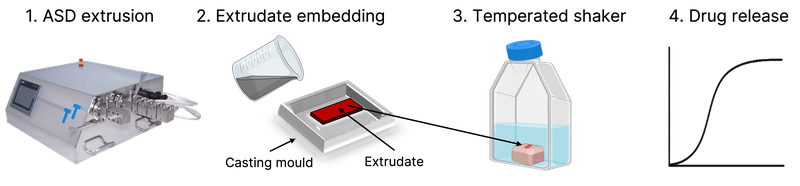
In collaboration with Nisso Chemical Europe, our team developed a new test that measures intrinsic dissolution of medicines formulated as amorphous solid dispersions using Nisso’s hydroxypropyl cellulose (HPC) as the carrier.
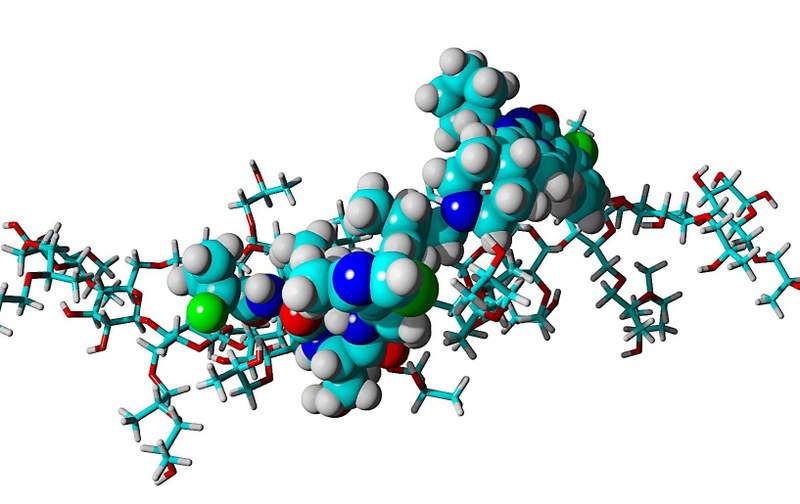
In higher concentrations of drug substance (30% or more), it’s desirable to use HPC plus other additives in the formulation, to increase drug stability and release. We developed computational tools to predict ideal ratios of different drugs + carriers + additives.
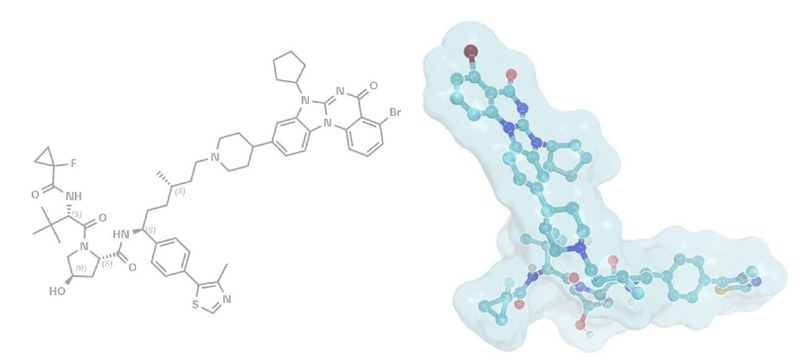
Finally, we are now working with Nisso on the possibility of formulating a new class of molecules called proteolysis-targeting chimeras (PORTACs) using HPC. PORTACs combine some properties of small molecules and biologics, and like biologics, are challenging or impossible for oral delivery. Building on work we did as part of the Horizon Europe project FASS, our aim is to enable these new medicines to be taken orally and be absorbed by the body.
Objectives and results
Measuring intrinsic dissolution of extrudates
Predicting the ideal ratio of drug, HPC, and additives
Using HPC and other additives to formulate proteolysis-targeting chimeras (PORTACs)
Project details
- Type
- Research project
- Research field
- Oral formulations of chemical drugs
- Topics
- Biology and chemistry, Artificial intelligence and machine learning, Data science and engineering, Health and medicine, Pharmaceutical, medical and biotechnology
- School
- FHNW School of Life Sciences / Institute for Pharma Technology and Biotechnology
- Partners
- Nisso Chemical Europe
- Duration
- Phase 1: 2025-2026
Phase 2: 2026-2027 - Team
- Martin Kuentz
Andreas Niederquell
Noemi Gattiger
Edmont Stoyanov
Contact

Prof. Dr. Martin Kuentz
- Phone
- +41 61 228 56 42
- martin.kuentz@fhnw.ch
Further projects
EASY
- Institute
- Institute for Pharma Technology and Biotechnology
- Research field
- Oral formulations of chemical drugs
FASS
- Institute
- Institute for Pharma Technology and Biotechnology
- Research field
- Oral formulations of chemical drugs

InPharma
- Institute
- Institute for Pharma Technology and Biotechnology
- Research field
- Oral formulations of chemical drugs
Bio-enabling formulations (PEARRL)
- Institute
- Institute for Pharma Technology and Biotechnology
- Research field
- Oral formulations of chemical drugs
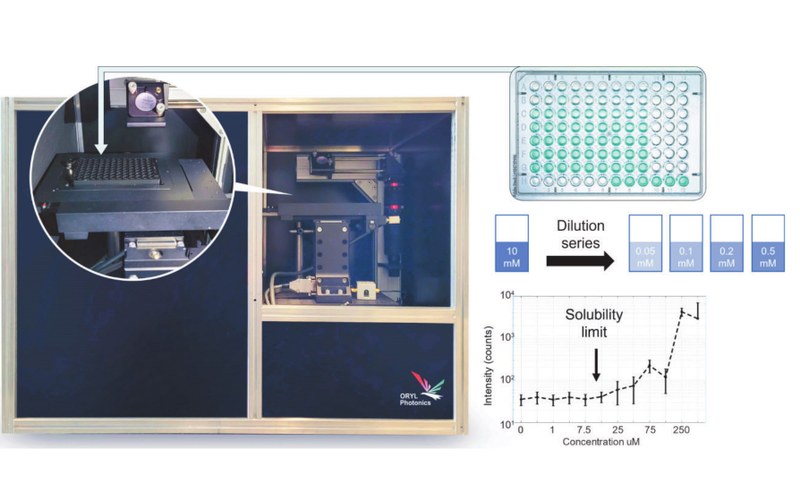
A new dynamic light scattering technique to analyze dispersions
- Institute
- Institute for Pharma Technology and Biotechnology
- Research field
- Formulations and devices for active chemical and biological substances, Oral formulations of chemical drugs