Water security for climate-resilient cities (PROAGUA 2025-2028)
Water resources in Peru are distributed very unequally. The majority of the population lives in rapidly growing cities with little rainfall. Water pollution and the demand for water are rising dramatically, and this is exacerbated by climate change and extreme weather events. Agriculture, which uses more than 90 per cent of the available water, is particularly vulnerable to water scarcity and is competing with household water needs.
Peru is aligning its policies, strategies, planning and investment with requirements for water security.
The Water, Sanitation, and Hygene research group at the FHNW's Institute for Ecopreneurship is participating in the PROAGUA project, contributing to work packages 1 and 2.
Work packages
1. Developing long-term scenario-based planning
For urban water management, the project promotes an approach focused on service quality and long-term water supply security, rather than just, as is currently the case, on access to services. To achieve this, it relies on the development and implementation of sectoral management and planning instruments that incorporate water security to develop long-term scenarios to assess how climate change could impact the balance between water supply and demand for population use. As part of this work package, the FHNW is developing scenarios that reflect future water supply, demand and climate change.
2. Sharing and scaling good practices
The project helps water utilities that have already adopted effective climate change adaption strategies to share these good practices with other companies across the country; for example, the early warning systems for floods and drought.
3. Engaging the private sector
The project supports the development of business models with the private sector to replicate proven practices, such as the reuse of treated wastewater in agriculture.
4. Training and education
PROAGUA supports the training of technical and operational staff. It advises public institutions on dual training, a German vocational model that combines classroom theory with practical, on-the-job training in real companies and water utilities. It also introduces a continuing education programme in cooperation with the Association of Swiss Wastewater and Water Protection Professionals (VSA).
Stories
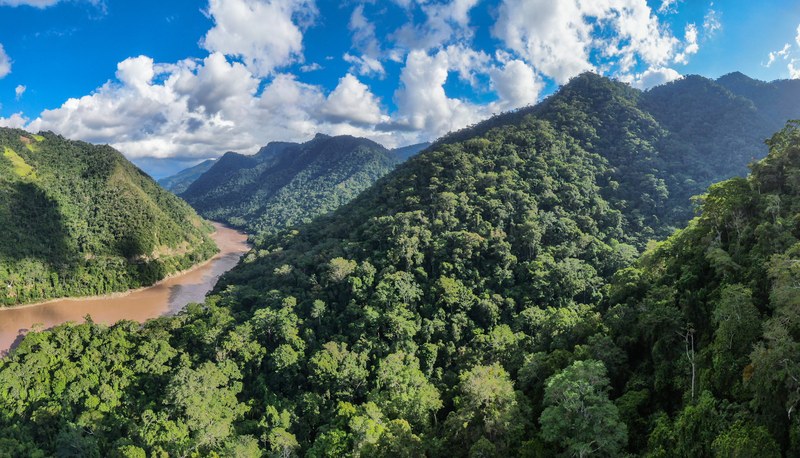
Making water flows visible
Project details
- Type
- Research project
- Research field
- Water, sanitation, and hygiene
- Topics
- Biology and chemistry, Circular economy, Education and pedagogy, Environment and sustainability, Natural sciences, Public administration, public law, Sustainable construction and energy efficiency, Technologies and engineering
- School
- FHNW School of Life Sciences / Institute for Ecopreneurship
- Partners
- Ministerio de Vivienda, Construcción y Saneamiento (MVCS)
- Funding
- Deutsche Gesellschaft für Internationale Zusammenarbeit (GIZ)
Swiss State Secretariat for Economic Affairs (SECO) - Duration
- 2025-2028
- Project lead
- Ana Isabel Moreno Morales
- Team
- Patrik Eckert
Contact
Further projects
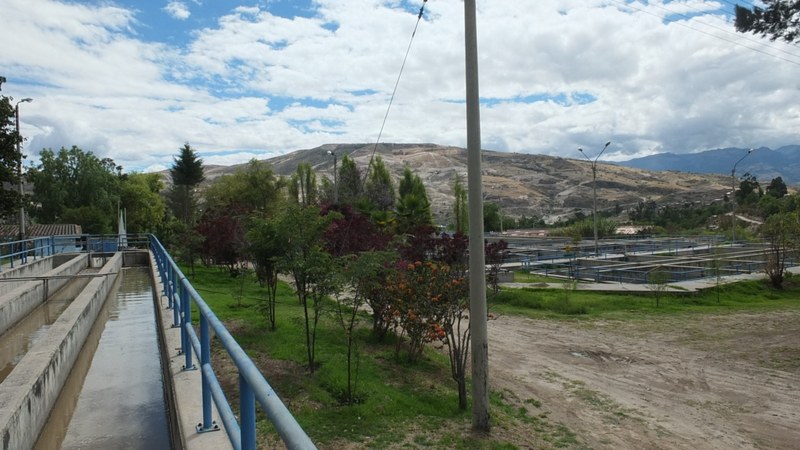
PROAGUA
- Institute
- Institute for Ecopreneurship
- Research field
- Environmental and water technologies, Water, sanitation, and hygiene